
Essential Spraying Equipment Options for Efficient Farm Management
Nowadays, keeping crops healthy and productive while reducing labor costs and protecting the environment is one of agriculture’s biggest challenges. Spray equipment plays a vital role in helping farmers manage their crops efficiently. Whether applying pesticides, herbicides, or fungicides, proper spraying is essential for maintaining plant health, controlling pests, and improving yields. This article explains the different types of spraying equipment, key factors to consider when choosing the right sprayer for your farm, and the benefits of adopting efficient spraying technologies.
The Basics of Spraying in Agriculture
What Is Spraying?
Agricultural spraying involves applying pesticides, herbicides, fungicides, and liquid fertilizers to crops. Research suggests that only about 2% of sprayed chemicals reach target pests, with the remainder contributing to soil, water, and air pollution detected in nearly 90% of U.S. agricultural streams.
Spraying serves several critical purposes:
- Pest control: Prevents or eliminates insects and organisms that damage crops.
- Weed management: Controls unwanted weeds that compete with crops for nutrients and water.
- Disease prevention: Fungicides and treatments help reduce the spread of crop diseases.
By using the correct spraying tools, farmers can ensure maximum crop protection while minimizing chemical use and environmental impact, as emphasized in agriculture guides that support sustainable farming practices.
Important Considerations Before Selecting Spraying Equipment
Before investing in spraying equipment, farmers should evaluate the following factors:
- Farm size and crop type: Larger farms or diverse crops often require advanced sprayers, while small-scale farmers may benefit from manual or compact models.
- Terrain and accessibility: Rough or hard-to-reach areas may require tracked or aerial sprayers.
- Application type: Different treatments for pests, weeds, or diseases demand specific equipment.
- Environmental conditions and regulations: Weather and local pesticide laws significantly affect spraying efficiency and compliance.
Types of Spraying Equipment
Spraying equipment ranges from simple manual tools to advanced high-tech machinery. Below are the most common types.
Manual Sprayers
Manual sprayers include handheld, backpack, and knapsack models operated by hand. These are ideal for small-scale farming or limited-area applications.
- Handheld sprayers: Portable units for spot treatments.
- Backpack and knapsack sprayers: Worn on the back for treating gardens or small fields.
Pros:
- Low cost
- Easy operation and maintenance
- Suitable for small areas
Cons:
- Labor-intensive
- Limited coverage
Tracked and Wheeled Sprayers
Designed for medium to large farms, these sprayers are tractor-mounted or vehicle-based for faster coverage.
- Wheeled sprayers: Ideal for flat terrain with high mobility.
- Tracked sprayers: Better for uneven land, offering reduced soil compaction and improved stability.
Pros:
- Fast and accurate application
- Large coverage area
- Suitable for medium and large farms
Cons:
- Higher upfront cost
- Requires regular maintenance
Aerial Sprayers (Drones and Aircraft)
Aerial spraying using drones or aircraft is becoming increasingly popular for large or inaccessible land areas.
Pros:
- Ideal for remote or extensive fields
- Fast and efficient
- Minimal ground disturbance
Cons:
- High initial investment
- Regulatory and licensing requirements
Self-Propelled Sprayers
Self-propelled sprayers are built for high-volume commercial farming, featuring large tanks and advanced control systems.
Pros:
- High efficiency
- Large tank capacity reduces downtime
- Advanced features such as GPS guidance and automated spraying
Cons:
- Expensive
- Complex maintenance
Essential Features to Look for in Spraying Equipment
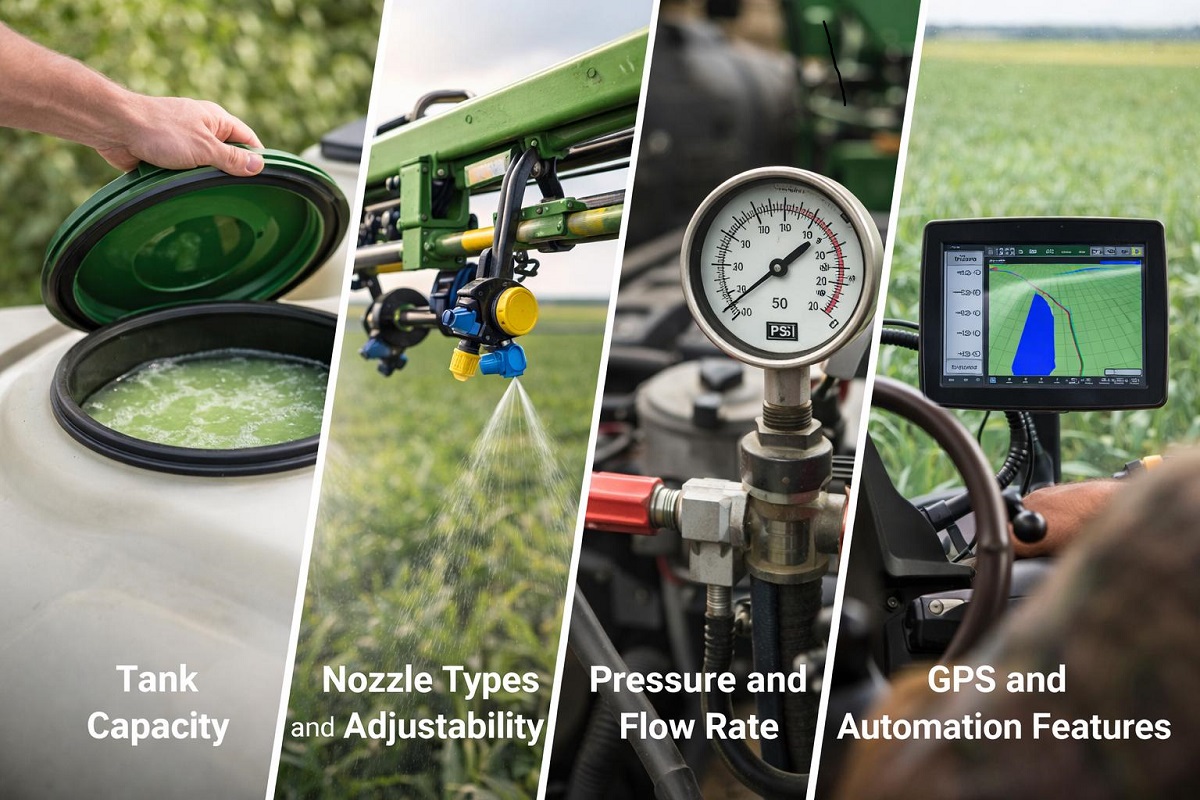
Tank Capacity
Larger tanks reduce refill frequency and improve productivity, especially on big farms.
Nozzle Types and Adjustability
Flat fan, hollow cone, and adjustable nozzles allow precise targeting, minimizing waste and improving coverage.
Pressure and Flow Rate
Consistent pressure prevents over- or under-application, protecting crops and reducing environmental harm.
GPS and Automation
Modern sprayers use GPS, section control, and field mapping to optimize chemical use and improve accuracy.
Benefits of Advanced Spraying Equipment
Improved Crop Health and Yield
Targeted applications enhance crop protection and increase overall productivity.
Cost Savings and Time Efficiency
Precise spraying reduces labor and chemical costs while freeing time for other farm activities.
Environmental Sustainability
Precision technology minimizes runoff and supports eco-friendly farming.
Enhanced Efficiency Through Technology
GPS-guided systems reduce human error and optimize resource use. Platforms like AgriBegri provide tech-enabled equipment for modern farming.
Maintenance and Best Practices
Regular Maintenance
Clean equipment after use, lubricate moving parts, and inspect for wear to extend service life.
Calibration
Routine calibration ensures accurate chemical delivery and prevents overapplication.
Operator Safety
Always wear protective gear such as gloves, goggles, and masks, and ensure operators receive proper training.
Choosing the Right Sprayer for Your Farm
Buying Considerations
Consider farm size, crop type, terrain, and budget. Investing in scalable equipment ensures a future-proof purchase.
Top Spraying Equipment Brands
Popular manufacturers include John Deere, Case IH, and AG Leader, offering solutions from manual sprayers to advanced self-propelled systems.
Conclusion
Selecting the right spraying equipment is essential for farm success. Quality sprayers improve crop health, reduce waste, save time, and support sustainable agriculture. Carefully assess your farm’s needs and invest in technology that aligns with your long-term goals.