Best Wheat Varieties for North India (2026 Guide)
Wheat is the backbone of food security in India, especially in the northern states where fertile plains and favorable climates support extensive wheat cultivation. As we approach the 2026 season, choosing the right wheat variety has never been more important. With evolving climate conditions, disease pressures, and market demands, farmers need varieties that offer high yields, good grain quality, and resilience.
This comprehensive guide covers the best wheat varieties for North India in 2026, explains how to choose them based on sowing time and environmental stress, and provides practical tips to improve wheat productivity. Whether you are a seasoned farmer or new to wheat farming, this guide will help you make informed decisions to increase productivity and profitability.
Why Choosing the Right Wheat Variety Matters
Selecting the right variety is a crucial decision in wheat farming. The variety determines not only the yield but also how well your crop withstands diseases, heat stress, and changing weather patterns. High-yield varieties with disease resistance can significantly boost farmers’ income by reducing losses and ensuring better grain quality.
In North India, conditions vary from the cool, irrigated plains of Punjab and Haryana to the warmer, semi-arid regions of Uttar Pradesh and Rajasthan. Therefore, wheat varieties are categorized by their adaptability to different sowing windows and stress conditions.
Classification of Wheat Varieties for North India
Wheat varieties suitable for North India can be broadly grouped based on:
- Timely-sown wheat varieties
- Late-sown wheat varieties
- Heat and drought tolerant varieties
- Biofortified and quality-focused varieties
Top Timely-Sown Wheat Varieties for 2026
Timely sowing, usually between mid-October and mid-November in North India, is essential for achieving maximum grain yield. These varieties are developed for optimal performance under the recommended sowing window when temperatures are conducive for crop establishment and tillering.
HD 2967
HD 2967 remains one of the most popular wheat varieties in North India due to its consistent performance across diverse agro-ecological regions. It has been widely adopted by farmers in Punjab, Haryana, Uttar Pradesh, and Bihar.
- Yield Potential: 5.0–6.5 tonnes per hectare under optimum management.
- Disease Resistance: Good tolerance to rusts (leaf and stripe rust).
- Grain Quality: Excellent grain weight and quality suitable for bread and chapati making.
- Adaptability: Performs well with timely sowing and adequate irrigation.
HD 2967 continues to be a reliable choice for farmers who prioritize stable production and marketable grain quality.
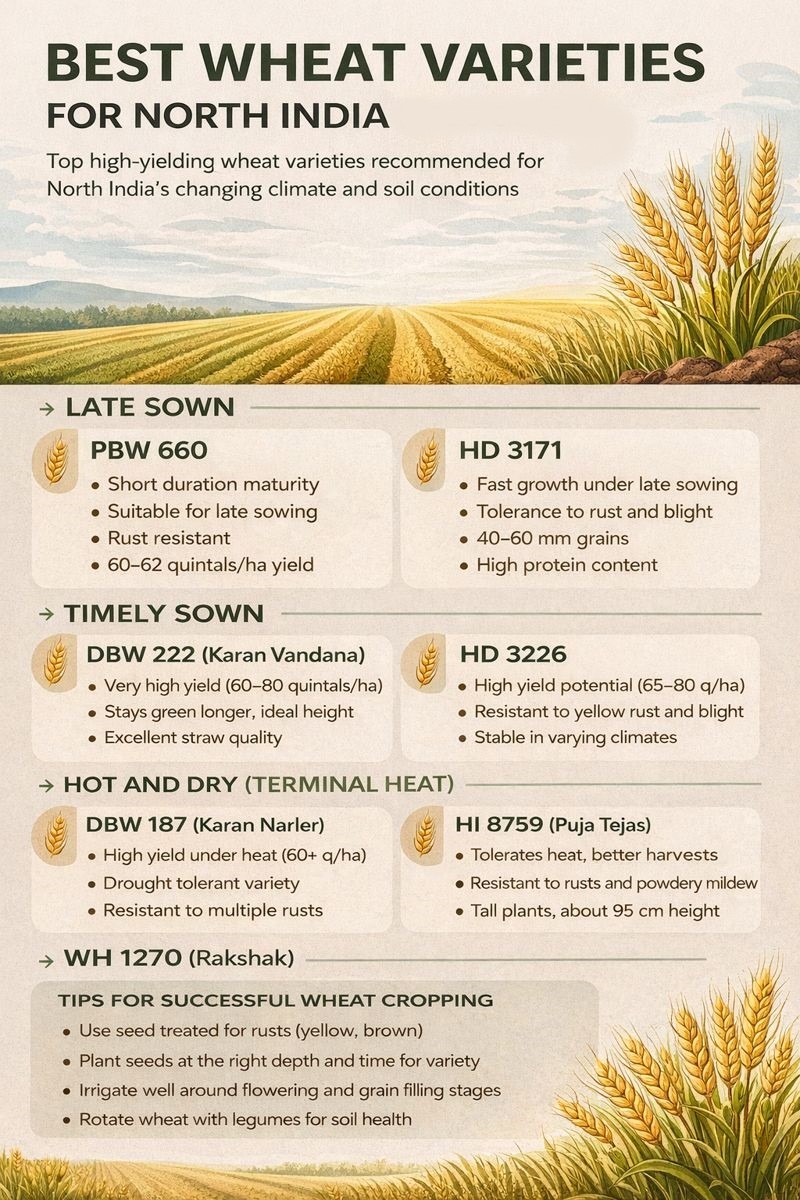
DBW 222 (Karan Vandana)
DBW 222, known in many regions as Karan Vandana, is another strong performer for timely sowing. Released by ICAR and state agricultural universities, it combines yield potential with adaptability.
- Yield Potential: Approximately 5.5–6.7 tonnes per hectare.
- Disease Resistance: Moderate resistance to rusts and leaf blight.
- Straw Quality: Good straw strength, reducing lodging risks.
- Grain Quality: High test weight and good milling quality.
This variety is especially suitable for farmers looking to balance grain and straw output.
HD 3086
HD 3086 is another reliable option for the timely-sown window, with improved disease resilience and yield capacity.
- Yield Potential: 5.3–6.3 tonnes per hectare.
- Disease Resistance: Tolerant to leaf rust and moderate against stripe rust.
- Grain Quality: Good quality suitable for diverse urban and rural markets.
This variety performs consistently with adequate nutrition and water management.
Best Late-Sown Wheat Varieties
In North India, unavoidable delays in sowing due to harvesting of preceding crops or monsoon impact necessitate varieties that still perform under late sown conditions (mid-November to December). These varieties are selected for their shorter crop duration and ability to escape terminal heat.
PBW 660
PBW 660 is a widely recommended variety for late-sown conditions. It is early maturing and offers stable yields even when sown after the optimal window.
- Yield Potential: 4.8–6.0 tonnes per hectare.
- Crop Duration: Relatively shorter, helping escape terminal heat.
- Disease Resistance: Moderate resistance to rusts.
Its early maturity is a key reason for adoption in rainfed and irrigated late-sown situations.
HD 3171
HD 3171 is another late-sown candidate known for reasonable yields and resilience under heat stress. Its medium maturity helps farmers achieve good productivity when sowing gets delayed.
- Yield Potential: 5.0–5.8 tonnes per hectare.
- Disease Resistance: Moderate tolerance to rust diseases.
- Adaptability: Good for late sowing in North India.
Heat and Drought Tolerant Wheat Varieties
With the changing climate and increasing frequency of heat waves, heat and drought tolerance have become critical traits. These varieties are developed to retain productivity under high temperatures or limited soil moisture.
DBW 187 (Karan Narler)
DBW 187, also known as Karan Narler, is bred for heat tolerance and robust performance in warmer plains.
- Yield Potential: 4.5–6.0 tonnes per hectare under heat stress.
- Resistance Traits: Good tolerance to leaf and stripe rusts.
- Suitability: Ideal for areas with high temperature spells during grain filling.
This variety provides a hedge against unexpected heat stress during the reproductive stages.
HI 8759 (Pusa Tejas)
HI 8759 (marketed as Pusa Tejas in some regions) is another heat tolerant variety with strong performance records.
- Yield Potential: 5.0–6.2 tonnes per hectare.
- Heat Tolerance: Designed to handle late spring heat stress.
- Other Traits: Acceptable resistance to common wheat diseases.
This variety suits warmer tracts of Uttar Pradesh and Rajasthan where high temperature stress is more frequent.
Biofortified and Quality-Focused Wheat Varieties
Beyond yield and resilience, there is growing emphasis on nutritional quality. Biofortified varieties aim to improve micronutrient content (like zinc) or protein levels without compromising yield.
DBW 93
DBW 93 is a zinc-fortified wheat variety recommended in several northern states. While its yield potential is comparable to other high-yielding types, its nutritional benefit is significant.
- Yield Potential: 5.0–6.0 tonnes per hectare.
- Zinc Content: Higher than many standard varieties.
- Use: Suitable for both grain markets and household consumption.
Selecting the Right Variety for Your Farm
Choosing the right wheat variety depends on several farm-specific factors:
- Sowing window: Whether you can sow timely or late.
- Water availability: Irrigated vs rainfed fields.
- Local disease pressure: Common rust prevalence in your area.
- Market demand: Some markets pay premiums for higher protein or specific quality traits.
For example, if you farm in the well-irrigated plains of Punjab and Haryana and can plant within the optimal window, varieties like HD 2967 and DBW 222 offer excellent yield stability. If sowing gets delayed due to late harvest of preceding crops, PBW 660 or HD 3171 can help avoid yield loss. For warmer areas that witness late-season heat spells, DBW 187 or HI 8759 provide an added advantage.
Best Practices for Growing Wheat in North India
Choosing a good variety is only part of the equation. Good crop management practices are essential to realize the full potential of your seed:
Soil Preparation
Begin with a soil test to identify nutrient levels and pH. Wheat prefers a loam to clay-loam soil with pH 6.0–7.5. Incorporate organic matter to improve soil structure. You can refer to our soil health basics post to assess and improve your soil quality.
Balanced Fertilization
Apply fertilisers as per soil test recommendations. Nitrogen, phosphorus, and potassium are essential, and micronutrients like zinc can boost productivity and grain quality.
Irrigation Management
Timely irrigation during crown root initiation and grain filling stages is critical. Avoid water stress at flowering and early grain fill.
Pest and Disease Control
Monitor fields regularly for signs of rusts, aphids, and spot blotch. Integrated pest management (IPM) helps reduce reliance on chemicals. Learn how to control pests in a natural, sustainable way in posts like organic farming beginners guide and home composting to support soil health.
Harvesting and Post-Harvest Care
Harvest when grains reach physiological maturity. Proper threshing, cleaning, and drying are important to maintain grain quality and reduce storage losses.
Conclusion: Planning for 2026 Success
The right wheat variety coupled with sound crop management is the cornerstone of a successful wheat enterprise in North India. As you plan for the 2026 season, consider your sowing window, local climatic conditions, water availability, and disease pressure. By matching these factors with an appropriate variety, whether it’s HD 2967 for timely sowing, PBW 660 for late sowing, or DBW 187 for heat tolerance, you can maximize yield and profitability.
Growers who adopt modern varieties along with best practices often see higher productivity and improved grain quality. Use this guide as a roadmap to select the best wheat varieties for North India and make your 2026 wheat crop a success.
Frequently Asked Questions (FAQs)
Q1. What is the best wheat variety for high yield in North India?
Varieties like HD 2967 and DBW 222 are widely considered top performers in timely-sown conditions for consistent high yield.
Q2. Which wheat variety is best for late sowing?
PBW 660 and HD 3171 are recommended for late-sown conditions due to shorter maturity and heat escape characteristics.
Q3. Are there wheat varieties resistant to heat stress?
Yes, DBW 187 and HI 8759 are bred for better performance under heat and limited moisture conditions.
Q4. Do biofortified wheat varieties yield less?
Biofortified varieties like DBW 93 have yield potential similar to other high-yielding varieties but offer higher micronutrient content.
Q5. When should wheat be sown in North India?
The optimal sowing period for most varieties in North India is mid-October to mid-November. Late sowing beyond this window may require varieties adapted for heat avoidance or early maturity.