
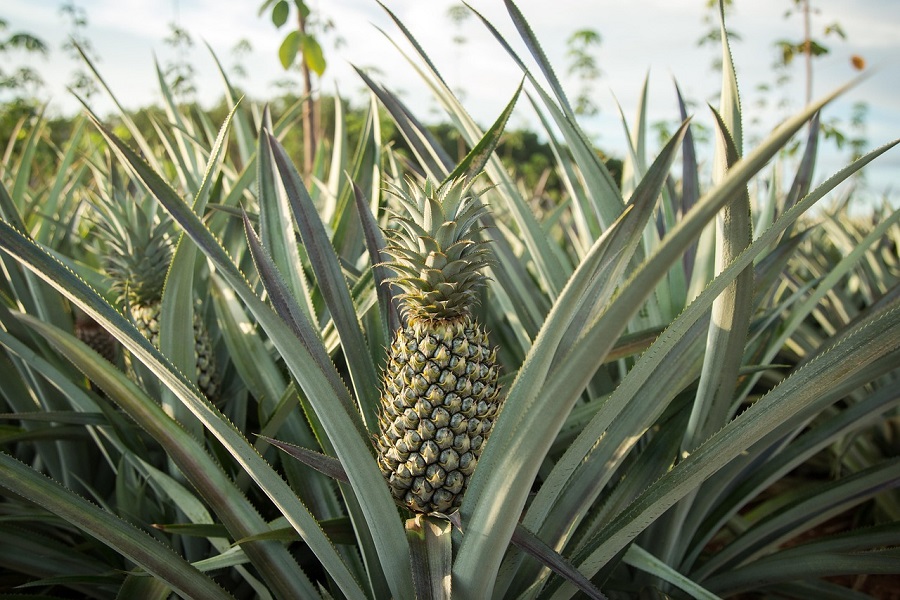
Pineapple Farming in India: Complete Guide | Cost, Profit & Cultivation
Pineapple, known as “Ananas” in Hindi, is one of India’s most commercially important fruit crops. With its sweet-tangy flavor, nutritional benefits, and year-round demand, pineapple farming offers excellent profit potential for Indian farmers. India is one of the world’s leading pineapple producers, with major cultivation in Kerala, West Bengal, Assam, Manipur, Karnataka, and the Northeastern states.
What makes pineapple farming particularly attractive is its relatively short duration (18-24 months for the first crop), high yield potential, and multiple marketing options. From fresh fruit sales to processing into slices, juice, jam, and even wine, pineapples offer diverse income streams. The crop is also well-suited for intercropping and can be integrated with other farming activities.
This comprehensive guide is written specifically for Indian farmers considering commercial pineapple cultivation. We cover everything from selecting the right variety and preparing the land to harvesting, marketing, and calculating profits. All information is based on practical field experience and Indian agricultural conditions.
📑 Table of Contents
- 1. Introduction
- 2. Quick Crop Overview
- 3. About Pineapple Fruit
- 4. Climate & Soil Requirement
- 5. Best Pineapple Varieties for Cultivation
- 6. Propagation Methods
- 7. Land Preparation & Planting
- 8. Irrigation Management
- 9. Month-wise Crop Calendar
- 10. Manure & Fertilizer Schedule
- 11. Intercropping & Weed Management
- 12. Flower Induction & Management
- 13. Pests and Diseases
- 14. Harvesting of Pineapple
- 15. Yield of Pineapple Crop
- 16. Storage and Marketing
- 17. Cost of Pineapple Farming & Profit Margin
- 18. Advantages of Pineapple Cultivation
- 19. Government Schemes for Pineapple Farming
- 20. Organic Pineapple Cultivation
- 21. Common Mistakes in Pineapple Farming
- 22. Value-Added Products & Processing
- 23. FAQs – Frequently Asked Questions
- 24. Conclusion
2. Quick Crop Overview
| Parameter | Details |
|---|---|
| Scientific Name | Ananas comosus |
| Botanical Family | Bromeliaceae |
| Origin | South America (Brazil, Paraguay) |
| Climate Requirement | Tropical and sub-tropical; Warm humid climate |
| Ideal Temperature | 22°C – 32°C |
| Soil Type & pH | Well-drained sandy loam, lateritic soil; pH 5.5 – 6.5 |
| Planting Season | May-June (Monsoon), September-October (Post-monsoon) |
| Spacing | 60 cm x 30 cm (High density), 90 cm x 60 cm (Normal) |
| Harvesting Time | 15-24 months after planting (varies by variety and season) |
| Yield Per Acre | 25,000 – 40,000 fruits (25-40 tonnes) |
| Economic Lifespan | 4-5 years (2-3 ratoon crops after main crop) |
3. About Pineapple Fruit
Pineapple is a tropical fruit known for its distinctive appearance, sweet flavor, and numerous health benefits. Botanically, it’s a multiple fruit composed of many individual flowers fused together around a central core. The fruit is rich in vitamin C, manganese, bromelain (a digestive enzyme), and dietary fiber.
In India, pineapple has been cultivated for centuries, with the northeastern region being a major center of diversity. The fruit holds cultural and economic significance in states like Kerala, where it’s an integral part of cuisine and festivals. Pineapple is consumed fresh, cooked, juiced, and preserved, making it one of the most versatile fruits in the market.
The economic importance of pineapple in India extends beyond fresh consumption. It’s a major raw material for the food processing industry, used in canned slices, chunks, juice concentrates, jams, candies, and even wine and vinegar. The fruit’s by-products, including the peel and crown, can be used for animal feed and compost, creating additional value for farmers.
4. Climate & Soil Requirement
🌤️ Climate for Pineapple Cultivation
Pineapple thrives in warm, humid tropical conditions. It’s sensitive to frost and low temperatures.
- Temperature: The ideal temperature range is 22°C to 32°C. Growth stops below 15°C and above 36°C.
- Rainfall: Well-distributed rainfall of 100-150 cm annually is ideal. The plant can tolerate short dry spells but prolonged drought affects fruit quality.
- Sunlight: Pineapple requires full sunlight for optimal growth and fruit development. Shading reduces yield and fruit size.
- Altitude: Can be grown from sea level up to 1,200 meters elevation in tropical regions.
- Wind: Strong winds can damage leaves and plants. Windbreaks are recommended in exposed areas.
India Context – Best States & Regions:
- Kerala: The leading producer, especially in Ernakulam, Kottayam, Idukki, and Pathanamthitta districts. Vazhakulam pineapple (GI tagged) is famous.
- West Bengal: Major production in Jalpaiguri, Cooch Behar, and Darjeeling districts.
- Assam: Karbi Anglong, Cachar, and Goalpara districts.
- Manipur: Known for high-quality Queen variety.
- Meghalaya, Tripura, Mizoram: Significant production in Jhum cultivation areas.
- Karnataka: Shimoga, Chikmagalur, and Coorg districts.
- Other States: Bihar, Odisha, Maharashtra (Konkan region), and Andhra Pradesh.
🌱 Soil Requirement
Pineapple requires well-drained, acidic soils for optimal growth.
- Best Soil Type: Sandy loam to lateritic soils with good organic matter content. Heavy clay soils with poor drainage are unsuitable.
- Ideal pH: 5.5 to 6.5 (Slightly acidic). The plant is sensitive to alkaline and calcareous soils.
- Drainage: Excellent drainage is critical. Waterlogging causes root rot and plant death. Raised beds are recommended in heavy soils.
- Organic Matter: Soils rich in organic matter produce better yields. Incorporate compost or FYM before planting.
- Slope: Gentle slopes (up to 15%) are ideal as they provide natural drainage.
Practical Tip: Conduct a soil test before planting. Apply lime if pH is below 5.0, or sulfur if pH is above 7.0.
5. Best Pineapple Varieties for Cultivation
Selecting the right variety is crucial for commercial success. Choice depends on market demand (fresh vs. processing), climate, and disease resistance.
Major Commercial Varieties in India
| Variety | Characteristics | Best Regions | Main Use |
|---|---|---|---|
| Kew (Giant Kew) | Large fruits (2-3 kg), cylindrical shape, yellow flesh, low fiber, high sugar (14-16° Brix). Most popular commercial variety. | Kerala, West Bengal, Karnataka, Northeastern states | Fresh fruit, canning, processing |
| Queen | Small to medium fruits (0.8-1.5 kg), golden yellow flesh, crispy texture, aromatic, excellent flavor, good keeping quality. | Manipur, Tripura, Meghalaya, parts of Kerala | Fresh fruit (premium market) |
| Mauritius | Medium-sized fruits (1.2-2 kg), conical shape, yellow flesh, sweet taste, less fibrous than Kew. | Maharashtra, Karnataka, Tamil Nadu | Fresh fruit |
| Jaldhup | Local variety from West Bengal, medium-sized, good flavor, early maturing. | West Bengal (Terai region) | Fresh fruit |
| Lakhat | Local variety from Meghalaya, known for high sugar content. | Meghalaya, Northeastern hills | Fresh fruit |
Improved/Hybrid Varieties
- MD-2 (Golden Ripe): International premium variety, very sweet (17° Brix), uniform fruits, golden color, long shelf life. Being introduced in India for export.
- Kew Selection: Improved selections from Kew with better uniformity and yield.
- CO-2 (Coimbatore): Developed by TNAU, suitable for Tamil Nadu conditions.
Region-wise Recommended Varieties
| Region/State | Recommended Varieties |
|---|---|
| Kerala | Kew, Mauritius, Vazhakulam Pineapple (Queen type) |
| West Bengal | Kew, Jaldhup, Queen |
| Assam & Northeast | Kew, Queen, Lakhat, local cultivars |
| Karnataka | Kew, Mauritius |
| Maharashtra (Konkan) | Mauritius, Kew |
| Manipur | Queen (famous for quality) |
Practical Tip: For export or premium domestic markets, consider Queen or MD-2 varieties. For processing and local markets, Kew is most reliable.
6. Propagation Methods
Pineapple is vegetatively propagated using planting materials from the mother plant. Seeds are used only for breeding purposes.
Types of Planting Materials
- Slips: Develop from the stalk below the fruit. Best quality planting material. Weigh 150-300 grams. Produce fruits in 18-22 months.
- Suckers: Grow from the leaf axils on the stem. Large size (300-500 grams). Earliest fruiting (15-18 months).
- Crowns: Top of the fruit. Most abundant but slowest to fruit (22-26 months).
- Ground Suckers/Ratons: Arise from underground stem. Good for ratoon crop establishment.
Selection of Planting Material
- Use only healthy, disease-free materials from certified sources.
- Preferred size: 30-40 cm length, 150-300 grams weight.
- Treat planting material before planting: Dip in fungicide solution (Bavistin 2g/L + Streptocycline 0.5g/L) for 10-15 minutes.
- Dry in shade for 3-5 days before planting to reduce moisture and improve survival.
Plants Required Per Acre
Plant population varies with spacing:
- High density (60 cm x 30 cm): 22,000 – 24,000 plants/acre
- Medium density (75 cm x 45 cm): 14,000 – 16,000 plants/acre
- Normal density (90 cm x 60 cm): 8,000 – 10,000 plants/acre
Practical Tip: For commercial farming, use a mix of slips and suckers to stagger harvesting and manage labor. Source planting material from reputed nurseries or your own plantation.
7. Land Preparation & Planting
Land Preparation
- Clearing: Clear the land of weeds, stones, and previous crop residues.
- Ploughing: Deep plough (2-3 times) to bring soil to fine tilth. Let soil solarize for 15-20 days.
- Soil Amendment: Incorporate well-decomposed FYM (20-25 tonnes/acre) during final ploughing.
- Bed Preparation:
- Flat beds: For well-drained soils with gentle slope.
- Raised beds: For heavy soils or high rainfall areas. Width: 90-150 cm, height: 30-45 cm.
- Contour planting: For sloping land to prevent erosion.
- Mulching: Apply black polythene mulch (25-30 micron) or organic mulch before planting. Mulching conserves moisture, controls weeds, and improves fruit quality.
Planting Method
- Best Planting Season: May-June (with monsoon onset) or September-October (post-monsoon).
- Spacing: Depends on variety, soil fertility, and management intensity.
- Kew/Mauritius (Normal): 90 cm x 60 cm (Double row system on beds)
- Kew (High density): 60 cm x 30 cm
- Queen (Normal): 60 cm x 45 cm
- Planting Depth: Plant slips/suckers 5-7 cm deep. Remove lower leaves if necessary. Ensure growing point is above soil.
- Planting System:
- Single row: On flat beds or ridges
- Double row: On raised beds (most common). Two rows on bed, zigzag pattern.
- Triple row: For high-density planting on wide beds.
- After Planting: Water immediately. Provide light shade for 7-10 days if planting in hot weather.
Practical Tip: Plant in the evening or on cloudy days to reduce transplant shock. Grade planting materials by size and plant separately for uniform growth.
8. Irrigation Management
Pineapple requires careful water management. While it tolerates drought, moisture stress affects yield and fruit quality.
- Water Requirement: 1000-1200 mm annually from rainfall + irrigation.
- Critical Stages: Planting (establishment), flowering (2 months before flowering), and fruit development (3-4 months after flowering).
- Irrigation Methods:
- Drip irrigation: Highly recommended. Saves water (40-50%), allows fertigation, and reduces weed growth. Use 2 LPH drippers at 60 cm spacing.
- Micro-sprinklers: Suitable for light soils, provides cooling effect.
- Furrow irrigation: In heavy soils, but water use is higher.
- Irrigation Schedule:
- Dry season (Nov-May): 7-10 day interval
- Rainy season (June-Oct): Only if dry spell exceeds 2 weeks
- Winter: 10-15 day interval
- Mulching: Reduces irrigation frequency by 30-40%.
- Water Stress Effects:
- Stunted growth, small fruits, premature ripening, reduced yield.
- Excess water: Root rot, fungal diseases, nutrient leaching.
Practical Tip: Install drip irrigation with fertigation capability. It pays for itself within 1-2 years through water savings and increased yield.
9. Month-wise Crop Calendar
This calendar is based on monsoon planting (June-July) for main crop.
| Month | Growth Stage | Key Operations |
|---|---|---|
| June-July | Planting | Land preparation, planting, basal fertilizer, first irrigation, mulching |
| August-September | Establishment | Gap filling, weeding, second fertilizer dose, pest monitoring |
| October-November | Vegetative growth | Third fertilizer dose, earthing up, weed control |
| December-January | Active growth | Fertigation (if available), remove side shoots, pest monitoring |
| February-March | Vegetative growth | Fertilizer application (if needed), irrigation management |
| April-May | Pre-flowering | Flower induction (if desired), reduce irrigation slightly |
| June-July (Year 2) | Flowering | Monitor flowering, protect from heavy rain, pest control |
| August-September | Fruit development | Fertilizer for fruit growth, protect from sunburn (leaf tying) |
| October-November | Fruit maturation | Harvest main crop, grading, packing |
| December onwards | Ratoon management | Select ratoon suckers, fertilizer application, irrigation |
10. Manure & Fertilizer Schedule
Pineapple responds well to balanced nutrition. Excessive nitrogen reduces fruit quality and shelf life.
Basal Dose (Per Acre)
| Manure/Fertilizer | Quantity | Application Method |
|---|---|---|
| FYM/Compost | 20-25 tonnes | Mixed in soil during preparation |
| Neem Cake | 200-300 kg | Mixed with FYM |
| Single Super Phosphate (SSP) | 100-125 kg | Basal application |
| Muriate of Potash (MOP) | 50-60 kg | Basal application |
Fertilizer Schedule for Main Crop (Per Acre)
Total requirement (N:P2O5:K2O): 160:80:240 kg/ha (approx. 65:32:96 kg/acre). Apply in split doses.
| Time of Application | Urea (kg) | SSP (kg) | MOP (kg) |
|---|---|---|---|
| 2 months after planting | 35 | 25 | 30 |
| 5 months after planting | 35 | 25 | 30 |
| 8 months after planting | 35 | 25 | 30 |
| 11 months after planting | 25 | 20 | 25 |
| 2 months before flowering induction | 20 | – | 25 |
Fertigation Schedule (For Drip Irrigation)
Water-soluble fertilizers applied through drip at 15-day intervals.
- Vegetative stage (3-9 months): 19:19:19 complex @ 5-8 kg/acre/week
- Pre-flowering (10-12 months): 12:61:00 @ 4-5 kg + SOP @ 5 kg/acre/week
- Fruit development (13-16 months): 13:00:45 @ 8-10 kg/acre/week
- Micronutrients: Apply ZnSO4 (0.5%), FeSO4 (0.5%), Borax (0.2%) foliar spray at 2-month intervals.
Practical Tip: Always base final fertilizer doses on soil test results. Pineapple is sensitive to chlorine – use potassium sulfate (SOP) instead of MOP in coastal areas.
11. Intercropping & Weed Management
🌾 Intercropping
In the first 12-15 months before canopy closure, intercropping generates additional income.
- Suitable Intercrops:
- Vegetables: Bush bean, cowpea, french bean, chilli, ginger, turmeric (partial shade tolerant).
- Leafy vegetables: Amaranthus, spinach.
- Pineapple by-crop: Plant slips/suckers in nursery beds for future planting.
- Unsuitable Intercrops: Tall crops (maize, sugarcane), vine crops that spread excessively.
- Benefits: Additional income, weed suppression, soil fertility improvement (legumes).
- Management: Maintain adequate distance from pineapple rows. Stop intercropping after 12-15 months when pineapple plants cover ground.
🌿 Weed Management
Weeds compete severely in the first 6-8 months. Pineapple has shallow roots and cannot compete with aggressive weeds.
- Mulching (Most Effective):
- Black polythene mulch: 25-30 micron thickness. Prevents weed growth, conserves moisture, improves fruit quality.
- Organic mulch: Paddy straw, sugarcane trash, dried leaves. Apply 10-15 tonnes/acre, 15-20 cm thick.
- Manual Weeding: 3-4 weedings in first year, 2-3 in second year. Costly but effective.
- Herbicides (Use with caution):
- Pre-emergence: Diuron 2 kg/ha or Oxyfluorfen 1.5 kg/ha within 3 days of planting.
- Post-emergence: Gramoxone (Paraquat) 2.5 L/ha as directed spray, avoiding contact with pineapple leaves.
- Earthing Up: After 6-8 months, earth up soil around plants to cover exposed roots and suppress weeds.
Practical Tip: Black polythene mulch is the best investment for commercial pineapple farming. The initial cost is recovered through higher yield and reduced weeding labor.
12. Flower Induction & Management
Flowering in pineapple is naturally triggered by short days and cool temperatures, but can be artificially induced for uniform harvest.
Natural Flowering
- Occurs 12-18 months after planting, depending on variety and climate.
- Queen variety flowers earlier than Kew.
- Natural flowering leads to extended harvest period (3-4 months).
Artificial Flower Induction (Forced Flowering)
Essential for uniform flowering and concentrated harvest. Saves labor and marketing costs.
- Time: When plants have 35-40 leaves (minimum 1.5 kg plant weight).
- Methods:
- Calcium Carbide (Most common): Dissolve 2-3 grams in 50 ml water, pour into plant heart (central cup). Apply in evening. Flowering occurs in 45-55 days.
- Ethrel/Ethephon: 2 ml/L water + 1% urea + 0.04% sodium carbonate. Spray 50 ml per plant into heart. Flowering in 50-60 days.
- NAA (Naphthalene Acetic Acid): 25-50 ppm concentration, 50 ml per plant.
- Precautions:
- Treat plants of uniform size for synchronized flowering.
- Stop nitrogen application 1 month before treatment.
- Apply during cool hours (evening).
- Ensure soil moisture is adequate.
- Don’t treat weak or stressed plants.
Fruit Development
- After flowering, fruit takes 120-150 days to mature.
- Protect developing fruit from sunburn by tying leaves together over fruit.
- Remove side shoots (slips) that compete for nutrients, leaving 1-2 for next crop.
Practical Tip: For commercial farms, use flower induction to plan harvest during peak market demand periods (festivals, summer).
13. Pests and Diseases
Major Pests
1. Mealybugs
- Symptoms: White cottony masses on leaves, stems, fruits. Sooty mold on honeydew. Plant stunting.
- Control:
- Use clean planting material.
- Ant control (ants protect mealybugs).
- Spray Dimethoate 30 EC @ 2 ml/L or Profenophos 50 EC @ 2 ml/L.
- Release Cryptolaemus ladybird beetles (bio-control).
2. Scale Insects
- Symptoms: Small, hard, brown scales on leaves and fruits. Yellowing, reduced vigor.
- Control:
- Remove heavily infested plant parts.
- Spray Fish Oil Rosin Soap 25 g/L.
- Spray Chlorpyriphos 20 EC @ 2.5 ml/L.
3. Thrips
- Symptoms: Silvery streaks on leaves, distorted growth, russeting on fruits.
- Control:
- Spray Fipronil 5 SC @ 1.5 ml/L or Spinosad 45 SC @ 0.3 ml/L.
- Use blue sticky traps.
4. Mites
- Symptoms: Bronzing of leaves, stunted growth, fruit russeting.
- Control:
- Spray Wettable Sulphur 3 g/L or Dicofol 18.5 EC @ 5 ml/L.
- Avoid water stress.
5. Nematodes (Root-knot, Lesion nematodes)
- Symptoms: Root galls, stunting, yellowing, wilting in patches.
- Control:
- Soil solarization before planting.
- Incorporate neem cake 200 kg/acre.
- Use nematode-free planting material.
- Carbofuran 3G @ 20 kg/acre in soil (if infestation severe).
Major Diseases
1. Heart Rot / Root Rot (Phytophthora)
- Symptoms: Water-soaked lesions on leaves near base, rotting of heart leaves, plant easily pulls out. Foul odor.
- Control:
- Plant on raised beds in heavy rainfall areas.
- Treat planting material with fungicide (Metalaxyl 2g/L).
- Drench soil with Metalaxyl + Mancozeb 2g/L or Fosetyl-Al 3g/L.
- Remove and destroy infected plants.
2. Fruit Rot (Various fungi – Thielaviopsis, Ceratocystis)
- Symptoms: Water-soaked lesions on fruit, blackening, shriveling. Often starts from injury sites.
- Control:
- Avoid fruit injury during harvesting and handling.
- Spray Carbendazim 1g/L before fruit maturity.
- Dip fruits in fungicide solution after harvest.
3. Base Rot (Ceratocystis paradoxa)
- Symptoms: Black rot at stem base, yellowing, wilting.
- Control:
- Treat planting material with fungicide.
- Avoid planting too deep.
- Soil drench with Carbendazim.
4. Bacterial Heart Rot (Erwinia)
- Symptoms: Water-soaked lesions, foul smell, heart leaf rot.
- Control:
- Avoid overhead irrigation.
- Spray Streptocycline 0.5g/L + Copper Oxychloride 2g/L.
- Remove infected plants.
5. Wilt Disease (Mealybug-associated)
- Symptoms: Leaf tip dieback, reddening, wilting, plant collapse.
- Control:
- Control mealybugs and ants.
- Use virus-free planting material.
6. Sunscald (Physiological)
- Symptoms: Yellow-white patches on fruit exposed to intense sun. Affected area soft, prone to rot.
- Control: Tie leaves over developing fruits or use shade nets during peak summer.
Integrated Pest Management (IPM) Strategy
- Preventive: Healthy planting material, field sanitation, resistant varieties, proper spacing.
- Cultural: Mulching, earthing up, balanced fertilizer, weed control.
- Biological: Predators (ladybird beetles), Trichoderma for soil-borne diseases.
- Chemical: As last resort, with proper rotation of molecules.
- Regular Monitoring: Weekly field observation, record pest incidence.
14. Harvesting of Pineapple
Harvesting Time
- Main crop: 15-24 months after planting (varies by variety and planting material).
- Ratoon crops: Every 12-15 months after main crop harvest.
- Peak seasons: July-September and January-March in most regions.
Maturity Indicators
- Fruit size and shape: Fully developed, plump.
- Color change: Base of fruit turns from green to yellow (for Queen/Mauritius). Kew remains greenish even when ripe.
- Eye flattening: Individual fruit segments (eyes) become flatter.
- Aroma: Sweet fragrance develops.
- TSS (Sugar content): Minimum 12° Brix for local market, 14-16° Brix for export.
- Days from flowering: 120-150 days after flower induction.
Harvesting Method
- Harvest in early morning or late evening to reduce field heat.
- Use sharp knife or secateurs to cut fruit stalk, leaving 2-3 cm stalk attached.
- Handle carefully – avoid bruising, dropping, or stacking.
- Place fruits gently in field containers lined with cushioning material.
- Keep fruits in shade after harvest.
Post-Harvest Handling
- Grading: Sort by size, weight, maturity, freedom from defects.
- Cleaning: Remove dirt gently with soft brush. Do not wash unless necessary.
- Trimming: Trim crown leaves if required (some markets prefer untrimmed).
- Waxing (optional): Food-grade wax improves appearance and extends shelf life.
- Packing:
- Local market: Open crates, bamboo baskets lined with leaves.
- Distant market: CFB boxes with 8-12 fruits per box (4-6 kg), single layer, with cushioning.
- Export: Specific cartons as per importer requirement, with ventilation.
- Pre-cooling: Reduce fruit temperature to 10-12°C within 4-6 hours of harvest for long-distance transport.
- Storage: Store at 10-13°C with 85-90% RH. Shelf life: 3-4 weeks in cold storage, 7-10 days at room temperature.
Loss Prevention Tips
- Harvest at correct maturity (not overripe).
- Minimize handling – field packing reduces injuries.
- Use proper containers with cushioning.
- Avoid stacking more than 3 layers.
- Transport during cool hours in ventilated vehicles.
- For distant markets, use refrigerated transport.
15. Yield of Pineapple Crop
Expected Yield (Per Acre)
| Crop | Plant Population | Average Fruit Weight | Total Yield (Tonnes) |
|---|---|---|---|
| Main crop (Normal density) | 10,000 plants | 1.5-2.0 kg | 15-20 tonnes |
| Main crop (High density) | 20,000 plants | 1.2-1.5 kg | 24-30 tonnes |
| First ratoon | 8,000 plants | 1.2-1.8 kg | 10-15 tonnes |
| Second ratoon | 6,000 plants | 1.0-1.5 kg | 6-9 tonnes |
| Total (4-5 years) | – | – | 50-70 tonnes |
Variety-wise Yield
- Kew: 25-35 tonnes/acre (main crop) – larger fruits
- Queen: 15-20 tonnes/acre (main crop) – smaller but premium price
- Mauritius: 20-25 tonnes/acre
Factors Affecting Yield
- Planting material quality: Healthy, graded material gives 20-30% higher yield.
- Soil fertility: Poor soils need more fertilizer.
- Irrigation: Moisture stress at critical stages reduces yield by 30-50%.
- Weed control: Poor weeding in early stages reduces yield.
- Pest and disease management: Timely control prevents losses.
- Flower induction: Uniform induction increases marketable yield.
- Climate: Hail, drought, excessive rain during fruiting affect yield.
16. Storage and Marketing
Storage Methods
- Short-term (7-10 days): Shaded, well-ventilated room with 25-30°C.
- Medium-term (2-3 weeks): Cool storage at 15-18°C, 85-90% RH.
- Long-term (4-6 weeks): Cold storage at 10-13°C, 85-90% RH.
- Controlled atmosphere storage: 2-5% O2, 5-10% CO2 at 8-10°C extends life to 8 weeks.
Marketing Channels
1. Local Markets (APMC Mandis)
- Sell directly to wholesalers or commission agents.
- Advantage: Immediate payment, no transport cost if nearby.
- Disadvantage: Lower prices, price fluctuations.
2. Distant Urban Markets (Metros)
- Ship to Mumbai, Delhi, Bangalore, Chennai, Kolkata.
- Work through commission agents or wholesalers.
- Better prices but higher transport and handling cost.
3. Processing Industry
- Supply to fruit processing companies (Dabur, Parle, Haldiram, local processors).
- Usually contract-based, stable prices.
- Prefer large, uniform fruits of Kew variety.
4. Export
- Growing demand in Middle East, Europe, Southeast Asia.
- Requires: Good Agricultural Practices (GAP) certification, uniform quality, phytosanitary certificate.
- Premium prices (₹40-60/kg) but strict quality requirements.
- Main markets: UAE, Saudi Arabia, Qatar, Nepal, Bangladesh.
5. Direct Marketing
- Farmer’s markets, weekly markets in cities.
- Farm gate sales (if near tourist spots or highways).
- Online platforms (agri e-NAM, local delivery).
6. Farmer Producer Organizations (FPOs)
- Collective marketing through FPOs gets better prices.
- Can access processing and export opportunities.
Processing & Value-Added Products
Diversifying into processing can increase income by 2-3 times.
- Pineapple slices: Canned in syrup
- Pineapple juice: Fresh or concentrated
- Jam and marmalade
- Pineapple candy
- Dehydrated pineapple
- Pineapple wine and vinegar
- Pineapple core and peel: Used for bromelain extraction, animal feed, compost
Practical Tip: Grade your produce – A-grade (perfect fruits) for fresh market at premium price, B-grade (minor defects) for local markets, C-grade (processing quality) for industry.
17. Cost of Pineapple Farming & Profit Margin
Disclaimer: These are realistic estimates for 1 acre. Actual figures vary by region, input costs, management, and market prices. Based on 2026 prices.
Assumptions: Kew variety, high-density planting (20,000 plants), drip irrigation, black mulch.
A. Initial Investment (Year 1 – Establishment Cost)
| Component | Quantity | Rate (₹) | Cost (₹) |
|---|---|---|---|
| Land preparation (ploughing, leveling) | 1 acre | 6,000 | 6,000 |
| Planting material (slips/suckers) | 22,000 nos | 8-10 per piece | 1,80,000 – 2,20,000 |
| FYM/Compost | 20 tonnes | 1,500/tonne | 30,000 |
| Fertilizers (first year) | Lump sum | – | 15,000 |
| Black polythene mulch (25 micron) | 5 rolls | 8,000/roll | 40,000 |
| Drip irrigation system | 1 acre | 50,000 | 50,000 |
| Planting labor | 30 man-days | 350/day | 10,500 |
| Weeding & intercultural (Year 1) | 40 man-days | 350/day | 14,000 |
| Plant protection chemicals | Lump sum | – | 8,000 |
| Miscellaneous | Lump sum | – | 10,000 |
| Total Year 1 Investment | ₹ 3,63,500 – 4,03,500 |
B. Annual Maintenance Cost (Year 2, Main Crop)
| Component | Cost (₹) |
|---|---|
| Fertilizers & micronutrients | 25,000 |
| Plant protection chemicals | 12,000 |
| Labor (irrigation, weeding, spraying) | 35,000 |
| Flower induction chemicals & labor | 8,000 |
| Harvesting & grading labor | 25,000 |
| Packing materials | 30,000 |
| Transportation | 20,000 |
| Miscellaneous | 10,000 |
| Total Year 2 Cost | ₹ 1,65,000 |
C. Income from Main Crop (Year 2)
| Parameter | Estimate |
|---|---|
| Expected fruit yield (20,000 plants × 85% fruiting) | 17,000 fruits |
| Average fruit weight | 1.5 kg |
| Total production | 25,500 kg (25.5 tonnes) |
| Average selling price | ₹ 18-25 per kg |
| Gross Income (at average ₹20/kg) | ₹ 5,10,000 |
D. Profit Calculation
| Year | Investment (₹) | Income (₹) | Net Profit/Loss (₹) |
|---|---|---|---|
| Year 1 | 3,80,000 | 0 | (-) 3,80,000 |
| Year 2 (Main crop) | 1,65,000 | 5,10,000 | 3,45,000 |
| Year 3 (Ratoon 1) | 1,00,000 | 3,00,000 | 2,00,000 |
| Year 4 (Ratoon 2) | 80,000 | 1,80,000 | 1,00,000 |
| Total (4 years) | 7,25,000 | 9,90,000 | 2,65,000 |
Important Notes:
- ROI (Return on Investment): Initial investment recovered by end of Year 2 or early Year 3.
- Price Variation: Prices range from ₹12/kg (glut season) to ₹40/kg (off-season, premium quality).
- Ratoon crops: Lower yield but also lower input costs – good for extended income.
- Subsidy impact: Drip irrigation subsidy (50-60%) reduces investment by ₹25,000-30,000.
- Organic premium: Organic pineapples fetch 30-50% higher prices in niche markets.
Profitability Summary
- Average annual profit over 4 years: ₹66,000/acre
- Peak year profit (Year 2): ₹3.45 lakhs/acre
- Break-even point: End of Year 2
18. Advantages of Pineapple Cultivation
- High Yield Potential: 25-40 tonnes per acre from main crop.
- Multiple Harvests: Ratoon crops provide additional income without replanting.
- Short Duration: First harvest in 18-24 months, faster than many fruit crops.
- Year-round Demand: Fresh and processed pineapple has consistent market.
- Processing Options: Can sell to processing industry when fresh prices are low.
- Export Potential: Growing international demand for Indian pineapple.
- Intercropping Income: Additional income in first year.
- Waste Utilization: Peel and crown can be composted or used as animal feed.
- Drought Tolerance: Once established, can withstand short dry periods.
- Soil Conservation: Perennial nature prevents soil erosion on slopes.
- Government Support: Eligible for MIDH, NHM subsidies.
19. Government Schemes for Pineapple Farming
- MIDH (Mission for Integrated Development of Horticulture):
- Subsidy for planting material: 40-50% of cost.
- Subsidy for drip irrigation: 50-55% (up to ₹50,000/acre).
- Assistance for mulching: 50% of cost.
- Training and demonstration programs.
- PMKSY (Per Drop More Crop):
- Subsidy for micro-irrigation: 55% for small/marginal farmers, 45% for others.
- RKVY (Rashtriya Krishi Vikas Yojana):
- Support for value addition, processing units, market linkages.
- NHB (National Horticulture Board):
- Capital investment subsidy for commercial horticulture projects.
- State-Specific Schemes:
- Kerala: Subsidy for pineapple cultivation under various schemes.
- West Bengal: Support for planting material and training.
- North Eastern States: Special packages for horticulture development.
- NABARD:
- Funding through bank loans with interest subvention.
How to Apply: Contact your district Horticulture Officer or Agriculture Technology Management Agency (ATMA) office.
20. Organic Pineapple Cultivation
Organic pineapples command premium prices (30-50% higher) in domestic and export markets.
Selecting Organic Inputs
- Soil preparation: Incorporate 25-30 tonnes FYM + 2 tonnes vermicompost + 500 kg neem cake per acre.
- Green manuring: Grow cowpea/daincha and incorporate before planting.
- Liquid manures: Jeevamrut (500 L/acre/month), Panchagavya (3% foliar spray).
Best Organic Nutrient Management
- Basal: Rock phosphate 200 kg + wood ash 100 kg + neem cake 500 kg/acre.
- Top dressing: Vermicompost 2 tonnes/acre in splits, fish meal 200 kg/acre.
- Foliar sprays: Seaweed extract, panchagavya, vermiwash at 15-day intervals.
Pest Management Organiclly
- Mealybugs/Scales: Neem oil 2% + garlic extract spray; release ladybird beetles.
- Diseases: Trichoderma viride (2.5 kg/acre in soil); Pseudomonas fluorescens (foliar spray).
- Nematodes: Neem cake incorporation, marigold as intercrop.
Weed Management (Organic)
- Organic mulch (paddy straw 10 tonnes/acre).
- Manual weeding (4-5 times in first year).
- Intercropping with legumes.
Certification
- NPOP (National Programme for Organic Production): For export.
- PGS-India (Participatory Guarantee System): For domestic organic market, simpler and cheaper.
- Conversion period: 2-3 years for certification.
Practical Tip: Start with a small area for organic, learn the practices, then expand. Join an FPO for collective certification and marketing.
21. Common Mistakes in Pineapple Farming
- Poor Quality Planting Material: Using ungraded, diseased slips/suckers leads to poor stand and low yield.
- Improper Spacing: Too dense – small fruits, disease; too sparse – low yield.
- Inadequate Drainage: Planting in waterlogged areas causes root rot.
- No Mulching: Results in high weed growth, moisture stress, lower yield.
- Over-Irrigation: Causes root rot and nutrient leaching.
- Under-Fertilization: Especially potassium deficiency affects fruit quality.
- No Flower Induction: Extended harvest period increases labor and reduces price realization.
- Ignoring Pest Control: Mealybug and nematode infestations spread slowly but cause major losses.
- Late Harvesting: Overripe fruits have short shelf life and lower price.
- Poor Post-Harvest Handling: Bruising, no pre-cooling leads to rapid spoilage.
- Not Grading: Selling mixed quality at average price reduces income.
- No Market Research: Planting without knowing market demand for variety.
- Ignoring Ratoon Management: Poor ratoon care reduces second and third crop yields.
- Not Maintaining Records: Can’t analyze profitability or plan improvements.
22. Value-Added Products & Processing
Processing can increase income by 2-3 times and utilize lower-grade fruits.
Simple Processing (Farm-level)
- Pineapple jam: Pulp + sugar + citric acid.
- Pineapple squash: Pulp + sugar syrup + preservative.
- Pineapple candy: Dried fruit pieces in sugar.
- Dehydrated pineapple: Solar drying or mechanical drying.
Small-scale Processing (Requires equipment)
- Canned slices/chunks: In sugar syrup.
- Pineapple juice: Fresh or concentrated.
- Pineapple wine: Fermented product.
- Pineapple vinegar.
Industrial Processing
- Bromelain extraction: Enzyme from stem and core – pharmaceutical use.
- Pineapple fiber: From leaves – textile industry.
- Animal feed: Dried peel and crown.
Processing Economics
| Product | Fruit Required | Output | Selling Price |
|---|---|---|---|
| Fresh fruit (C-grade) | 1 kg | 1 kg | ₹10-15 |
| Jam | 1 kg pulp | 1.2 kg jam | ₹60-80/kg |
| Juice | 1 kg | 0.5 L juice | ₹40-50/L |
| Canned slices | 1 kg | 400g slices | ₹100-120/kg |
Practical Tip: Form an FPO with other farmers to set up a small processing unit. This captures value and provides employment.
23. FAQs – Frequently Asked Questions
Q1. Is pineapple farming profitable in India?
A: Yes, pineapple farming is profitable with proper management. A well-maintained acre can generate ₹3-5 lakhs from the main crop (Year 2) and additional income from ratoon crops. Net profit over 4 years is approximately ₹2.5-3.5 lakhs per acre.
Q2. How much time does pineapple take to grow?
A: Pineapple takes 18-24 months from planting to first harvest. After that, ratoon crops are harvested every 12-15 months.
Q3. What is the best season for planting pineapple?
A: The best planting time is May-June (with the onset of monsoon) or September-October (post-monsoon). Avoid extreme winter or summer.
Q4. How many pineapples can be planted in one acre?
A: Depending on spacing: Normal density (90 cm x 60 cm): 8,000-10,000 plants; Medium density: 14,000-16,000 plants; High density: 22,000-24,000 plants.
Q5. Which variety of pineapple is best for farming?
A: Kew is best for processing and general market (high yield). Queen is best for fresh fruit market (premium price, excellent taste). Mauritius is good for fresh market in some regions.
Q6. Does pineapple require full sun?
A: Yes, pineapple requires full sunlight for optimal growth and fruit development. Partial shade reduces yield and fruit size.
Q7. What type of soil is best for pineapple?
A: Well-drained sandy loam to lateritic soils with pH 5.5-6.5. The soil must be rich in organic matter and have excellent drainage.
Q8. Can pineapple be grown organically?
A: Yes, pineapple responds well to organic cultivation. Organic pineapples fetch premium prices (30-50% higher) in niche markets.
Q9. What is the yield of pineapple per acre?
A: Main crop yield: 25-40 tonnes per acre (depending on variety and density). Total yield including ratoons over 4 years: 50-70 tonnes.
Q10. How long does a pineapple plantation last?
A: One planting can produce 3-4 crops (1 main + 2-3 ratoons) over 4-5 years. After that, replanting is recommended.
Q11. What are the major diseases in pineapple?
A: Heart rot, root rot, fruit rot, base rot, and bacterial heart rot are the main diseases. Most can be managed with proper drainage, healthy planting material, and timely fungicide application.
Q12. How do I induce flowering in pineapple?
A: Flowering can be induced using calcium carbide (2-3g/plant) or Ethrel solution poured into the plant heart. This ensures uniform flowering and harvest.
Q13. What is the market price for pineapple?
A: Prices range from ₹12-15/kg (glut season) to ₹30-40/kg (off-season, premium quality). Export quality fetches ₹40-60/kg.
Q14. Can I grow pineapple in pots?
A: Yes, pineapple can be grown in large pots (at least 15-20 liter capacity) for home gardening. However, commercial production requires field conditions.
Q15. Is there any government subsidy for pineapple farming?
A: Yes, subsidies are available under MIDH, PMKSY, and state schemes for planting material, drip irrigation, mulching, and processing units. Contact your local horticulture officer.
24. Conclusion
Pineapple farming represents an excellent opportunity for Indian farmers looking for a profitable horticultural venture. With its relatively short gestation period, high yields, multiple marketing channels, and value-addition potential, pineapple can provide stable income for 4-5 years from a single planting.
The key to success lies in attention to detail: selecting quality planting material, proper land preparation with good drainage, mulching, balanced nutrition, timely flower induction, and careful post-harvest handling. Farmers who invest in good practices-drip irrigation, quality inputs, and market intelligence-consistently achieve better returns.
For those starting, we recommend beginning with 1-2 acres, learning the crop’s behavior, and gradually expanding. Join local farmer groups or FPOs to access better inputs and markets. With India’s growing demand for fresh and processed pineapple, both domestically and for export, the future looks bright for pineapple farmers.
Call-to-Action: Before starting, get your soil tested. Visit successful pineapple farms in your region (especially in Kerala, West Bengal, or Assam). Consult with your state horticulture department about available subsidies and technical guidance. With proper planning and hard work, your pineapple orchard can become a source of reliable income for years to come.
Disclaimer: The information in this guide is for educational purposes. Costs, yields, profits, and practices mentioned are estimates and vary by location, management, and market conditions. Consult local agricultural experts before making investment decisions. The author is not responsible for any financial outcomes based on this information.


