Paddy Cultivation Step-by-Step in India (Complete Guide)
This step-by-step guide explains the complete process of paddy cultivation in India, from land preparation to harvesting.
1. Climate and Soil Requirement for Paddy Cultivation
Paddy requires a warm and humid climate. The ideal temperature ranges between 20°C and 35°C. High rainfall or assured irrigation is essential, especially during the vegetative stage.
Best suited soils for paddy cultivation include:
- Clayey soil
- Clay loam soil
- Loamy soil with good water retention
The ideal soil pH ranges from 5.5 to 7.5.
2. Selection of Paddy Varieties
Choosing the right variety is crucial for higher yield. Paddy varieties should be selected based on region, season, and water availability.
Common types of paddy varieties grown in India:
- High Yielding Varieties (HYVs)
- Hybrid varieties
- Traditional and aromatic varieties
Farmers should prefer varieties resistant to pests, diseases, and lodging.
3. Land Preparation for Paddy Cultivation
Proper land preparation helps in weed control and better root development.
Steps involved:
- Plough the field 2–3 times to achieve fine tilth
- Level the field properly to maintain uniform water depth
- Prepare bunds to retain standing water
Puddling is done in irrigated fields to reduce water percolation and suppress weeds.
4. Nursery Preparation and Seed Treatment
Paddy is generally grown by transplanting seedlings raised in a nursery.
Seed rate: 20–25 kg per hectare
Before sowing, seeds should be treated to protect against seed-borne diseases. Seeds are soaked in water for 24 hours and incubated for 24–36 hours for sprouting.
Seedlings become ready for transplanting in 20–25 days.
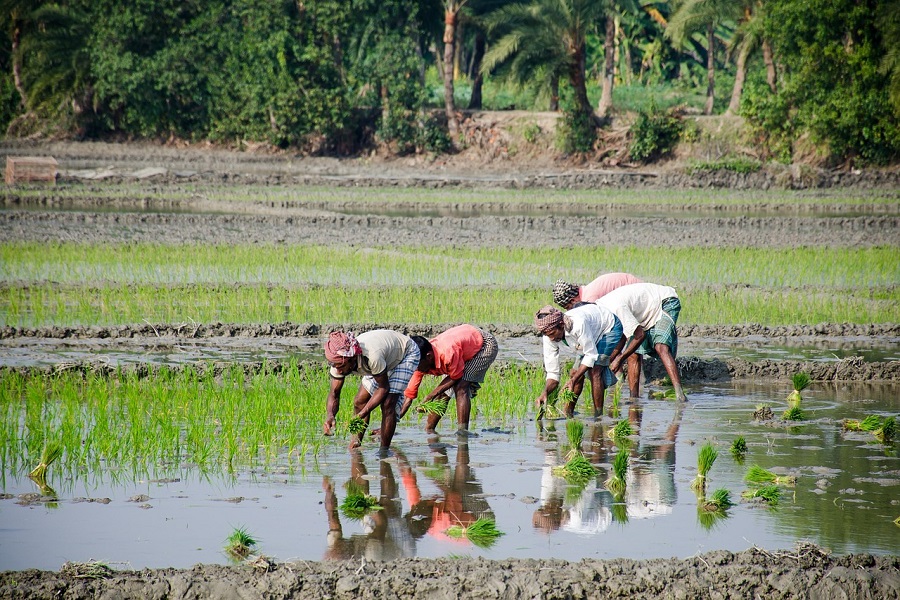
5. Transplanting of Paddy Seedlings
Transplanting is done in puddled fields with standing water.
- Age of seedlings: 20–25 days
- Spacing: 20 cm × 15 cm
- Number of seedlings per hill: 2–3
Proper spacing helps in better tillering and higher yield.
6. Water Management in Paddy Farming
Paddy requires continuous water supply, especially during early growth stages.
- Maintain 2–5 cm water level after transplanting
- Avoid excessive flooding
- Drain excess water before harvesting
Alternate Wetting and Drying (AWD) can be practiced to save water without reducing yield.
7. Fertilizer and Nutrient Management
Balanced nutrition is essential for high productivity.
General fertilizer recommendation per hectare:
- Nitrogen: Applied in split doses
- Phosphorus: Applied as basal dose
- Potassium: Applied in two splits
Use organic manures like farmyard manure or compost to improve soil health.
8. Weed Management in Paddy
Weeds compete with paddy plants for nutrients, water, and light.
Effective weed control methods:
- Manual weeding
- Mechanical weeders
- Timely use of recommended herbicides
Weeding should be done within 20–40 days after transplanting.
9. Pest and Disease Management
Common pests and diseases in paddy include stem borer, leaf folder, blast, and bacterial leaf blight.
Preventive measures:
- Use resistant varieties
- Maintain field sanitation
- Monitor crop regularly
Adopt integrated pest management practices for sustainable control.
10. Harvesting of Paddy Crop
Paddy crop becomes ready for harvesting when:
- Grains become hard
- Straw turns yellow
- Moisture content reduces
Harvesting is done using sickles or combine harvesters. Timely harvesting reduces grain loss.
11. Yield of Paddy in India
Average paddy yield ranges from 3 to 6 tonnes per hectare, depending on variety, management practices, and region.
Conclusion
Paddy cultivation in India requires careful planning, timely operations, and proper crop management. By following these step-by-step practices, farmers can achieve higher yield, better grain quality, and improved profitability.