Lemon Farming in India: Complete Cultivation, Yield & Profit Guide
If you are looking for a fruit crop that is easy to grow, holds strong demand throughout the year, and earns a decent income even on a small plot of land, lemon farming in India is one of the smartest choices you can make today. The humble lemon – sour, bright, and packed with vitamin C – is far more than just a kitchen ingredient. It is a serious cash crop that has quietly been fuelling the income of lakhs of farmers across states like Maharashtra, Andhra Pradesh, Rajasthan, Gujarat, and Karnataka for decades.
India is one of the largest lemon-producing countries in the world, and demand keeps rising. Lemons are used in everything from lemonades and pickles to pharmaceuticals, cosmetics, and food processing. Whether you are a small marginal farmer with two acres or an agri-entrepreneur planning an orchard-based business, understanding how to cultivate lemons properly – from soil preparation to harvesting and marketing – can transform your farming income in a meaningful way.
This guide has been written with practical, ground-level information in mind. You will find real data on costs, yields, profits, varieties, pest management, government schemes, and more – all tailored to Indian conditions. No fluff, no guesswork. Just honest, useful knowledge that you can take straight to your field.
📑 Table of Contents
- Quick Crop Overview
- About the Lemon Fruit
- Climate & Soil Requirements
- Best Lemon Varieties for Cultivation
- Propagation Methods
- Land Preparation for Lemon Orchard
- Planting Method
- Irrigation Management
- Month-wise Crop Calendar
- Manure & Fertilizer Schedule
- Intercropping & Weed Management
- Pruning & Training System
- Pests and Diseases
- Flowering and Fruiting Stage
- Harvesting of Lemons
- Yield of Lemon Crop
- Storage and Marketing
- Cost & Profit Analysis
- Advantages of Lemon Cultivation
- Government Schemes
- Organic Lemon Cultivation
- Common Mistakes
- FAQs
- Conclusion
🌱Quick Crop Overview
Before you dig your first pit, it helps to know the basics of the lemon plant – its scientific identity, what kind of environment it thrives in, and how long it takes to start earning. Here is a quick-reference table that covers everything at a glance.
| Parameter | Details |
|---|---|
| Scientific Name | Citrus limon (L.) |
| Botanical Family | Rutaceae |
| Origin | Northeast India / Southeast Asia (ancient hybridisation of citron and lime) |
| Climate Requirement | Subtropical to tropical; tolerates mild frost but not prolonged freezing |
| Ideal Temperature | 15–30 °C (optimum around 25 °C) |
| Soil Type | Well-drained loamy or sandy-loam; pH 6.0–7.0 |
| Planting Season | February–March (post-winter) or August–September (monsoon end) |
| Spacing | 8 m × 8 m (open orchard); 6 m × 6 m (high-density) |
| Harvesting Time | First harvest 2–3 years after planting; then 2–3 harvests/year |
| Yield (per acre) | 80–120 tonnes (mature orchard, irrigated) |
| Yield (per hectare) | 200–300 tonnes (mature, well-managed) |
| Economic Lifespan | 25–40 years with proper care |
🍋About the Lemon Fruit
Origin & History
The lemon as we know it today is believed to have originated in the regions of northeastern India and parts of Southeast Asia, possibly as a natural cross between a citron and a lime. Arab traders carried it westward along trade routes into Persia, Egypt, and eventually Europe by the 10th century. By the time the Portuguese arrived in India in the 16th century, lemons were already thriving across the subcontinent. Today, India ranks among the top five lemon-producing nations globally.
Nutritional Value
Lemons are a powerhouse of vitamin C – a single medium lemon provides roughly 30–50 mg, which is about 30–50% of the daily recommended intake for an adult. They also contain flavonoids, citric acid, potassium, and small amounts of vitamin A and B-complex vitamins. This nutritional profile makes them a staple in health food, beverages, and traditional medicine across India.
Economic & Industrial Importance
Beyond the kitchen, lemons feed a wide range of industries. Lemon juice is used in food preservation, cosmetics (skin-care creams and soaps), pharmaceuticals (as a base for certain medications), and the beverage industry. Lemon essential oil – extracted from the peel – is a high-value product used in aromatherapy and cleaning products. Processing lemons adds significant value, which means farmers who can move beyond fresh-fruit sales and get into value-added products often earn considerably more per kilogram.
🍋 Did You Know? India produces over 2.5 million tonnes of lemons and limes annually, making it one of the top citrus-producing nations in the world. Maharashtra, Andhra Pradesh, and Gujarat lead production volumes.
🌤️Climate & Soil Requirements
Suitable Climate
Lemons are essentially subtropical plants – they grow best where winters are mild and summers are warm but not scorching. A temperature range of 15–30 °C is ideal. They can handle short spells of cool weather down to about 5 °C, but sustained frost below 2–3 °C will damage flower buds, young fruit, and even woody branches. This makes places like northern Rajasthan or high-altitude regions risky without some frost protection.
Lemons need 6–8 hours of direct sunlight per day to flower and fruit well. Annual rainfall of 600–1,200 mm suits them, though they do very well under supplementary irrigation even in drier zones. Heavy, waterlogged conditions during monsoon are something to avoid – a well-drained site is non-negotiable.
Soil Requirements
The ideal soil for lemon is loamy or sandy-loam, which drains well and lets air circulate around the roots. A pH range of 6.0 to 7.0 is best; lemons are moderately sensitive to very acidic or very alkaline soils. If your land is heavy clay, you can improve it by mixing in generous amounts of sand and farm yard manure (FYM) before planting.
🌱 Soil Preparation Tip: Before digging pits, get a simple soil test done through your local Krishi Seva Kendra (KSK) or state agricultural university. Knowing the exact pH and nutrient levels saves you from guessing and wasting money on the wrong fertiliser mix.
Best Regions in India for Lemon Farming
| Region Type | Suitable States / Areas | Notes |
|---|---|---|
| Plains (Irrigated) | Maharashtra, Gujarat, Rajasthan, Madhya Pradesh | Highest yield potential with drip irrigation |
| Semi-Arid | Andhra Pradesh, Telangana, Karnataka (dry zones) | Good for acid lemons; needs efficient irrigation |
| Coastal | Tamil Nadu, Kerala, Karnataka coast | Humid; watch for fungal diseases |
| Hill Slopes (500–1000 m) | Parts of Himachal Pradesh, Uttarakhand, NE India | Natural drainage; cooler nights reduce pest pressure |
🏷️Best Lemon Varieties for Cultivation in India
Picking the right variety is one of the single most important decisions you will make. A variety that performs brilliantly in Maharashtra may struggle in the humid conditions of Kerala. Here is a breakdown of the top options, sorted by type.
Indian / Traditional Varieties
| Variety | Key Traits | Yield (tonnes/ha) | Best For |
|---|---|---|---|
| Nimbu (Desi Lemon) | Hardy, acidic juice, thorny | 100–150 | General use; rainfed areas |
| Kagzi Nimbu | Thin skin, high juice content, year-round bearing | 120–180 | Fresh market; processing |
| Galgal | Sour, thick rind, cold-hardy | 80–120 | Hilly regions; pickle industry |
Improved / Hybrid Varieties
| Variety | Key Traits | Yield (tonnes/ha) | Best For |
|---|---|---|---|
| Eureka | Nearly seedless, consistent fruiting, mild acidity | 150–200 | Fresh & processed market |
| Lisbon | High acid, good shelf life, prolific | 140–190 | Export; cold-storage supply chain |
| Meyer Lemon | Sweet-sour balance, fragrant, semi-dwarf | 100–140 | Home gardens; niche fresh market |
| Volkamer Lemon | Very prolific, tolerates salt stress, fast growing | 160–220 | Rootstock use; saline-prone areas |
Government-Recommended Varieties
State Horticulture Departments and the National Horticulture Mission (NHM) regularly publish lists of recommended varieties for each agro-climatic zone. Always cross-check with your local KVK (Krishi Vigyan Kendra) before buying saplings, as they will know which varieties perform best in your specific district.
💡 Quick Tip: In Maharashtra and Rajasthan, Kagzi Nimbu and Eureka are among the top picks. In cooler, hilly regions, Galgal is a safer choice. For saline soils, consider grafting onto a Volkamer rootstock.
🌿Propagation Methods in Lemon Farming
Growing a lemon tree from seed is possible, but it is almost never recommended for commercial farming. Seed-grown trees take 6–8 years to bear fruit, produce inconsistent quality, and often carry disease. Grafting is the preferred method across India for orchard-scale lemon cultivation.
Grafting
The most common grafting technique used is the T-grafting (budding) method, sometimes called shield grafting. A healthy bud from a desired variety (the scion) is inserted into a cut on a one-year-old rootstock shoot. The rootstock determines how well the tree handles soil, water, and climate stress – the scion determines the fruit type and quality.
Rootstock Selection
| Rootstock | Why Use It | Best Suited For |
|---|---|---|
| Rangpur Lime | Drought-tolerant, vigorous, disease-resistant | Dry plains of Rajasthan, Maharashtra |
| Volkamer Lemon | Salt-tolerant, fast growth | Coastal or saline soils |
| Trifoliate Orange (Poncirus) | Cold-hardy, dwarfing, long life | Cooler zones; high-density orchards |
| Cleopatra Mandarin | Balanced growth, moderate drought tolerance | General subtropical zones |
Nursery Preparation & Saplings Needed
A well-managed nursery can produce grafted saplings in 6–9 months. For a standard orchard spacing of 8 m × 8 m, you will need roughly 55–65 plants per acre (or around 135–160 per hectare). Always buy saplings that are at least 6–8 months old and show healthy leaf growth. Buying from a certified nursery or a state government nursery reduces the risk of buying diseased stock.
🪚Land Preparation for Lemon Orchard
Good land preparation is an investment that pays off for the entire life of your orchard – sometimes 25–40 years. Cutting corners here means problems down the line with stunted growth, poor drainage, and higher pest pressure.
Steps to Follow
- Ploughing: Plough the land 2–3 times, cross-ploughing to break up compacted soil. If the soil is heavy clay, add sand (about 30–40% by volume) and mix it in during the final ploughing pass.
- Levelling: Level the field to avoid waterlogging in low spots. A slight slope (1–2%) is actually helpful for natural drainage.
- Pit Digging: Dig pits of 60 cm × 60 cm × 60 cm (or 75 cm cube in heavier soils). The pit should be spaced according to your chosen layout – typically 8 m apart in rows, with 8 m between rows.
- FYM & Compost Mixing: Fill each pit with a mix of 50 kg FYM + 50 kg compost + top soil. This enriches the root zone right from the start and improves water retention.
- Soil Treatment: If your area has a history of soil-borne diseases (like Phytophthora), mix a small quantity of copper sulphate (about 50 g per pit) into the filling mix. This is a preventive step – not always necessary, but cheap insurance.
🌳Planting Method of Lemon
When to Plant
The two best windows for planting lemon saplings in India are February–March (just after winter, when temperatures start to rise) and August–September (end of monsoon, when soil moisture is naturally high). Planting during peak summer heat (April–June) stresses young saplings and leads to poor establishment.
How to Plant
- Place the sapling gently into the prepared pit so that the grafting point sits above the soil line by 3–4 cm. This prevents the rootstock from sprouting its own shoots underground.
- Fill the pit back with the FYM-compost-soil mix, pressing lightly to remove air gaps.
- Water thoroughly immediately after planting – about 10–15 litres per plant.
- Tie the sapling loosely to a short stake (60–70 cm) to protect it from wind until it establishes roots (usually 2–3 months).
- Mulching: Lay 8–10 cm of dry grass, straw, or leaves around the base of each plant (keeping a 10 cm gap from the trunk). This keeps soil moisture, reduces weeds, and prevents soil crust formation.
📏 Spacing Guide: Open orchard → 8 m × 8 m (about 55–65 plants/acre). High-density planting → 5 m × 5 m (about 160 plants/acre), but this requires dwarfing rootstocks and regular pruning.
💧Irrigation in Lemon Farming
Water is one of the most important factors in a lemon orchard’s health and productivity, but more water is not always better. Lemons dislike waterlogged roots. The goal is to keep the soil consistently moist – not soggy.
Water Requirement
A mature lemon tree needs roughly 450–600 litres of water per week during the active growing season (March–October), depending on temperature and soil type. In cooler months, this drops to 200–300 litres per week.
Critical Irrigation Stages
- Flowering stage: Irregular watering here can cause flower drop. Keep irrigation consistent – every 3–4 days.
- Fruit set & development: This is when the tree demands the most water. Reducing water now leads directly to smaller, lower-quality fruit.
- Post-harvest period: Ease off irrigation slightly to encourage the tree to rest and prepare for the next flush.
Drip Irrigation – The Smart Choice
Drip irrigation delivers water directly to the root zone, cutting water use by 40–60% compared to flood or furrow irrigation. It also allows fertigation (delivering liquid fertiliser through the drip lines), which is extremely efficient. The initial setup cost is moderate – roughly ₹25,000–₹40,000 per acre – but government subsidies under NHM and PMKSY can cover 50–75% of this cost. Drip irrigation is one of the best investments a lemon farmer can make.
⚠️ Water Stress Warning: Prolonged water stress (more than 1 week without irrigation in summer) causes leaf curl, fruit drop, and can permanently reduce next season’s yield. Never skip irrigation during March–June unless your trees are fully rainfed-adapted varieties.
📅Month-wise Crop Calendar
This calendar is a general guide for irrigated lemon orchards in the plains of India. Adjust timings based on your local weather – early summers or late monsoons can shift things by 2–3 weeks.
| Month | Key Operations |
|---|---|
| January | Light pruning of dead/diseased branches; apply mulch; check irrigation system |
| February | First fertiliser dose (NPK); new sapling planting (if expanding); soil preparation for new pits |
| March | Main flowering flush begins; increase irrigation; spray micronutrient foliar (Zn, B) |
| April | Monitor for aphids and mealybugs; fruit set underway; maintain regular watering |
| May | Peak heat – shade young trees if needed; second fertiliser dose; watch for spider mites |
| June | Monsoon arrives; reduce irrigation; first harvest of early-maturing fruit; weed management |
| July | Heavy rain period – check drainage; apply FYM around base; watch for fungal diseases |
| August | Second flowering flush in some varieties; continue weed control; pest surveillance |
| September | End of monsoon; resume regular irrigation; third fertiliser dose; new sapling planting (if planned) |
| October | Fruit development – critical irrigation period; begin marketing planning |
| November | Main harvest season; grade & sort fruit; cold storage arrangements if needed |
| December | Post-harvest pruning; orchard clean-up; apply compost; rest the tree |
🧪Manure & Fertiliser Schedule
Lemons are moderate to heavy feeders – especially nitrogen (N), which drives leafy growth and supports fruiting. However, too much nitrogen without balanced phosphorus (P) and potassium (K) leads to lush leaves but poor fruit quality. Balance is everything.
Year-wise NPK Schedule (per tree)
| Tree Age | Nitrogen (g) | Phosphorus (g) | Potassium (g) | FYM (kg) | When to Apply |
|---|---|---|---|---|---|
| Year 1 (nursery/establishment) | 50 | 25 | 25 | 5 | Feb & Sep (split dose) |
| Year 2–3 | 100 | 50 | 75 | 10 | Feb, Jun, Sep (3 splits) |
| Year 4–6 (pre-bearing) | 150 | 75 | 100 | 15 | Feb, Jun, Sep |
| Year 7+ (bearing) | 200–250 | 100–120 | 150–180 | 20–25 | Feb, Jun, Sep |
Micronutrients
Lemons are particularly sensitive to deficiencies in Zinc (Zn) and Boron (B). A foliar spray of zinc sulphate (0.5%) and boric acid (0.1%) once during flowering and once during fruit development makes a noticeable difference in fruit size and quality.
Fertigation
If you have drip irrigation set up, you can deliver water-soluble NPK directly through the lines. This is called fertigation and it reduces fertiliser wastage by up to 40%. Soluble NPK formulations (like 19:19:19 or 20:20:20) are widely available in India from major agri-input brands.
🌿 Organic Alternative: Replace or supplement chemical NPK with vermicompost (5–10 kg/tree/year), Azospirillum (nitrogen-fixing biofertiliser), and mycorrhiza inoculant at planting time. These options are discussed in more detail in the Organic Cultivation section below.
🌾Intercropping & Weed Management
Intercropping in Young Orchards
In the first 3–4 years, lemon trees are still small and there is plenty of sunlight and space between rows. This is the perfect time to grow intercrop species that earn you short-term income while the orchard matures. Good intercrop choices include:
- Vegetables: Tomato, chilli, okra, and beans do well between lemon rows in the first 2 years.
- Legumes: Groundnut, moong, or arhar (pigeon pea) fix nitrogen in the soil and reduce the need for chemical N-fertiliser.
- Cover crops: Grass-legume mixes (like Napier grass + clover) between rows protect the soil from erosion, improve organic matter, and suppress weeds.
Once the orchard canopy closes (usually after 5–6 years), intercropping becomes difficult due to shade. At that point, focus on ground cover and weed suppression instead.
Weed Management
Weeds compete with lemon trees for water, nutrients, and light – especially in the first few years when the tree root system is still developing. Here are the main approaches:
- Manual weeding: Hand-weed around each tree every 4–6 weeks during the monsoon season. Keep a 1-metre radius around each trunk weed-free.
- Mulching: A thick layer (10–15 cm) of organic mulch around the tree base suppresses most weeds and reduces soil evaporation. Straw, dry grass, or fallen leaves work well.
- Herbicides: If weeds are severe, a single pre-emergent herbicide application (like glyphosate at the recommended dose) in June before heavy weed growth can save significant labour time. Always follow label directions and keep herbicide away from tree trunks.
✂️Pruning & Training System
Pruning is not just about keeping the tree tidy – it directly affects how much fruit your orchard produces and how easy it is to harvest. A well-pruned lemon tree lets more sunlight into the inner canopy, reduces disease risk, and encourages strong new growth flushes.
Training Method
The most common training system for lemons in India is the Open Centre (Vase) system. In this system, you select 3–4 main scaffold branches from the trunk and remove the central leader (the top-most upward shoot). This creates a bowl-shaped canopy that is open in the middle – maximising sunlight penetration and air circulation.
When to Prune
- Light pruning: Done in January–February, just before the main spring flush. Remove dead twigs, crossing branches, and any water sprouts (vigorous vertical shoots that rarely fruit).
- Moderate pruning: Done after the main harvest (November–December). Remove fruited twigs and shape the canopy to encourage the next season’s growth.
Benefits of Pruning
Regular pruning can increase fruit yield by 15–25% compared to unpruned trees, and it makes harvesting faster and safer. It also makes it easier to spot and treat pests and diseases early.
🐛Pests and Diseases in Lemon Farming
Lemons attract a fair number of pests and diseases, but most of them can be controlled with early detection and timely action. The key is regular field scouting – walk your orchard every week and look at leaves, stems, and fruit closely.
Major Pests
Major Diseases
🛡️ General Prevention Rule: Healthy trees resist diseases better. Keep your orchard well-fertilised, properly irrigated, and pruned. Clean your pruning tools with alcohol between cuts to avoid spreading pathogens from one tree to another.
🌸Flowering and Fruiting Stage
Lemons are unusual among citrus fruits in that they can flower and fruit multiple times a year – typically 2–3 flushes, depending on the variety and climate. The main flushes in India occur around February–March (spring flush) and August–September (monsoon flush). Some varieties like Kagzi Nimbu are nearly continuous bloomers.
Pollination
Lemons are largely self-pollinating, meaning a single tree can set fruit without another variety nearby. However, cross-pollination by bees and other insects significantly increases fruit set and size. If you notice heavy flowering but poor fruit set, consider placing a bee hive or two near your orchard – it is a simple and cost-effective boost.
Fruit Set & Maturity
After successful pollination, the tiny fruit begins to develop. It takes roughly 3–5 months from flowering to harvest-ready maturity, depending on the variety and weather. During this time, consistent irrigation and nutrient supply are critical. Any major stress during fruit development directly reduces the final size and juice content of your harvest.
🧺Harvesting of Lemons
When Is the Fruit Ready?
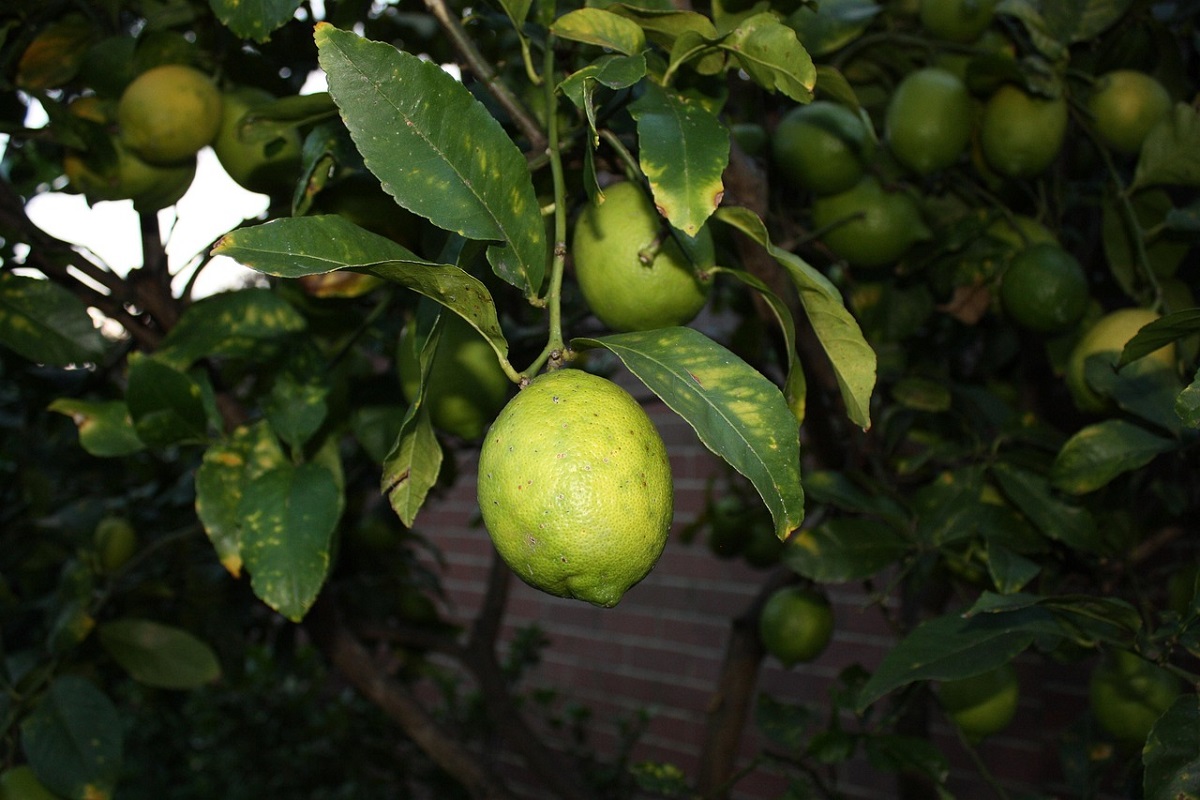
Lemons are typically harvested when they are firm to the touch, bright yellow in colour, and slightly heavy for their size. A mature lemon should have a faint fragrance when you scratch the skin gently. Avoid picking green or very pale-yellow fruit – it may not have developed full juice content yet.
Harvesting Method
Hand-picking is the standard method for lemon orchards in India. Use clean, sharp pruning shears or a simple harvesting knife. Cut the fruit with 1–2 cm of the stem still attached. This small stem acts as a natural seal and reduces moisture loss during storage and transport. Avoid twisting or yanking fruit off – this damages the branch and invites disease entry points.
Post-Harvest Handling
- Place harvested fruit in clean, dry crates lined with paper or soft cloth. Avoid stacking more than 3–4 layers to prevent crushing.
- Shift fruit to a shaded, well-ventilated area within 2–3 hours of picking.
- Sort and grade the fruit by size and quality immediately – this helps in getting better prices at the market.
- Wash fruit gently with clean water only if it is heading to a cold store or processing unit. Fresh market fruit is usually sold unwashed.
📦 Loss Prevention Tip: Lemon is a relatively tough fruit compared to mangoes or litchis, but it still loses moisture and firmness quickly in heat. If you are transporting more than 50 km, try to do it at night or early morning. Keeping crates under shade or in a cool vehicle significantly reduces post-harvest loss.
📊Yield of Lemon Crop
Yield varies enormously based on variety, tree age, irrigation, and management practices. Here is a realistic breakdown:
| Parameter | Low (Rainfed / Young) | Average (Irrigated) | High (Well-Managed) |
|---|---|---|---|
| Yield per plant (mature) | 100–150 kg | 200–300 kg | 350–500 kg |
| Yield per acre | 40–60 tonnes | 80–120 tonnes | 140–180 tonnes |
| Yield per hectare | 100–150 tonnes | 200–300 tonnes | 350–450 tonnes |
Factors That Affect Yield
- Irrigation: Irrigated orchards yield 2–3× more than rainfed ones.
- Variety: Improved varieties like Eureka and Lisbon yield significantly more than desi types under the same conditions.
- Pruning: Regular pruning opens up the canopy and can lift yield by 15–25%.
- Pest and Disease Management: Even a single season of untreated citrus canker or fruit fly can cut your usable yield by 30–50%.
- Tree Age: Trees reach peak bearing between 8–15 years of age. Young and very old trees yield less.
🏪Storage and Marketing
Storage Methods
Fresh lemons can be stored at room temperature for 1–2 weeks without significant quality loss, provided they are kept in a cool, shaded, well-ventilated space. For longer storage, cold storage at 3–5 °C with 85–90% relative humidity can extend shelf life to 4–8 weeks. Some large orchards in Maharashtra and Gujarat have access to nearby commercial cold stores – check with your local agricultural produce market committee (APMC) for availability.
Marketing Channels
| Channel | Price Range (₹/kg) | Notes |
|---|---|---|
| Local Mandi (APMC market) | ₹15–30 | Bulk sales; commission charged by agents |
| Direct to Retail Shops | ₹25–45 | Requires grading & transport; better margins |
| Contract with Processor | ₹12–22 | Stable, guaranteed volume; lower price |
| Online / E-Agri Platforms | ₹30–50 | Growing channel; check e-NAM and state platforms |
| Export | ₹40–80+ | Quality must meet international standards; needs certification |
Value-Added Products
If you can process lemons on-farm or through a small unit, the value jumps significantly. Popular value-added products include lemon pickle, lemon juice concentrate, lemon essential oil, lemon soap, and dried lemon peel (used in teas and spice blends). Even simple lemon juice extraction and bottling – done cleanly and with proper labelling – can fetch 2–3× the price of raw fruit.
💰Cost of Lemon Farming & Profit Margin
The numbers below are based on realistic data from irrigated orchards in states like Maharashtra and Rajasthan. Actual figures will vary based on your location, labour costs, and market conditions in the year of sale.
Cost & Income Breakdown (Per Acre – Mature Orchard)
| Item | Cost (₹) |
|---|---|
| One-Time / Initial Investment | |
| Sapling purchase (60 plants) | ₹18,000–₹30,000 |
| Land preparation & pit digging | ₹12,000–₹18,000 |
| Drip irrigation setup | ₹25,000–₹40,000 |
| Fencing / boundary wall | ₹15,000–₹25,000 |
| Total Initial Investment | ₹70,000–₹1,13,000 |
| Annual Maintenance Cost (Bearing Year) | |
| Fertiliser (NPK + FYM + micronutrients) | ₹18,000–₹25,000 |
| Irrigation (water + electricity) | ₹8,000–₹15,000 |
| Labour (pruning, harvesting, weeding) | ₹20,000–₹35,000 |
| Pest & disease management | ₹5,000–₹10,000 |
| Transport & marketing | ₹6,000–₹12,000 |
| Total Annual Cost | ₹57,000–₹97,000 |
| Expected Yield & Income | |
| Average yield (per acre) | 80–120 tonnes |
| Average market price | ₹18–30 per kg |
| Gross Income | ₹14,40,000–₹36,00,000 |
| Net Profit (after annual costs) | ₹12,43,000–₹35,03,000 |
Region-wise Profit Comparison
| State | Avg. Yield (tonnes/acre) | Avg. Price (₹/kg) | Approx. Net Profit/Acre |
|---|---|---|---|
| Maharashtra | 90–110 | ₹18–25 | ₹14–22 lakh |
| Rajasthan | 80–100 | ₹20–30 | ₹15–25 lakh |
| Gujarat | 85–105 | ₹17–24 | ₹13–20 lakh |
| Andhra Pradesh | 95–120 | ₹16–22 | ₹14–23 lakh |
| Karnataka | 80–100 | ₹19–28 | ₹13–22 lakh |
📈 ROI Timeline: The initial investment is typically recovered within the first or second year of full bearing (year 3–4 after planting). After that, annual net profits remain high for the 25–40 year productive life of the orchard – making lemon farming one of the most attractive long-term investments in Indian horticulture.
⭐Advantages of Lemon Cultivation
- Year-round demand: Unlike seasonal fruits, lemons are consumed throughout the year – in drinks, food, and industry. This means you are not dependent on a single harvest window to sell your crop.
- High export value: India exports a significant quantity of lemons to Middle Eastern and Southeast Asian markets. If quality and certification requirements are met, export is a lucrative option.
- Long economic lifespan: A well-maintained lemon tree produces for 25–40 years. Your initial investment pays dividends for decades.
- Government support: Multiple central and state schemes provide subsidies on saplings, drip irrigation, cold storage, and training. This significantly reduces out-of-pocket costs.
- Processing potential: Lemons are not just a fresh-market crop. Juice, essential oil, pickle, and other value-added products open up multiple income streams from the same orchard.
- Relatively low maintenance: Compared to some other fruit crops like mango or apple, lemons require moderate inputs and are forgiving of minor management lapses once established.
🏛️Government Schemes for Lemon Farming
The Indian government has rolled out several programmes to support fruit growers – especially small and marginal farmers. Here are the key schemes worth looking into:
| Scheme | What It Offers | How to Apply |
|---|---|---|
| National Horticulture Mission (NHM) | Subsidy on plantation establishment, drip irrigation, cold storage, and market linkage | Apply through your State Horticulture Department or District Agriculture Officer |
| MIDH (Mission Integrated Development of Horticulture) | Covers nursery development, post-harvest infrastructure, and skill training | Through state government portal or KVK |
| PM Kisan Samman Nidhi | Direct income support (₹6,000/year) to eligible farmers | Register at pmkisan.gov.in |
| PMKSY (Pradhan Mantri Krishi Sinchayee Yojana) | Subsidy on drip and sprinkler irrigation systems (up to 75% for SC/ST/small farmers) | Apply through District Irrigation Officer |
| State Nursery Subsidies | Many states subsidise certified nursery saplings by 50–75% | Contact your nearest KVK or state horticulture office |
💡 Tip: Always keep your land records, Aadhaar, bank account details, and a photograph handy when applying. Delays in applications are usually due to missing documents, not lack of eligibility.
🌿Organic Lemon Cultivation
Organic lemons fetch a 20–40% premium in the market – and the demand for organic citrus is growing fast across India. Switching to organic farming is not overnight, but with the right inputs and a little patience, it is entirely achievable.
Key Organic Inputs
- Compost & Vermicompost: Replace chemical NPK with 10–15 kg of well-made compost or 5–8 kg of vermicompost per tree per year. These supply nutrients slowly and improve soil biology.
- Biofertilisers: Use Azospirillum (for nitrogen fixation) and Phosphorus Solubilising Bacteria (PSB) at planting time. These micro-organisms help the roots absorb nutrients more efficiently.
- Mycorrhiza: Mycorrhizal inoculant applied at the nursery stage dramatically improves root development and water/nutrient uptake. It is one of the easiest and most effective organic inputs available.
Natural Pest Control
- Neem oil spray (2–3%): Controls aphids, leafminers, and mealybugs without chemical residue.
- Beauveria bassiana: A naturally occurring fungus that infects and kills insect pests. Available as a powder or spray from agri-input companies.
- Companion planting: Growing marigold or basil near lemon trees can deter some pest species naturally.
- Pheromone traps: Highly effective for fruit fly management – no chemicals involved.
Organic Certification
To legally sell your lemons as “organic” in India, you need a certificate from one of the government-approved certifying agencies (like FSSAI-registered bodies). The process takes about 3 years of documented organic management. Apply through the National Organic Certification Portal (NPOP) or contact your state agriculture department for guidance.
⚠️Common Mistakes in Lemon Farming
Knowing what not to do is just as valuable as knowing what to do. Here are the mistakes that cost Indian lemon farmers the most money and yield, year after year:
🌍 Soil Mistakes
Planting in heavy clay or waterlogged land without improving drainage. Not getting a soil test done first. Ignoring pH – lemons in highly acidic or alkaline soil struggle to absorb nutrients.
📐 Spacing Errors
Planting trees too close together (less than 6 m apart) in an attempt to fit more trees per acre. This leads to overlapping canopies, poor light, disease buildup, and reduced yield within 3–4 years.
💧 Over-Irrigation
Watering daily or flooding the base of the tree. Lemons need moist soil, not wet soil. Waterlogging is one of the top causes of root rot and tree death in Indian orchards.
✂️ Poor Pruning
Either never pruning at all, or pruning too aggressively at the wrong time. Both reduce fruit production. Use clean, sharp tools and prune in the right season.
🐛 Ignoring Pest Signs
Waiting until an infestation is severe before acting. By then, damage is done and control is expensive. Weekly field scouting catches problems early when they are cheap to fix.
📦 Poor Post-Harvest Handling
Leaving harvested fruit in the sun, piling it carelessly, or transporting in hot, unventilated vehicles. Small handling mistakes can cause 20–30% loss before the fruit even reaches the market.
❓Frequently Asked Questions
🎯Conclusion
Lemon farming in India is not a gamble – it is a calculated, long-term investment that rewards patience, good management, and a willingness to learn. The demand for lemons is steady and growing, the profit margins are healthy, and the Indian government is actively supporting fruit growers through subsidies and training programmes.
Whether you are a marginal farmer looking to add a second income source, or an agri-entrepreneur planning a dedicated orchard business, the information in this guide gives you a solid foundation to start with. From choosing the right variety and preparing your land, to managing pests and marketing your harvest – every step has been covered here with practical, India-specific data.
The most important advice? Start small, learn fast, and scale up. Begin with 1–2 acres, get your management practices right, and expand once you see consistent results. Talk to your local KVK, connect with other lemon growers in your area, and do not hesitate to seek training or consultation. The knowledge and support systems are out there – you just need to take the first step.
🍋 Ready to Start Your Lemon Orchard?
Get personalised guidance on varieties, nursery sourcing, and government schemes in your region. Connect with a trained agricultural consultant or attend a free KVK workshop near you.
Disclaimer: The yield figures, cost estimates, and profit margins mentioned in this article are approximate and based on general data available for irrigated lemon orchards across major Indian states. Actual results may vary significantly based on your location, soil quality, climate, management practices, local labour and input costs, and prevailing market prices at the time of sale. This guide is meant for informational purposes only and should not be taken as a guaranteed financial projection. Always consult with local agricultural experts, your Krishi Vigyan Kendra (KVK), or a certified agricultural consultant before making investment decisions.