Grapes Farming in India: Complete Cultivation, Yield & Profit Guide
Grapes, often called the “Queen of Fruits,” are one of the most commercially significant and globally traded fruits. In India, grape farming is not just a traditional practice but a highly sophisticated, technology-driven agri-business that brings substantial income to farmers, especially in states like Maharashtra, Karnataka, and Tamil Nadu. With a perfect blend of favorable climate, improved varieties, and advanced cultivation techniques, India has emerged as a leading producer and exporter of table grapes in the world.
The importance of grape farming in India extends beyond fresh fruit consumption. It is the backbone of a thriving value-added industry, including raisins (dried grapes), wine, juice, and jam. For an Indian farmer, investing in a grape orchard represents a long-term commitment with the potential for high returns. The crop’s adaptability to various training systems, responsiveness to good management, and consistent market demand make it an attractive venture for progressive farmers and agri-entrepreneurs alike.
This comprehensive guide is written specifically for you-the Indian farmer. Whether you are a smallholder looking to diversify or an entrepreneur planning a large-scale vineyard, this post will walk you through every single step: from selecting the right variety and preparing the land to managing pests, harvesting, and finally calculating your profit. We’ll use simple, practical language, share field-level tips, and provide realistic data to help you make informed decisions and avoid common pitfalls. Let’s delve into the fruitful world of grape cultivation.
📑 Table of Contents
- Quick Crop Overview
- About Grapes Fruit
- Climate & Soil Requirement
- Best Grapes Varieties for Cultivation
- Propagation Methods in Grapes
- Land Preparation for Grapes Orchard
- Planting Method of Grapes
- Irrigation in Grapes Farming
- Month-wise Crop Calendar
- Manure & Fertilizer Schedule
- Intercropping & Weed Management
- Pruning & Training System
- Pests and Diseases in Grapes Farming
- Flowering and Fruiting Stage
- Harvesting of Grapes
- Yield of Grapes Crop
- Storage and Marketing
- Cost of Grapes Farming & Profit Margin
- Advantages of Grapes Cultivation
- Government Schemes for Grapes Farming
- Organic Grapes Cultivation
- Common Mistakes in Grapes Farming
- FAQs – Frequently Asked Questions
- Conclusion
Quick Crop Overview
Here is a quick reference table with all the essential details about grape farming.
| Parameter | Details |
|---|---|
| Scientific Name | Vitis vinifera (Common European Grape) |
| Botanical Family | Vitaceae |
| Origin | Mediterranean region, Central Asia |
| Climate Requirement | Warm, dry summer & mild winter; Humid climates require extra care. |
| Ideal Temperature | 25°C – 40°C (Growth), 10°C – 15°C (Dormancy) |
| Soil Type & pH | Well-drained sandy loam to clay loam; pH 6.5 – 7.5 |
| Planting Season | Feb-March (in most regions), also June-July in some areas. |
| Spacing | Common: 6 ft x 10 ft or 8 ft x 12 ft (Varies with training system) |
| Harvesting Time | Feb-April (For summer crop in peninsular India) |
| Yield Per Acre (Mature Vineyard) | 15 – 25 Tons (Varies widely with variety and management) |
| Yield Per Hectare | 35 – 60 Tons |
| Economic Lifespan | 15 – 25 Years (With good management) |
About Grapes Fruit
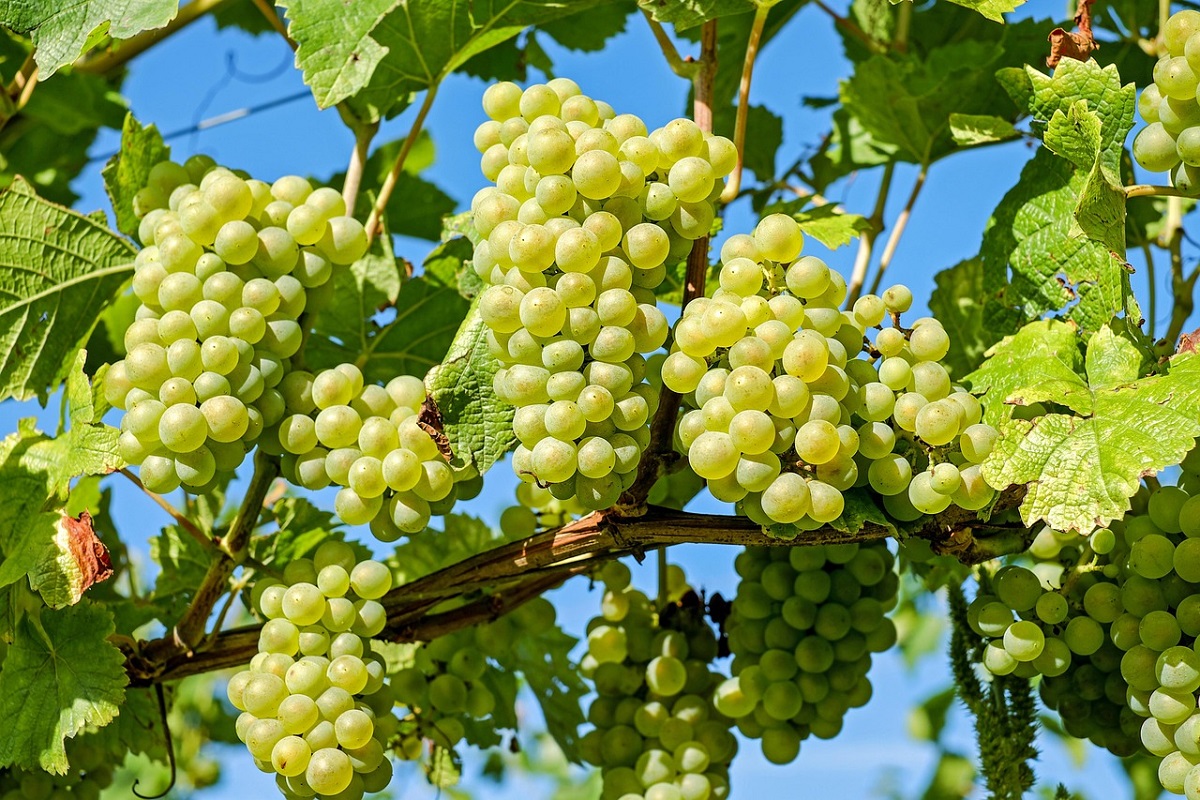
Grapes are botanically classified as true berries that grow in clusters on perennial woody vines. The fruit is a powerhouse of nutrition, packed with natural sugars (glucose and fructose), vitamins (C, K, and B-complex), minerals (potassium, copper, and iron), and potent antioxidants like resveratrol, which is linked to numerous health benefits.
The history of grape cultivation in India dates back to the medieval period, but it was the introduction of improved varieties from Europe and America in the 20th century that transformed it into a modern horticultural enterprise. Today, India is renowned for its seedless table grape varieties that dominate export markets.
Economically, grapes are immensely important. They are consumed fresh (table grapes), dried as raisins, and processed into products like wine, juice, vinegar, and jam. The fruit’s versatility ensures multiple market avenues, reducing the risk for growers. For the Indian farmer, this means the potential to tap into local mandis, high-end domestic retail, and lucrative export markets, particularly to Europe and the Middle East.
Climate & Soil Requirement
🌤️ Climate for Grapes Cultivation
Grapes thrive in a Mediterranean-type climate, long, warm to hot dry summers and mild winters. In India, this climate is ideally found in the semi-arid regions of peninsular India.
- Temperature: The ideal temperature for active growth is between 25°C and 40°C. A distinct dormant period is triggered by cooler winter temperatures (around 10°C to 15°C), which is crucial for bud break and uniform flowering. Extreme heat above 42°C can cause berry sunburn.
- Rainfall: Annual rainfall of 50-75 cm is sufficient. However, rain during flowering and fruit ripening is detrimental as it promotes disease and cracking. This is why regions with dry summers and controlled irrigation are preferred.
- Frost Sensitivity: Young shoots and flowers are highly sensitive to frost. Areas prone to late winter frosts are not suitable.
- Sunlight: Full, uninterrupted sunlight is essential for high sugar content, color development, and overall vine health.
- Chill Hour Requirement: Unlike temperate fruits, most commercial grape varieties in India have a low chilling requirement, which is easily met in our winters.
India Context – Best States & Regions:
- Maharashtra: The undisputed leader, contributing over 80% of India’s production. Nashik is famously called the “Wine Capital of India.” Other major districts: Sangli, Solapur, Pune, Ahmednagar.
- Karnataka: Bangalore Rural, Kolar, Bijapur, and Bagalkot districts are major producers.
- Tamil Nadu: Theni, Coimbatore, and Madurai districts.
- Andhra Pradesh & Telangana: Rangareddy, Anantapur, and Medak districts.
- North India: In parts of Punjab, Haryana, and Uttar Pradesh, grape cultivation is practiced on a smaller scale, often with Pergola training systems.
🌱 Soil Requirement
The right soil ensures a healthy root system and a long-lived vineyard.
- Best Soil Type: Well-drained soil is non-negotiable. Sandy loam to clay loam soils are ideal. Heavy clay soils can cause waterlogging and root rot, while very sandy soils require frequent irrigation and more fertilizer.
- Ideal pH: 6.5 to 7.5 (Neutral to slightly alkaline). Grapes are moderately tolerant to salinity and alkalinity.
- Drainage: Excellent subsurface drainage is critical. If natural drainage is poor, raised beds must be prepared.
- Soil Preparation Tip: Conduct a soil test before planting. It will guide you on pH correction (using gypsum for alkaline soils or lime for acidic soils) and baseline nutrient levels.
Best Grapes Varieties for Cultivation
Choosing the right variety is the first and most critical step for success. Selection should be based on your target market (table, raisin, or wine), local climate, and disease resistance.
Indian Varieties
- Bangalore Blue (Isabella): Unique foxed flavor, blue-black berries. Popular for juice and table use in South India. Tolerant to high humidity.
- Bhokri: Grown in Maharashtra, used for table purpose and making Raisins.
Improved / Hybrid Varieties (Most Popular for Table & Export)
- Thompson Seedless (Sultana): The king of Indian grapes. Seedless, light green, high TSS (Total Soluble Solids). Used for table, raisin, and wine. Requires skilled management (gibberellic acid treatment).
- Tas-A-Ganesh: A mutant of Thompson Seedless, produces larger berries. Popular in Maharashtra.
- Sonaka: Another seedless, elongated berry variety. Excellent for export.
- Sharad Seedless: Deep black, seedless grape. Good shelf life and disease resistance.
- Flame Seedless: Early-maturing, red seedless grape with a crisp texture. Gaining popularity.
Imported & Special Purpose Varieties
- Red Globe: Very large, red, seeded berry. High demand in export markets like China. Requires precise pruning.
- Crimson Seedless: Late-season, red seedless variety with good storage life.
- Wine Varieties: Cabernet Sauvignon, Shiraz, Chenin Blanc, Sauvignon Blanc – Grown specifically in designated wine grape regions like Nashik.
Region-wise Suitability Table
| Region | Recommended Varieties | Primary Use |
|---|---|---|
| Maharashtra (Nashik, Sangli) | Thompson Seedless, Tas-A-Ganesh, Sonaka, Sharad Seedless | Table, Export, Raisins |
| Karnataka (Bangalore, Kolar) | Bangalore Blue, Thompson Seedless | Table, Juice |
| Telangana/Andhra Pradesh | Thompson Seedless, Red Globe | Table, Export |
| Punjab/Haryana | Perlette, Flame Seedless, Thompson Seedless (with Pergola) | Table |
| Wine Zones (e.g., Nashik) | Cabernet Sauvignon, Shiraz, Chenin Blanc | Wine |
Propagation Methods in Grapes
Grapes are never propagated by seeds for commercial farming, as seedlings are not true-to-type. Vegetative propagation is the standard.
-
- Hardwood Cuttings: Growers most commonly use this cost-effective method. They cut mature, dormant canes from the previous season into 30–40 cm lengths (with 3–4 buds) and plant them directly in the field or in a nursery during winter.
- Grafting: Growers use this method when they need specific rootstocks. They commonly select rootstocks such as Dog Ridge (Vitis champini) and Salt Creek for resistance to nematodes, drought, and salinity. Growers usually practice whip grafting or wedge grafting on rooted rootstocks.
- Budding (T-budding): Growers perform this during active growth periods (spring/summer). They insert a single bud from the desired variety into the rootstock.
Practical Tip for Farmers: For beginners, it is highly recommended to purchase certified, disease-free saplings from a reputed government or private nursery. This ensures varietal purity, graft compatibility, and a healthy start. An acre typically requires 600 to 700 plants at standard spacing.
Land Preparation for Grapes Orchard
A well-prepared field is the foundation of a productive orchard that lasts decades.
- Field Preparation: Clear the land of all weeds, stones, and previous crop residues.
- Deep Ploughing: Use a tractor-mounted disc plough to deep plough the field (up to 60-75 cm). This breaks hardpans, improves aeration and drainage. Follow with 2-3 cross harrowings to achieve a fine tilth.
- Layout & Marking: Based on your chosen training system (Bower/Pergola, Trellis, Kniffin), mark the exact spots for pits using ropes and pegs. Common spacing for the Bower system is 3m x 3m (10ft x 10ft).
- Pit Digging: Dig pits of 60 cm x 60 cm x 60 cm size. Keep topsoil and subsoil separate.
- Pit Filling & Soil Treatment: Mix the topsoil with:
- 25-30 kg of well-rotted Farm Yard Manure (FYM) or compost.
- 1 kg of Single Super Phosphate (SSP).
- 50-100 gm of a neem cake or chlorpyriphos dust for termite/soil pest control.
Fill the pit with this mixture, creating a small mound. Irrigate the pits to allow settling before planting.
Planting Method of Grapes
- Best Planting Season: In most parts of India, February-March (spring) is ideal. In regions with heavy monsoon, planting can be done in June-July.
- Planting Technique:
- Make a small hole in the center of the prepared pit.
- Remove the polythene sleeve from the sapling carefully without disturbing the root ball.
- Place the sapling in the hole, ensuring the graft union remains 5-7 cm above the soil level.
- Fill the hole with soil, press gently, and water immediately.
- Mulching: After planting, mulch around the base with dry leaves or paddy straw to conserve soil moisture and suppress weeds.
Irrigation in Grapes Farming
Grapes need careful water management. Over-irrigation is as harmful as water stress.
- Water Requirement: A mature vineyard requires about 700-900 mm of water per year, mostly through irrigation.
- Critical Stages: Water is crucial during bud break, flowering, berry setting, and berry development stages. Stress should be avoided during these phases.
- Drip Irrigation – The Gold Standard: Drip irrigation is highly recommended and almost essential for profitable grape farming. It saves 40-60% water, reduces weed growth, allows for precise fertigation, and keeps the foliage dry, reducing disease incidence. Emitters with 4-8 LPH capacity are placed near each vine.
- Irrigation Schedule:
- Young Vines (1st Year): Frequent, light irrigation every 3-4 days.
- Bearing Vines: Generally, irrigation is given at 10-12 day intervals in winter and 5-7 day intervals in summer. Irrigation is stopped 15-20 days before anticipated pruning to induce dormancy and again before harvest to improve fruit quality.
- Rainfed Conditions: Commercial grape farming is not feasible under purely rainfed conditions in India. Supplemental irrigation is mandatory.
Month-wise Crop Calendar
This calendar is based on the predominant single pruning system in peninsular India for a summer harvest.
| Month | Key Operations |
|---|---|
| April-May | Post-harvest resting period. Light irrigation, weed control. |
| June | Apply FYM and micronutrients. Start light irrigation. |
| July-August | Vines in active vegetative growth. Continue irrigation and pest monitoring. |
| September-October | Withhold irrigation to induce stress for uniform bud break later. |
| November | PRUNING (Most Critical Operation). Done after leaf fall. Immediately after pruning, apply basal fertilizer and give a heavy “bud break” irrigation. |
| December | Bud break, shoot emergence. Start fertigation schedule. Spray for downy/powdery mildew prevention. |
| January | Flowering, fruit set. Careful water & nutrient management. Berry thinning & GA3 application for seedless varieties. |
| February-March | Berry development & ripening. Reduce irrigation. Monitor for pests. Harvesting begins by end-Feb/early March. |
Manure & Fertilizer Schedule
Grapes are heavy feeders. A balanced nutrient schedule based on soil test results is vital.
Year 1 (Establishment Year): Focus on building plant framework. Apply 20:40:40 grams NPK/plant at 2-month intervals after planting.
For a Mature Bearing Vineyard (Per Acre, 600 plants):
- Basal Dose (After Pruning, in November):
- FYM/Compost: 10-15 tonnes/acre
- Neem Cake: 500 kg/acre
- Single Super Phosphate (SSP): 125 kg/acre
- Muriate of Potash (MOP): 50 kg/acre
- Mix thoroughly in the soil in the basin area.
Fertigation Schedule (Split Applications via Drip, Dec-Feb):
| Growth Stage | Fertilizer (kg/acre) | Frequency |
|---|---|---|
| Bud Break to Shoot Growth | Urea: 50 kg, MOP: 25 kg | 2-3 splits |
| Flowering & Fruit Set | 19:19:19 (Complex): 60 kg | 2 splits |
| Berry Development | 13:0:45 (or MOP): 75 kg, Calcium Nitrate: 20 kg | 3-4 splits |
- Micronutrients: Essential for quality. Apply through foliar sprays.
- Borax (0.2%) – At flowering for better fruit set.
- Magnesium Sulphate (1%) & Zinc Sulphate (0.5%) – During vegetative growth.
- Commercial micronutrient mixes can be used as per label instructions.
Intercropping & Weed Management
🌾 Intercropping
In the first 2-3 years, before the grape vines cover the entire overhead bower, intercropping is possible to generate extra income.
- Suitable Crops: Short-duration, shallow-rooted vegetables like tomato, brinjal, onion, garlic, or legumes like cowpea. Avoid tall or climbing crops.
- Benefit: Legumes fix nitrogen, improving soil fertility. After the 3rd year, the canopy closes, and intercropping is stopped.
🌿 Weed Management
Weeds compete fiercely for water and nutrients, especially in young vineyards.
- Manual Weeding: Effective but labor-intensive. Done around the plant basin.
- Mulching: Organic mulch (paddy straw, sugarcane trash) or Black Agrifilm suppresses weeds and conserves moisture.
- Herbicides: Use with extreme caution. Glyphosate (a non-selective herbicide) can be applied as a directed spray on weeds, avoiding any contact with green grape shoots or leaves. Pre-emergent herbicides like Diuron can be used in established vineyards as per expert advice.
Pruning & Training System
This is the most skilled operation in grape cultivation. It determines yield, fruit quality, and vine longevity.
- Training System: In India, the Overhead Bower (Pergola) System is most popular for table grapes, as it maximizes yield per unit area and provides shade to the bunches. The Telephone/Trellis System is used for wine grapes and in some regions for table grapes.
- Pruning:
- Time: In peninsular India, pruning is done in October-November (after rains) to induce a single crop. In North India, double pruning (spring and autumn) is practiced.
- Objective: To regulate the number of fruiting canes (1-year-old wood) and leave the correct number of buds (8-12 buds per cane).
- Method: All current season’s canes are cut back, leaving selected healthy canes from the previous year. The number of buds retained determines the number of bunches. Common practice is to leave 50-60 buds per vine.
- Benefits: Pruning regulates crop load, improves sunlight penetration and air circulation, controls vine size, and ensures consistent, high-quality production year after year.
Pests and Diseases in Grapes Farming
Vigilant monitoring and preventive sprays are key to protection.
Major Pests
- Thrips:
- Symptoms: Silvery-white speckling on leaves, scabby patches on berries.
- Control: Blue sticky traps, sprays of Fipronil 5% SC or Dimethoate 30% EC.
- Mealybug:
- Symptoms: White cottony masses on stems, leaves, and bunches; sooty mold due to honeydew.
- Control: Remove infected parts, release Cryptolaemus ladybird beetles, root drenching with Imidacloprid 17.8% SL.
- Flea Beetle:
- Symptoms: Shot-hole damage on leaves.
- Control: Spray Carbaryl 50% WP.
- Berry Moth:
- Symptoms: Larvae feeding on berries inside webbed bunches.
- Control: Pheromone traps, spray Chlorantraniliprole 18.5% SC.
Major Diseases
- Downy Mildew (Most Destructive):
- Symptoms: Yellow “oil spots” on upper leaf surface, white cottony growth underside. Berries turn brown and shrivel.
- Control: Preventive sprays are crucial. Use Metalaxyl 8% + Mancozeb 64% WP or Fosetyl-Al 80% WP. Ensure good air circulation.
- Powdery Mildew:
- Symptoms: White powdery patches on leaves and berries, berry skin cracking.
- Control: Wettable Sulphur (3g/L) or Hexaconazole 5% SC or Myclobutanil 10% WP.
- Anthracnose:
- Symptoms: Small, sunken, brown spots with dark margins on leaves, stems, and berries.
- Control: Prune and destroy infected parts, spray Carbendazim 12% + Mancozeb 63% WP.
- Bacterial Canker:
- Symptoms: Wilting of arms, cankers on wood.
- Control: No effective chemical control. Prune and burn infected arms. Use disease-free planting material.
General Preventive Measures: Choose resistant varieties, ensure proper spacing and training for airflow, avoid overhead irrigation, remove and burn diseased plant debris, and follow a strict preventive spray schedule starting from bud break.
Flowering and Fruiting Stage
- Flowering Time: Flowering occurs 40-50 days after pruning (typically in December in Maharashtra).
- Pollination: Grapes are predominantly self-pollinated. Wind assists in pollination.
- Fruit Set: After successful pollination, tiny berries form. Not all flowers set fruit; this is natural.
- Berry Thinning & Growth Regulators: For seedless varieties like Thompson Seedless, two critical practices are followed:
- Berry Thinning: Removing 30-40% of the berries in a bunch using small scissors to ensure remaining berries grow larger and uniformly.
- Gibberellic Acid (GA3) Treatment: A growth regulator is used to increase berry size and elongation. Typically, two sprays are given: first at full bloom and second 10-15 days later. Precise dosage and timing are critical and must be learned from experienced farmers or horticulture officers.
- Maturity Period: It takes 90-120 days from pruning to harvest, depending on the variety and weather.
Harvesting of Grapes
- Harvesting Time: The main harvest season is February to April.
- Maturity Indicators:
- TSS (Total Soluble Solids or Brix): Measured with a refractometer. For export-quality seedless grapes, TSS should be 16-18° Brix with an acid level below 0.7%.
- Berry Color: Full development of variety-specific color (green, red, black).
- Taste: Sweet taste with no sourness.
- Harvesting Method: Harvest in the early morning hours when temperatures are cool. Use sharp secateurs to cut the bunch with a small piece of the stem attached. Handle bunches by the stem to avoid removing the natural “bloom” (waxy coating) on berries.
- Post-Harvest Handling:
- Field Packing: Skilled workers grade and pack bunches directly into CFB (Corrugated Fiber Board) boxes in the field shade.
- Pre-Cooling: For export and distant markets, packed boxes are moved to cold storage within 2-3 hours for pre-cooling (reducing pulp temperature to 2-4°C).
- Fumigation: For export, SO2 generating pads are placed in boxes to prevent fungal rot during transit.
Yield of Grapes Crop
Yield depends heavily on variety, age of vine, training system, and management.
- Yield Per Plant: A mature, well-managed vine can produce 15-25 kg of grapes.
- Yield Per Acre: In a high-density bower system with varieties like Thompson Seedless, a well-managed vineyard can yield 18-25 tonnes per acre. In exceptional cases, with superior management, yields can reach 30 tonnes/acre.
- Yield Per Hectare: 40-60 tonnes/ha.
- Factors Affecting Yield: Poor pruning, inadequate fertilization, water stress during critical stages, severe pest/disease infestation, and unfavorable weather during flowering/fruiting.
Storage and Marketing
-
- Storage: Table grapes are highly perishable. Under ordinary conditions, they last only 3–5 days. Cold storage at 0–1°C with 90–95% RH extends their storage life to 6–8 weeks.
- Transport: Traders use refrigerated vans (reefers) to transport grapes over long distances to metros and ports.
- Marketing Channels:
- Local APMC Mandis: For domestic wholesale.
- Direct to Retail Chains/Big Basket: Offers better prices.
- Export: The most lucrative channel. India exports mainly to the Netherlands, UK, Russia, Bangladesh, and the Middle East. Export requires GlobalG.A.P. certification, strict residue testing, and adherence to PH standards.
- Value-Added Products: Farmers can also explore forming FPOs (Farmer Producer Organizations) to invest in small-scale processing for raisins, juice, or wine, capturing a larger share of the value chain.
Cost of Grapes Farming & Profit Margin
Disclaimer: The following figures are realistic estimates and can vary significantly (±25%) based on region, input costs, management efficiency, and market prices.
Assumptions: 1 Acre, Thompson Seedless, Bower System, Drip Irrigation.
A. Initial Investment (Year 1 – Establishment Cost)
| Component | Estimated Cost (₹) |
|---|---|
| Land Preparation, Pits, FYM, etc. | 30,000 |
| Cost of Saplings (600 nos.) | 25,000 |
| Bower System (Iron Poles, GI wires, labour) | 1,20,000 – 1,50,000 |
| Drip Irrigation System | 50,000 |
| Fertilizers & Pesticides (Year 1) | 30,000 |
| Labour & Miscellaneous | 40,000 |
| Total Initial Investment | ₹ 2,95,000 – ₹ 3,25,000 |
B. Annual Maintenance Cost (From Year 3 Onwards, Full Production)
| Component | Estimated Cost (₹/Acre/Year) |
|---|---|
| Fertilizers & Micronutrients | 40,000 |
| Pesticides/Fungicides | 35,000 |
| Labour (Pruning, Spraying, Harvesting etc.) | 60,000 |
| Irrigation (Electricity/Diesel) | 15,000 |
| Packaging Material (Boxes, etc.) | 25,000 |
| Miscellaneous & Contingencies | 15,000 |
| Total Annual Cost | ₹ 1,90,000 |
C. Profit Calculation (Year of Full Yield)
| Parameter | Estimate |
|---|---|
| Expected Yield | 20 Tonnes/Acre |
| Average Selling Price (to trader/mandi) | ₹ 40 per kg |
| Gross Income | 20,000 kg * ₹40 = ₹ 8,00,000 |
| Annual Maintenance Cost | ₹ 1,90,000 |
| Net Profit Per Acre Per Year | ₹ 8,00,000 – ₹ 1,90,000 = ₹ 6,10,000 |
Important Notes:
- Year 1 & 2: No commercial yield. Only maintenance costs.
- Year 3: Partial yield (30-50% of full yield).
- Year 4 Onwards: Full yield as calculated.
- ROI Timeline: The initial investment is typically recovered by the end of the 4th or 5th year. From then on, the vineyard generates high annual profits for 15+ years.
- Price Variation: If you secure export contracts or sell directly to high-end markets, prices can be ₹60-80/kg or more, dramatically increasing profits.
Advantages of Grapes Cultivation
- High Profit Potential: One of the most profitable horticultural crops in India.
- Long Economic Life: A well-managed vineyard produces for over 20 years.
- Strong Market Demand: Consistent domestic and growing international demand.
- Export Potential: India is a top global exporter of table grapes.
- Value-Added Opportunities: Scope for processing into raisins, wine, juice, etc., reducing market risk.
- Government Support: Eligible for subsidies on drip irrigation, planting material, and under various horticulture missions.
Government Schemes for Grapes Farming
- Mission for Integrated Development of Horticulture (MIDH): Provides subsidy for planting material, drip irrigation, and protected cultivation structures. Implemented through State Horticulture Missions.
- PMKSY (Per Drop More Crop): Subsidy of 55-60% for drip irrigation systems for small/marginal farmers.
- NHM (National Horticulture Mission): Similar support for area expansion and rejuvenation of old orchards.
- State-Specific Schemes: States like Maharashtra, Karnataka offer additional subsidies and support for grape growers, especially for export-oriented clusters.
- NABARD Subsidies: For vineyard projects through bank loans.
- How to Access: Contact your district Assistant Director of Horticulture or Agriculture Officer for application details and eligibility.
Organic Grapes Cultivation
There is a growing niche market for organic grapes, especially for export.
- Organic Inputs: Replace chemical fertilizers with FYM, Vermicompost, Jeevamrut, Panchagavya. Use Rock Phosphate and Wood Ash for P and K.
- Pest & Disease Management:
- Prevention: Encourage biodiversity, use pheromone traps, yellow/blue sticky traps.
- Control: Neem oil, garlic-chilli extract, Trichoderma and Pseudomonas biofungicides, Bacillus thuringiensis (Bt) for caterpillars.
- Weed Management: Mulching and manual weeding.
- Certification: To sell as “organic,” certification from agencies like NPOP (APEDA) or PGS-India is required. The conversion process takes 2-3 years.
Common Mistakes in Grapes Farming
- Poor Variety Selection: Choosing a variety unsuitable for the local climate or market.
- Inadequate Spacing: Planting too densely, leading to poor air circulation and increased disease.
- Neglecting Soil Preparation: Skipping deep ploughing and pit preparation, leading to poor root development.
- Over or Under Irrigation: Not following a scientific irrigation schedule, causing root rot or water stress.
- Incorrect Pruning: The number one mistake. Either too light or too heavy pruning, done at the wrong time.
- Ignoring Preventive Sprays: Waiting for pests/diseases to appear before spraying, leading to major losses.
- Overloading the Vine: Not thinning bunches/berries, resulting in small, poor-quality fruit and vine fatigue.
- Neglecting Micronutrients: Focusing only on NPK, leading to deficiencies like Zn, B, Mg that affect yield and quality.
FAQs – Frequently Asked Questions
Q1. How profitable is grape farming in India?
A: Grape farming is highly profitable in the long run. After an initial investment period of 3-4 years, a well-managed acre can generate a net profit of ₹4-6 lakhs annually for over 15 years.
Q2. How many years do grape plants take to bear fruit?
A: Grape vines start bearing a small crop in the second year after planting. Commercial yields begin from the 3rd or 4th year.
Q3. What is the best soil for grapes?
A: Well-drained sandy loam to clay loam soil with a pH of 6.5 to 7.5 is ideal. Good drainage is the most critical factor.
Q4. How much water do grapes need per day?
A: Water requirement is not calculated daily but in intervals. A mature vineyard typically needs irrigation every 5-7 days in summer and 10-12 days in winter through drip irrigation.
Q5. What is the lifespan of a grape plant?
A: With good management, a grape vine remains economically productive for 15 to 25 years.
Q6. Can grapes be grown in rainy/humid areas?
A: It is challenging. Humid climates promote severe fungal diseases like downy mildew. If attempted, select resistant varieties (like Bangalore Blue), use wider spacing, meticulous training, and a rigorous preventive spray schedule.
Q7. Which state is best for grape farming in India?
A. Maharashtra is the top state, especially the Nashik-Sangli belt, due to its ideal semi-arid climate, followed by Karnataka, Tamil Nadu, and Andhra Pradesh.
Q8. How many plants can be planted in 1 acre?
A: In the common bower system, spacing of 10ft x 10ft gives around 435 plants/acre. Spacing of 12ft x 8ft gives about 450 plants/acre.
Q9. Is grape cultivation expensive?
A: The initial establishment cost is high (₹3-4 lakhs/acre), mainly due to the cost of the bower and drip system. However, annual maintenance costs are moderate, and the high returns justify the initial investment.
Q10. Can I grow grapes in a polyhouse?
A: Yes, farmers can use controlled cultivation in polyhouses or greenhouses to protect the crop from rain and some pests. However, this method involves a very high initial cost and farmers usually adopt it only for super-premium produce or seed production.
Conclusion
Grape farming in India is a testament to how traditional agriculture can transform into a modern, precision-based, and highly rewarding enterprise. It demands dedication, attention to detail, and a willingness to learn and adopt scientific practices, from precise pruning and drip fertigation to integrated pest management. The journey from planting a sapling to harvesting your first export-quality bunch is challenging but immensely satisfying.
For the Indian farmer with access to suitable land and water, grape cultivation offers a clear path to financial stability and growth. The strong domestic market and ever-expanding export opportunities provide a safety net against price volatility. We encourage you to start small, perhaps with an acre or two, learn the skills, consult with local Krishi Vigyan Kendras (KVKs) and successful growers in your region, and then scale up.
NOTE– Before you begin, get your soil and water tested. Visit a successful grape vineyard in your state to see the operations firsthand. Talk to your state horticulture department about available subsidies and training programs. With the right start and persistent effort, your grape orchard can become a source of pride and prosperity for generations.
Disclaimer: The information provided in this guide is for educational and informational purposes only. The costs, yields, profits, and agricultural practices mentioned are estimates and can vary significantly based on your specific location, soil conditions, weather, management skills, and prevailing market prices. We strongly recommend consulting local horticulture experts, agricultural universities (such as AAU, MPKV, and UAS), or Krishi Vigyan Kendras before making any investment or operational decisions.The author and publisher are not responsible for any financial loss or crop failure resulting from the use of this information.