Litchi Farming in India: Complete Guide 2026 | Cost, Profit & Cultivation
Litchi, known for its juicy, sweet, and aromatic fruits, is one of India’s most prized horticultural crops. Cultivated extensively in the foothills of the Himalayas, particularly in Bihar, West Bengal, and Uttar Pradesh, litchi offers farmers a high-value orchard crop with significant export potential. India is the second-largest producer of litchi in the world, with Bihar alone accounting for over 40% of the country’s total production. The state’s famous Shahi litchi from Muzaffarpur has been awarded the prestigious Geographical Indication (GI) tag, recognizing its unique quality and regional identity .
The year 2026 brings renewed opportunities for litchi growers. The ICAR-National Research Centre on Litchi (NRCL) in Muzaffarpur has released new high-yielding, crack-resistant varieties like Gandaki Sampada, which produces fruits weighing 35-42 grams with 80-85% pulp recovery. Research from Bihar has demonstrated that GA3 application can extend the harvest window and increase yields to 75 kg per tree, improving benefit-cost ratios to 5.2. In Sitamarhi district, farmers can avail 75% subsidy on plant protection sprays for litchi under the government’s horticulture scheme. This comprehensive guide provides everything you need to know about starting and managing a profitable litchi orchard in 2026.
📑 Table of Contents
- 1. Quick Crop Overview
- 2. About Litchi
- 3. Climate & Soil Requirement
- 4. Best Litchi Varieties for Cultivation
- 5. Propagation & Planting Material
- 6. Land Preparation & Planting
- 7. Irrigation Management
- 8. Month-wise Crop Calendar
- 9. Manure & Fertilizer Schedule
- 10. Intercropping & Weed Management
- 11. Training & Pruning
- 12. Girdling Technology for Off-Season Flowering
- 13. Pests and Diseases
- 14. Fruit Cracking: Causes & Prevention
- 15. Harvesting & Post-Harvest Handling
- 16. Yield of Litchi
- 17. Storage & Marketing
- 18. Cost of Litchi Farming & Profit Margin
- 19. Advantages of Litchi Cultivation
- 20. Government Schemes & Support (2025-26)
- 21. Value-Added Products & Processing
- 22. Common Mistakes & Challenges
- 23. FAQs
- 24. Conclusion
1. Quick Crop Overview
| Parameter | Details |
|---|---|
| Scientific Name | Litchi chinensis Sonn. |
| Family | Sapindaceae |
| Origin | China |
| Climate | Subtropical to mild tropical; requires cool, dry winters |
| Ideal Temperature | 10°C – 35°C (with distinct winter chill) |
| Rainfall | 1,200-2,000 mm annually, well-distributed |
| Soil & pH | Deep, well-drained loam; pH 5.5 – 7.0 |
| Planting Season | August – September (post-monsoon) or February – March (spring) |
| Spacing | 8 m x 8 m to 10 m x 10 m |
| Plants per Acre | 40-60 plants |
| Plants per Hectare | 100-150 plants |
| Fruiting Starts | 5th – 6th year (grafted plants) |
| Full Bearing Age | 10th – 12th year onwards |
| Harvesting Season | May – June (early), June – July (late varieties) |
| Average Yield per Tree (Mature) | 80-150 kg (variety-dependent) |
| Yield Per Hectare (Mature Orchard) | 8-15 tonnes |
| Economic Lifespan | 35-40 years |
2. About Litchi
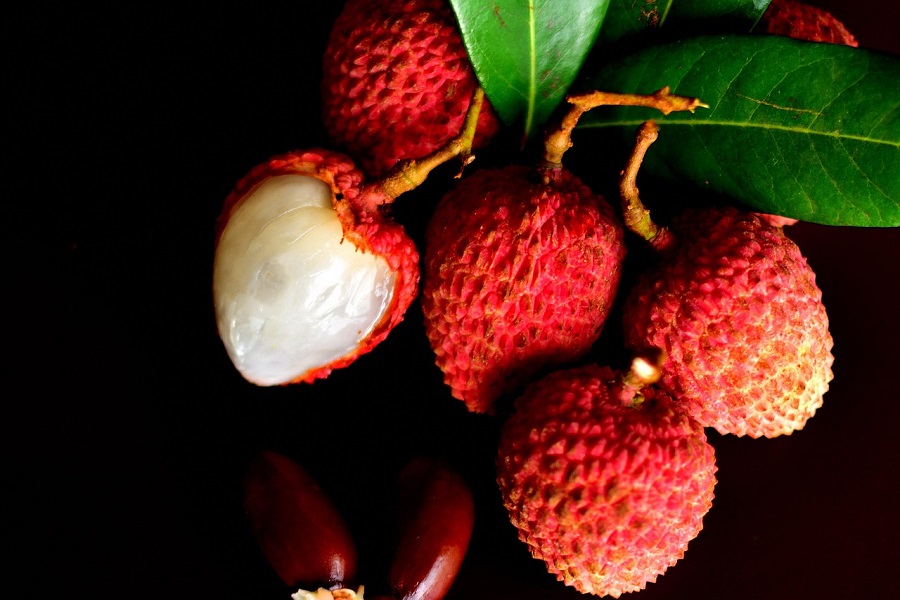
Litchi is a delicious and aromatic subtropical fruit known for its juicy, white aril and distinctive flavor. The fruit is a drupe, varying in shape from round to heart-shaped or oval, with a rough, leathery skin that turns bright red or pink when ripe. The edible portion is the fleshy aril surrounding a single, large seed. Litchi is rich in Vitamin C, potassium, and antioxidants, making it popular in fresh fruit markets and for processing.
Major Litchi Growing States in India (2026):
- Bihar: The undisputed leader, contributing over 40% of India’s total production. Major districts: Muzaffarpur (the “Litchi Kingdom”), East Champaran, West Champaran, Vaishali, Samastipur, and Sitamarhi. The famous Shahi litchi from Muzaffarpur holds GI tag status .
- West Bengal: Second-largest producer, with major cultivation in Murshidabad and Malda districts. In 2025-26, Malda cultivated litchi on 1,553 hectares, producing approximately 5,000-6,000 tons .
- Uttar Pradesh: Significant production in Saharanpur, Muzaffarnagar, and Bareilly districts.
- Uttarakhand: Dehradun and Nainital districts, known for Rose Scented variety.
- Punjab & Haryana: Grown in foothill regions with suitable microclimates.
- Bihar’s New Districts: The government is promoting litchi cultivation in 32 districts under various schemes, with Sitamarhi offering 75% subsidy on plant protection sprays .
Market Demand (2026): Litchi commands premium prices in metropolitan markets, ranging from ₹100-250 per kg during peak season. Export markets in the Middle East, Europe, and Southeast Asia offer even higher returns for quality, well-graded fruits. The short harvesting window (4-6 weeks) creates opportunities for early and late varieties to capture better prices .
3. Climate & Soil Requirement
🌤️ Climate for Litchi Cultivation
Litchi is a subtropical fruit that requires specific climatic conditions for successful flowering and fruiting. The tree is sensitive to temperature extremes and requires distinct seasons.
- Winter Temperature (Chilling): Litchi requires a cool, dry winter with temperatures between 10°C and 15°C for 2-3 months. This chilling period is essential for inducing flowering. The tree sheds its leaves in winter, and new growth emerges in spring. Early rainfall before winter can trigger vegetative growth instead of flowering, as seen in Malda district in 2026 where only 50% of trees produced blossoms .
- Summer Temperature: During fruit development, moderate temperatures of 25°C-35°C are ideal. High temperatures above 40°C can cause fruit cracking and sunburn .
- Rainfall: Requires well-distributed annual rainfall of 1,200-2,000 mm. Dry weather during flowering (February-March) is critical. Rainfall during this period can reduce fruit set. In Dinajpur, Bangladesh, favorable weather with mild winter and no early rainfall led to excellent budding in 2026 .
- Humidity: Moderate humidity during fruit development is beneficial, but high humidity encourages fungal diseases.
- Sunlight: Full sunlight is essential for optimal growth and fruit development. The tree’s dense canopy requires careful pruning for light penetration.
🌱 Soil Requirement
- Best Soil Type: Deep, well-drained loamy soils rich in organic matter are ideal. Litchi thrives in soils with good water-holding capacity but cannot tolerate waterlogging. In Bijoynagar, Bangladesh, red soil is prized for producing high-quality litchi with excellent taste .
- Ideal pH: The optimum soil pH range is 5.5 to 7.0 (slightly acidic to neutral).
- Drainage: Excellent drainage is critical. Waterlogging leads to root rot and tree death.
- Soil Depth: Minimum depth of 1.5-2 meters is required for proper root development. The tree has a deep taproot system.
- Avoid: Heavy clay soils, alkaline soils (pH above 7.5), and shallow or rocky soils.
Practical Tip: Before planting, conduct a soil test. Incorporate 20-25 kg of well-decomposed FYM per pit to improve soil structure and fertility.
4. Best Litchi Varieties for Cultivation
India has a rich diversity of litchi varieties, categorized by maturity time: early, mid, and late season. The ICAR-National Research Centre on Litchi (NRCL) in Muzaffarpur maintains the national germplasm and has released superior varieties .
High-Yielding Commercial Varieties
| Variety | Key Characteristics | Maturity | Yield/Tree |
|---|---|---|---|
| Shahi | Bihar’s most famous variety, GI tagged. Early season cultivar. Fruits globose-heart shaped, moderately prone to cracking (8.24%). Fruit weight 22-26 g. Pulp recovery 65-70% with TSS 19-21°Brix. Trees vigorous with regular bearing . | Early (May) | 140-150 kg |
| China | Mid to late season cultivar. Vigorous tree but tends to alternate bearing. Heavy bunch bearing (20-25 fruits per bunch). Fruit weight 22-26 g, less prone to cracking (4.17%). Pulp recovery 60-67% . | Mid-Late | 150-160 kg |
| Gandaki Sampada (NRCL) | New cultivar developed by NRCL from Pantnagar selection. Late maturing (mid-June). Fruits conical, vermilion to carmine color. Large fruit (35-42 g). Cracking resistant. Pulp recovery 80-85%. Excellent quality . | Late (June) | 120-140 kg |
| Gandaki Lalima (NRCL) | New cultivar from Ranchi selection. Late maturing (second week June). Moderately vigorous tree. Fruit weight 28-32 g. Pulp creamy white, sweet (TSS 18-19°Brix). Good shelf life . | Late (June) | 130-140 kg |
| Rose Scented | Popular in Uttarakhand and Uttar Pradesh. Very vigorous trees. Fruits medium-large (20-22 g) with distinct aroma. TSS 21-23°Brix. Moderately susceptible to sunburn and cracking . | Mid | 80-90 kg |
| Bombai | Vigorous trees, carmine red color. Pulp greyish-white, sweet, soft, juicy. TSS 17-20°Brix. Widely grown in West Bengal and Bangladesh . | Mid | 80-90 kg |
| Purbi | Large fruits (23-25 g) in large clusters. Matures in third week May. Peel thick, rough, bright red. Fruits egg-round to lopsided heart-shaped with pointed tip. Less susceptible to cracking . | Mid (May) | 90-100 kg |
| Early Seedless | Medium yielding but regular bearing. Seed very small, shrunken, dirty chocolate color. Pulp creamy white, soft, juicy, sweet (TSS 17-20°Brix) . | Early | 50-60 kg |
| Kasba | Mid-late maturing variety from Bihar. Dark red fruits, oval or round. Resistant to cracking and sunburn . | Mid-Late | 80-100 kg |
Other Notable Varieties
- Dehradun: Medium fruits (15-20 g), oblique-heart shape, bright rose pink color. Highly susceptible to sunburn and cracking .
- Mandraji: Large fruits (22-26 g) in clusters, thick rough pericarp, attractive bright red color. Matures late May to early June .
- Ajhauli: Pink floral disc (distinct from Shahi). Fruits red, 18-21 g. Highly prone to cracking .
- Gandaki Yogita: Dwarf stature suitable for closer planting. Late maturing (mid-July). Pulp recovery 70-75%, melting texture, pleasant aroma .
- Longia: Traditional variety of Bihar, though now becoming rare .
Practical Tip: For commercial farming in 2026, consider a mix of early (Shahi), mid (China/Purbi), and late (Gandaki Sampada/Gandaki Lalima) varieties to extend your harvesting window and reduce marketing pressure. For the new NRCL varieties like Gandaki Sampada, source certified plants directly from ICAR-NRCL, Muzaffarpur .
Government Link: For detailed information on varieties and to obtain certified planting material, visit the official website of ICAR-National Research Centre on Litchi, Muzaffarpur.
5. Propagation & Planting Material
Commercial litchi farming relies on vegetative propagation, as seed-grown plants are not true-to-type, take longer to bear fruit (10-12 years), and produce inferior quality fruit.
- Air Layering (Gootee): The most common and successful method for litchi. Selected branches (1-2 years old, pencil-thick) are ringed, treated with rooting hormones, and wrapped with moist sphagnum moss or soil mixture. Roots develop in 2-3 months, and layers are separated and planted in nursery beds or polybags.
- Grafting: Approach grafting and cleft grafting onto seedling rootstock are also practiced but less common than air layering.
- Certified Plants: Use only grafted/air-layered plants from certified nurseries. Plants should be vigorous, disease-free, and true-to-type. The ICAR-NRCL and state agricultural universities maintain mother blocks for producing quality planting material.
Plants Required Per Acre: With standard spacing of 8m x 8m, you will need approximately 60-70 plants per acre. For 10m x 10m spacing, about 40-45 plants per acre.
6. Land Preparation & Planting
Land Preparation
- Clearing & Ploughing: Clear the land of weeds, stones, and previous crop residues. Conduct deep ploughing 2-3 times to improve aeration and break up compacted layers.
- Layout & Pit Digging: Mark the spots for pits based on chosen spacing (e.g., 8m x 8m). Dig pits of size 1 m x 1 m x 1 m during the summer (April-May). Leave pits open for sunlight exposure for 1-2 months to sterilize them.
- Pit Filling Mixture (per pit): Refill the pits 1-2 months before planting with a mixture of:
- Topsoil
- 20-25 kg well-decomposed Farm Yard Manure (FYM) or compost
- 1 kg Single Super Phosphate (SSP)
- 500 g Neem cake (for nematode/pest control)
Water the pits to allow the mixture to settle.
Planting Method
- Best Planting Season: The post-monsoon season (August – September) is ideal as it provides adequate moisture for establishment. Spring planting (February – March) is also possible with regular irrigation.
- Planting Technique:
- Make a small hole in the center of the prepared pit.
- Place the air-layered/grafted plant carefully, ensuring the root collar is at ground level.
- Spread the roots gently and fill the hole with soil, pressing firmly to eliminate air pockets.
- Create a basin around the plant and water immediately.
- Provide staking support to protect young trees from strong winds.
- Aftercare: Mulch around the base with organic material (paddy straw, dry leaves) to conserve moisture and suppress weeds. Water regularly during dry periods.
7. Irrigation Management
Litchi requires adequate moisture throughout the year, with critical stages being flowering, fruit set, and fruit development. However, waterlogging must be strictly avoided.
Irrigation Schedule & Water Requirement
- Young Plants (Establishment Phase): Require regular irrigation every 4-5 days during dry periods to ensure good root development. Mulching helps reduce watering frequency.
- Growing Trees (Non-bearing): Irrigate at 7-10 day intervals during dry spells. During winter dormancy, reduce irrigation.
- Mature Trees (Bearing): Critical irrigation periods:
- Before flowering (February-March): Irrigation 15 days before and after flowering to prevent bud drop .
- During fruit development (April-May): Consistent moisture is essential to prevent fruit cracking. Dry spells followed by heavy irrigation can cause cracking.
- Post-harvest (June-July): Irrigation to support new flush growth.
- Drip Irrigation: Highly recommended for efficient water use and improved yield. Fertigation through drip can significantly enhance nutrient use efficiency .
- Avoid: Over-irrigation and waterlogging, which can lead to root rot diseases. Ensure proper drainage in the orchard.
Government Link: For details on subsidies for micro-irrigation, visit the official PMKSY (Per Drop More Crop) website. The scheme provides financial assistance for installing drip/sprinkler systems.
8. Month-wise Crop Calendar
(Based on conditions in Bihar and Eastern Uttar Pradesh)
| Month | Growth Stage / Operation |
|---|---|
| November – January | Winter Dormancy. Trees shed leaves. Reduce irrigation. Apply FYM. Pruning if required. Girdling for off-season flowering can be done in early April, but this is the planning period . |
| February – March | Bud Burst & Flowering. New growth and flower panicles emerge. Critical irrigation period (15 days before and after flowering). Monitor for mite and aphid infestations. |
| April – May | Fruit Set & Development. Ensure adequate soil moisture. Apply fertilizer after fruit set. Monitor for fruit cracking. Fruit fly control measures. |
| May – June | Harvesting (Early & Mid varieties). Harvest early varieties like Shahi in May. China and Purbi in late May-June. Post-harvest management. |
| June – July | Harvesting (Late varieties) & Post-Harvest. Late varieties like Gandaki Sampada, Gandaki Lalima harvested in June-July. Apply post-harvest fertilizers. New flush growth. |
| August – September | Planting Season. Ideal time for new orchard planting. Weeding and sanitation. |
| October – November | Pre-Dormancy. Final irrigation before winter. Prepare for dormancy. |
9. Manure & Fertilizer Schedule
Litchi is a heavy feeder and requires balanced nutrition for optimal yields. Fertilizer recommendations should be based on soil test reports.
Annual Fertilizer Schedule (Per Tree, for Mature Trees)
| Time of Application | FYM (kg) | N (g) | P₂O₅ (g) | K₂O (g) |
|---|---|---|---|---|
| November – December (Post-harvest) | 30-50 | – | – | – |
| February (Before flowering) | – | 400-500 | 200-250 | 300-400 |
| April – May (After fruit set) | – | 200-300 | – | 200-300 |
Micronutrients: Zinc and boron are particularly important for litchi quality. Foliar sprays of ZnSO4 (0.5%) and Borax (0.2%) can be applied after fruit set to improve fruit set and reduce cracking. Soil testing every 2-3 years is strongly recommended.
10. Intercropping & Weed Management
🌾 Intercropping
During the initial 5-7 years, when litchi trees are widely spaced, intercropping provides additional income and optimizes land use.
- Suitable Intercrops:
- Legumes: Cowpea, moong (green gram), gram – these fix nitrogen and improve soil health.
- Vegetables: Tomato, chilli, brinjal, ginger, turmeric (shade-tolerant).
- Short-duration fruits: Papaya, banana (temporary).
- Medicinal plants: Asparagus, andrographis.
- Benefits: Additional income, weed suppression, and soil fertility improvement.
- Caution: Avoid tall crops that can shade the young litchi trees. Stop intercropping once the litchi canopy expands significantly (around year 6-7).
🌿 Weed Management
- Mulching: Organic mulch (paddy straw, dry leaves) applied around the tree basin is highly effective for moisture conservation and weed suppression.
- Manual Weeding: Regular weeding (3-4 times a year) in the tree basins and inter-row spaces.
- Herbicides: Use as a last resort. Glyphosate can be used as a directed spray on emerged weeds, taking care to avoid any contact with litchi foliage or green bark.
11. Training & Pruning
Proper training in the early years and light pruning annually are key to developing a strong tree framework and maintaining productivity.
- Training (First 3-4 Years): Develop a strong framework with 3-4 well-spaced main branches arising from the trunk at a height of 60-75 cm. Remove all other competing branches and rootstock suckers.
- Annual Pruning (Mature Trees – After Harvest):
- Remove all dead, diseased, damaged, and crossing branches.
- Remove water sprouts and suckers.
- Thin out crowded branches to improve light penetration and air circulation throughout the canopy. This improves fruit quality and reduces disease incidence.
- Litchi requires less pruning than many other fruit trees, but regular light pruning maintains productivity.
- Benefits of Pruning: Develops a strong structure, maintains tree health, improves fruit size and quality, and reduces disease pressure.
12. Girdling Technology for Off-Season Flowering
A significant advancement in litchi cultivation is the development of girdling technology to induce off-season flowering. The Central Horticultural Experiment Station (ICAR-IIHR), Chettalli, organized a demonstration of this technology in December 2024 at Kodagu, Karnataka .
- What is Girdling? Girdling involves removing a ring of bark (approximately 4 mm width) from about 50% of the primary branches.
- Timing: The girdling is performed during the first week of April, which is 4-5 months before the normal flowering period .
- Variety: The technology was demonstrated on the Shahi cultivar.
- Benefits: Girdling can induce early or off-season flowering, allowing farmers to harvest when market prices are higher. It also helps in managing crop timing and can lead to better yields.
- Farmer Participation: Nearly 20 farmers from Kodagu and Hassan districts participated in the demonstration program, learning about girdling techniques along with nutrient and pest management strategies .
Practical Tip: Farmers interested in off-season litchi production should contact their local KVK or ICAR-IIHR for proper training on girdling techniques. Incorrect girdling can damage trees.
13. Pests and Diseases
Litchi is susceptible to several pests and diseases. Integrated Pest Management (IPM) is essential for sustainable production.
Major Pests
- Litchi Fruit Borer: The most destructive pest. Larvae bore into fruits, causing premature drop and fruit rot. Control: Install pheromone traps for monitoring. Spray insecticides like cypermethrin or chlorantraniliprole at fruit set. Maintain clean orchard floor by removing fallen fruits.
- Litchi Mite: Causes erineum (felt-like) growth on leaves, leading to defoliation and reduced yield. Control: Prune infested leaves. Spray wettable sulphur or dicofol during dormant season.
- Leaf Roller: Larvae roll leaves and feed within, causing defoliation. Control: Manual removal of rolled leaves. Spray quinalphos or cypermethrin if infestation is severe.
- Bark Borer: Larvae bore into trunk and branches, causing dieback. Control: Maintain tree vigor. Remove and destroy affected branches. Insert dichlorvos-soaked cotton into active holes and seal with mud.
- Fruit Fly: Females lay eggs in ripening fruits, causing fruit rot. Control: Use methyl eugenol traps. Practice clean cultivation. Apply bait sprays.
Major Diseases
- Fruit Cracking (Physiological Disorder): A major problem in litchi, leading to significant yield losses. Caused by fluctuations in soil moisture, nutritional imbalances (calcium, boron deficiency), and genetic factors. Control: Maintain consistent soil moisture through mulching and regular irrigation. Apply calcium nitrate sprays. Borax foliar sprays. Plant crack-resistant varieties like Gandaki Sampada, China (4.17% cracking), and Purbi .
- Leaf Spot (Cercospora/Pestalotiopsis): Brown to gray spots on leaves, causing defoliation. Control: Prune affected leaves. Spray Carbendazim or Mancozeb.
- Powdery Mildew: White powdery growth on leaves and flower panicles, affecting fruit set. Control: Spray wettable sulphur or dinocap.
- Root Rot (Phytophthora): Caused by poor drainage. Leaves yellow, wilt, and plant may die. Control: Ensure excellent drainage. Avoid over-irrigation. Drench soil with Metalaxyl + Mancozeb if detected early.
- Dieback: Drying of branches from tip backwards. Caused by fungal infection or physiological stress. Control: Prune affected branches. Improve overall tree health through proper nutrition and irrigation.
Government Link: In Sitamarhi district, Bihar, farmers can avail a 75% subsidy on plant protection sprays for litchi under the government’s horticulture scheme. Farmers need to apply online or through the district agriculture office. After spraying, geo-tagged photos must be uploaded to the DBT portal. Eligible farmers can get subsidy for up to 56 litchi plants.
14. Fruit Cracking: Causes & Prevention
Fruit cracking is the most significant physiological disorder affecting litchi production in India, causing losses of 10-30% in susceptible varieties.
- Causes:
- Varietal Susceptibility: Ajhauli is highly prone to cracking; Shahi moderately so (8.24%); China (4.17%) and Purbi are less susceptible. New NRCL varieties like Gandaki Sampada are specifically bred for crack resistance .
- Soil Moisture Fluctuations: Dry spells followed by heavy irrigation or rain cause rapid water uptake, leading to cracking.
- Nutritional Deficiencies: Calcium and boron deficiencies increase cracking incidence.
- High Temperature: Extreme heat during fruit development can cause cracking and sunburn.
- Prevention Strategies:
- Plant crack-resistant varieties: China, Purbi, Gandaki Sampada, Gandaki Lalima.
- Maintain consistent soil moisture through mulching and regular irrigation. Avoid dry-wet cycles.
- Apply calcium nitrate (0.5-1%) and borax (0.2%) as foliar sprays after fruit set.
- Ensure balanced nutrition with adequate potassium.
- Provide partial shade in extreme heat conditions.
15. Harvesting & Post-Harvest Handling
Harvesting
- When to Harvest: Litchi is ready for harvest when the fruits develop their characteristic varietal color (bright red/pink) and the tubercles on the skin become flattened. Fruits are harvested in clusters (panicles) with a portion of the branch and leaves attached, as this improves shelf life.
- Harvesting Season:
- Early varieties (Shahi, Early Seedless): May
- Mid varieties (China, Purbi, Bombai): Late May – June
- Late varieties (Gandaki Sampada, Gandaki Lalima): June – mid July
- Harvesting Method:
- Harvest in the cool part of the day (morning or evening).
- Use sharp secateurs or clippers to cut the entire panicle.
- Handle carefully – litchi bruises easily. Place fruits gently in padded baskets or crates.
- Avoid harvesting during rain or immediately after irrigation.
- GA3 Application to Extend Harvest Window: Research in North-West Bihar (West Champaran) showed that foliar application of GA3 (100 ppm) at 35 days after fruit set extended the duration from fruit set to maturity by an average of 4.59 days (65.80 days vs 61.21 days in control). This treatment also increased yield (75.22 kg/plant vs 69.73 kg) and improved the benefit-cost ratio to 5.2 .
Post-Harvest Handling
- Grading: Sort fruits by size, color, and freedom from defects. Remove cracked, diseased, or damaged fruits.
- Pre-cooling: Remove field heat immediately after harvest by placing fruits in cool, shaded area or using forced-air cooling.
- Desapping: Remove excess sap by dipping fruits in water.
- Packing: Pack in CFB boxes or ventilated plastic crates with cushioning material. For distant markets, use single-layer packing to prevent crushing.
- Shelf Life: Litchi has a very short shelf life of 2-3 days at ambient temperature. In cold storage (2-5°C with 90-95% RH), shelf life can be extended to 2-3 weeks.
16. Yield of Litchi
Litchi Yield is highly dependent on variety, tree age, management practices, and pollination success.
- Year 1-4: No commercial yield. Trees focus on vegetative growth and establishment.
- Year 5-7: Initial economic yields, ranging from 20-40 kg per tree.
- Year 8-10: Increasing yields, 50-80 kg per tree.
- Year 10 onwards (Full Bearing):
- Shahi: 140-150 kg per tree
- China: 150-160 kg per tree
- Gandaki Sampada: 120-140 kg per tree
- Gandaki Lalima: 130-140 kg per tree
- Rose Scented, Bombai, Dehradun: 80-90 kg per tree
- Purbi: 90-100 kg per tree
Yield Per Hectare: With 100-150 plants per hectare, yields range from 8-15 tonnes per hectare. Research trials with GA3 application achieved 75 kg per plant .
17. Storage & Marketing
Storage Methods
- Short-term (Ambient): Litchi is highly perishable and lasts only 2-3 days at room temperature. It should be marketed immediately after harvest.
- Cold Storage: Fruits can be stored at 2-5°C with 90-95% relative humidity for 2-3 weeks. Sulfur dioxide (SO2) fumigation is sometimes used to prevent browning, though it must be carefully controlled.
- Controlled Atmosphere Storage: Can extend shelf life further but is expensive.
- Pre-cooling: Essential for long-distance transport. Remove field heat immediately after harvest.
Marketing Channels & Price (2026)
- Local APMC Mandis: Traditional marketing channel in Muzaffarpur, Murshidabad, Saharanpur. Prices are determined by quality and variety.
- Metropolitan Markets (Premium Segment): High demand in Delhi, Mumbai, Kolkata, Bangalore, and Hyderabad. Premium varieties like Shahi and Gandaki Sampada fetch higher prices. In Gorkha, Nepal (similar market), litchi sold at NPR 65-100 per kg (approx. ₹40-65) in 2025 .
- Export: Significant potential in Middle East, Europe, UK, and Southeast Asia. Requires strict quality control, grading, and phytosanitary certification.
- Market Price (2026):
- Wholesale prices: ₹60-120 per kg (depending on variety and season)
- Retail prices: ₹100-250 per kg
- Export prices: Higher for premium graded fruits
- Farm-gate contract prices: In some areas, traders contract orchards at flowering stage, paying ₹3,000-3,500 per thousand pieces .
18. Cost of Litchi Farming & Profit Margin
Disclaimer: These are estimates for 1 hectare based on 2025-26 data. Actual figures vary by region, variety, input costs, management, and market prices.
Assumptions: 8m x 8m spacing (150 plants), grafted plants, mature orchard (12+ years).
A. Initial Investment (Years 1-7 – Orchard Establishment)
| Component | Cost (₹) |
|---|---|
| Land preparation & pit digging | 30,000 |
| Cost of grafted plants (150 @ ₹150-200) | 25,000 |
| FYM and fertilizers (first 7 years) | 80,000 |
| Irrigation setup & maintenance | 40,000 |
| Labour, weeding, intercropping expenses | 80,000 |
| Total Investment (Years 1-7) | ₹ 2,55,000 |
B. Annual Maintenance Cost (From Year 8 onwards, per hectare)
| Component | Cost (₹/year) |
|---|---|
| Fertilizers & Manure | 20,000 |
| Plant protection chemicals | 15,000 (subsidy available up to 75% in some districts) |
| Labour (pruning, spraying, irrigation) | 25,000 |
| Irrigation (electricity) | 10,000 |
| Harvesting, grading & packing | 25,000 |
| Total Annual Cost | ₹ 95,000 |
C. Income from Mature Orchard (Year 12 onwards, per hectare)
Based on average yields and market prices.
| Parameter | Conservative Estimate | Optimistic Estimate |
|---|---|---|
| Yield per hectare | 8,000 kg | 12,000 kg |
| Average price | ₹ 80 per kg | ₹ 120 per kg |
| Gross Income | ₹ 6,40,000 | ₹ 14,40,000 |
D. Profit Calculation (Mature Orchard, per hectare)
| Parameter | Conservative (₹) | Optimistic (₹) |
|---|---|---|
| Gross Income | 6,40,000 | 14,40,000 |
| Annual Maintenance Cost | 95,000 | 1,00,000 |
| Net Profit Per Year | ₹ 5,45,000 | ₹ 13,40,000 |
Important Notes:
- Benefit-Cost Ratio: Research in Bihar showed a B:C ratio of 5.2 with GA3 application .
- Subsidy Impact: The 75% subsidy on plant protection sprays in Sitamarhi can significantly reduce annual input costs .
- Break-even: Given the long gestation period, the initial investment is typically recovered by the 10th-12th year. The orchard then generates substantial profit for 25+ years.
19. Advantages of Litchi Cultivation
- High Value, Strong Demand: Premium prices in domestic and export markets. India’s production meets only a fraction of global demand.
- Multi-Generational Income: Long economic lifespan of 35-40 years makes a litchi orchard a legacy asset .
- GI Recognition: Shahi litchi from Muzaffarpur has GI tag, adding brand value and market recognition .
- Improved Varieties: New crack-resistant, high-yielding varieties (Gandaki Sampada, Gandaki Lalima) from ICAR-NRCL with fruit weights up to 42g and pulp recovery up to 85% .
- Technology Support: Girdling technology for off-season flowering and GA3 application for extended harvest window give farmers greater market control.
- Government Support: 75% subsidy on plant protection sprays in Bihar and support through MIDH, PMKSY.
- Export Potential: Growing demand in Middle East, Europe, and Southeast Asia.
- Processing Opportunities: Suitable for juice, squash, canned products, and dried litchi.
20. Government Schemes & Support (2025-26 Update)
Several government initiatives support litchi farmers. Key schemes for 2025-26 include:
- MIDH (Mission for Integrated Development of Horticulture): The central scheme for horticulture development. It provides financial assistance for area expansion (new orchards), planting material, and creation of water resources. For more details, visit the official MIDH website.
- PMKSY (Per Drop More Crop): Provides subsidies for installing micro-irrigation (drip/sprinkler) systems: 55% for small and marginal farmers and 45% for other farmers.
- 75% Subsidy on Plant Protection Sprays (Sitamarhi Model): In Sitamarhi district, Bihar, the government is providing 75% subsidy to farmers for spraying insecticides and other chemicals on mango, litchi, and guava plants .
- For litchi, farmers can get subsidy for up to 56 plants.
- First spray costs ₹76 per plant, with ₹57 subsidy (75%).
- Second spray costs ₹96 per plant, with ₹72 subsidy.
- After spraying, geo-tagged photos must be uploaded to the DBT portal.
- Farmers can apply online or through the district agriculture office.
- ICAR-NRCL Support: The National Research Centre on Litchi in Muzaffarpur provides technical guidance, publishes varieties, and offers training programs for farmers .
How to Apply for Subsidy: Farmers can apply through the State Horticulture Mission or their local District Horticulture Officer. For the Sitamarhi scheme, contact the District Agriculture Office or visit the official portal.
21. Value-Added Products & Processing
Processing litchi adds significant value and helps utilize fruits that may not meet fresh market standards.
- Canned Litchi: Peeled and pitted litchi in light syrup. Popular in export markets.
- Litchi Juice & Squash: Refreshing beverages with good market demand.
- Litchi Wine: Fermented product with growing niche market.
- Dried Litchi (Litchi Nut): Similar to raisin, with concentrated sweetness.
- Litchi Pulp: Frozen or aseptic pulp for use in ice cream, yogurt, and desserts.
- Litchi Jam & Jelly: Value-added products for retail markets.
- Peel Utilization: Litchi peel is rich in antioxidants and can be used for extracting bioactive compounds.
Farmer Producer Organizations (FPOs) can explore setting up small-scale processing units to capture more value from their produce, especially during peak harvest when fresh prices may be lower.
22. Common Mistakes & Challenges
- Planting in Unsuitable Climate: Attempting to grow litchi in areas without adequate winter chilling or with excessive rainfall during flowering .
- Poor Variety Selection: Planting seed-grown trees or low-yielding, crack-susceptible varieties instead of improved, high-yielding varieties like Gandaki Sampada .
- Inadequate Drainage: Planting in heavy or waterlogged soils leads to root rot and tree death.
- Ignoring Fruit Cracking: Not implementing measures to prevent cracking (mulching, consistent irrigation, calcium/boron sprays) can result in 10-30% losses.
- Improper Spacing: Planting too densely leads to overcrowding, competition for light, and reduced yields.
- Neglecting Pruning: Failure to prune leads to tangled canopies, poor light penetration, and reduced fruit quality.
- Poor Pollination Management: Not understanding that litchi benefits from cross-pollination and requires bee activity.
- Over-reliance on a Single Variety: Planting only one variety leads to a narrow harvest window and marketing pressure.
- Inadequate Post-Harvest Handling: Not pre-cooling, rough handling, and poor packaging lead to rapid spoilage and loss of market value.
- Lack of Pest and Disease Monitoring: Late detection of fruit borer or mite infestations can lead to significant yield losses.
- Not Leveraging Government Schemes: Missing out on available subsidies for plant protection and micro-irrigation.
23. FAQs – Frequently Asked Questions
Q1. Is litchi farming profitable in India?
A: Yes, litchi farming is highly profitable in suitable climates. A mature, well-managed hectare can yield a net profit of ₹5-13 lakhs per year, depending on variety and market prices. Research shows benefit-cost ratios of up to 5.2 with improved practices .
Q2. How many years does a litchi tree take to bear fruit?
A: Grafted/air-layered litchi plants start bearing a small crop from the 5th-6th year after planting. Commercial yields begin from the 8th-10th year, and full production is achieved by the 12th year onward.
Q3. What is the yield of a litchi tree?
A: A mature, well-managed tree can yield 80-160 kg of fruit per year, depending on variety. Shahi yields 140-150 kg, China yields 150-160 kg, and Gandaki Sampada yields 120-140 kg per tree .
Q4. Which is the best litchi variety for commercial farming?
A: For early harvest, Shahi (GI tagged) is excellent. For mid-season, China (high yield, low cracking) and Purbi are recommended. For late harvest, new NRCL varieties Gandaki Sampada (35-42g fruit, 80-85% pulp recovery, crack-resistant) and Gandaki Lalima are outstanding .
Q5. What is the climate requirement for litchi farming?
A: Litchi requires a cool, dry winter with temperatures 10-15°C for 2-3 months to induce flowering. It prefers moderate summers (25-35°C) during fruit development and cannot tolerate frost or waterlogging.
Q6. How do I prevent fruit cracking in litchi?
A: Plant crack-resistant varieties (China, Purbi, Gandaki Sampada). Maintain consistent soil moisture through mulching and regular irrigation. Apply calcium nitrate (0.5-1%) and borax (0.2%) as foliar sprays after fruit set.
Q7. What is girdling technology in litchi?
A: Girdling is a technique where a ring of bark (4mm width) is removed from primary branches in April to induce off-season flowering. This technology has been demonstrated by ICAR-IIHR for farmers in Karnataka .
Q8. What government subsidies are available for litchi farming in 2026?
A: In Sitamarhi, Bihar, farmers can avail 75% subsidy on plant protection sprays for up to 56 litchi plants. Farmers can also avail subsidies under MIDH for orchard establishment and PMKSY for micro-irrigation.
Q9. Can GA3 be used to extend the litchi harvest window?
A: Yes, research in West Champaran, Bihar, showed that GA3 (100 ppm) application 35 days after fruit set extended maturity by 4.6 days, increased yield to 75 kg per plant, and improved the benefit-cost ratio to 5.2 .
Q10. What is the lifespan of a litchi tree?
A: With proper care and management, a litchi tree has a very long economic lifespan of 35-40 years .
Q11. Where can I get high-quality litchi plants?
A: Certified, grafted plants of improved varieties can be obtained from the ICAR-National Research Centre on Litchi (NRCL), Muzaffarpur, and state agricultural universities in Bihar, West Bengal, and Uttar Pradesh.
Q12. What is the market price for litchi?
A: In 2026, wholesale prices range from ₹60-120 per kg, retail prices ₹100-250 per kg. Premium varieties fetch higher prices. Export markets offer even better returns for quality, graded fruits.
24. Conclusion
Litchi farming in India stands at an exciting juncture. With ICAR-NRCL releasing world-class varieties like Gandaki Sampada (35-42g fruit, 80-85% pulp recovery, crack-resistant), farmers now have access to planting material that can compete globally. The Shahi litchi’s GI tag continues to add brand value to India’s premier litchi region .
Technological advancements are empowering farmers to take greater control of their harvests. Girdling technology, demonstrated by ICAR-IIHR in Karnataka, offers the potential for off-season production. Research-backed GA3 applications can extend the harvest window and improve yields to 75 kg per plant with benefit-cost ratios of 5.2. The government’s 75% subsidy on plant protection sprays in districts like Sitamarhi provides crucial financial support for managing pests and diseases .
However, success in litchi cultivation demands patience, knowledge, and attention to detail. The long gestation period of 5-7 years before commercial yields requires farmers to have a long-term perspective. Challenges like fruit cracking, which can cause 10-30% losses in susceptible varieties, must be addressed through variety selection and proper orchard management. Weather fluctuations, such as those experienced in Malda in 2026 where only 50% of trees flowered due to early rainfall, remain a constant risk .
For farmers in suitable regions-the foothills of the Himalayas from Bihar to Uttarakhand, a litchi orchard is a legacy asset. With a productive lifespan of 35-40 years, it can provide financial security for generations. By combining improved varieties with modern management techniques and available government support, Indian litchi farmers are well-positioned to capture a larger share of this valuable market.
Ready to start your Litchi Farming?
Are you in a suitable region? Begin by getting your soil tested and visiting successful orchards in your area. For the highest quality planting material of new NRCL varieties, contact the ICAR-National Research Centre on Litchi, Muzaffarpur. If you are in Sitamarhi or neighboring districts, apply for the 75% subsidy on plant protection sprays at your local agriculture office. Consult with your local District Horticulture Officer to learn about MIDH and PMKSY support. With careful planning and a long-term commitment, your litchi orchard can become a source of prosperity for your family and generations to come.
Disclaimer: The information provided in this guide is for general informational purposes only. The costs, yields, profits, and cultivation practices mentioned are estimates and may vary significantly based on location, soil conditions, climate, management practices, and dynamic market factors. It is strongly recommended that farmers consult with local agricultural experts, KVKs, and state horticulture departments before making any investment decisions. This website and its authors disclaim any liability for financial losses or crop failures resulting from the use of this information.