Papaya Farming in India: Best Varieties, Planting Method & Profits
Imagine a fruit crop that gives you a harvest in less than a year, yields abundantly for over two years, and has booming demand in both local and export markets. That crop is papaya. For Indian farmers looking for quick returns and high productivity, papaya farming is a golden opportunity waiting to be tapped. Known as the “wonder fruit” for its nutritional and medicinal properties, papaya has transformed from a backyard garden plant to a serious commercial venture.
Unlike many fruit trees that take years to bear, a papaya plant can start yielding marketable fruits within 8-10 months of planting. Its continuous bearing nature ensures a steady cash flow for the farmer. Whether you have a small piece of land or are planning a large-scale orchard, papaya fits perfectly due to its short stature and high-density planting potential. This comprehensive guide is designed to walk you through every step of papaya cultivation. We will cover everything from selecting the right hybrid seeds to mastering disease control and calculating real-world profits. Written in simple, practical language, this guide aims to be your go-to resource for establishing a successful and profitable papaya farm.
Table of Contents
- Quick Papaya Crop Overview
- About Papaya Fruit
- Climate & Soil Requirement for Papaya
- Suitable / Popular Papaya Varieties
- Propagation Method for Papaya
- Land Preparation for Papaya Farm
- Planting Method of Papaya
- Irrigation Management in Papaya Farming
- Fertilizer & Nutrient Management for Papaya
- Intercropping & Weed Management
- Pruning & Training in Papaya
- Pest & Disease Management in Papaya
- Flowering & Fruiting in Papaya
- Harvesting of Papaya Fruit
- Yield of Papaya Crop
- Storage & Marketing of Papaya
- Cost of Cultivation & Profitability in Papaya Farming
- Advantages of Papaya Cultivation
- Government Support & Schemes for Papaya Farming
- Organic Papaya Farming
- Common Mistakes in Papaya Farming
- FAQs – Frequently Asked Questions on Papaya Farming
- Conclusion
🌱 Papaya Crop Overview at a Glance
This table gives you a quick snapshot of the key details about papaya cultivation. It’s a great reference before diving deeper.
| Parameter | Details |
|---|---|
| Scientific Name | Carica papaya |
| Botanical Family | Caricaceae |
| Origin | Tropical America |
| Climate Requirement | Warm Tropical; Frost-free |
| Soil Type & pH | Well-drained sandy loam; pH 6.0 to 7.0 |
| Planting Season | Monsoon (June-July), Spring (Feb-March), Autumn (Oct-Nov) |
| Spacing | 1.8m x 1.8m (1500 plants/acre) or 2m x 2m (1000 plants/acre) |
| First Harvest | 8-10 months after planting |
| Economic Lifespan | 2-3 years |
| Yield Per Acre (Avg.) | 40-60 tonnes (in 2-year cycle) |
| Yield Per Hectare (Avg.) | 100-150 tonnes (in 2-year cycle) |
About Papaya Fruit
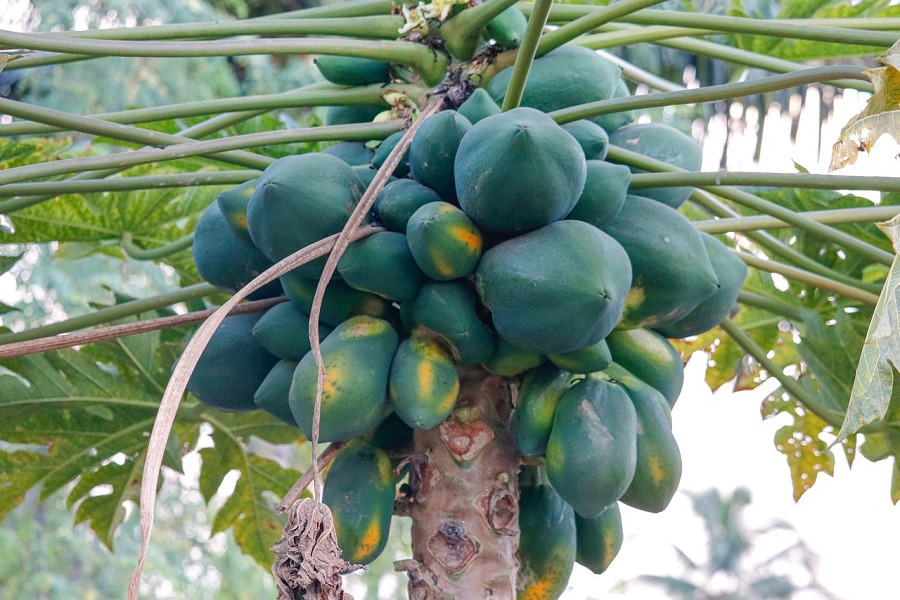
The papaya (Carica papaya) is a large, herbaceous plant that grows as a single stem, bearing fruits directly on its trunk. It is not a tree but a fast-growing perennial herb. Native to tropical America, it was introduced to India in the 16th century and has since become naturalized across the country.
Papaya is a nutritional powerhouse, celebrated for its digestive enzyme papain. It is exceptionally rich in Vitamin C (more than oranges), Vitamin A, folate, dietary fiber, and antioxidants. It is low in calories and is known for its medicinal properties, aiding digestion, boosting immunity, and promoting skin health.
The economic importance of papaya is significant and growing. Beyond fresh consumption, the fruit and other parts of the plant have diverse commercial applications, making it a highly versatile crop for value addition.
Commercial & Processing Uses:
- Fresh Consumption: The primary market for ripe, table-purpose varieties.
- Processing: Papaya pulp is used in juices, nectars, jams, jellies, and fruit blends.
- Papain Extraction: The latex from raw fruits and leaves is a major source of papain, a vital enzyme used in the pharmaceutical, meat tenderizing, and beer clarification industries. This offers a high-value by-product.
- Value-Added Products: Candied papaya, dried papaya slices, and papaya powder.
- Cosmetic & Pharma: Papain is used in cosmetic creams, toothpaste, and digestive enzyme tablets.
Climate & Soil Requirement for Papaya
🌤️ Ideal Climate for Papaya Cultivation
Papaya is a true tropical fruit and is highly sensitive to frost and cold winds. Climate is the single most critical factor for success.
- Suitable Climate: Warm, humid tropical climate. It thrives in regions with consistent warmth.
- Temperature Range: The ideal range is 21°C to 33°C. Growth is retarded below 15°C. Temperatures above 38°C can cause flower drop, while frost is fatal.
- Rainfall Requirement: 150-200 cm of well-distributed annual rainfall is ideal. However, it cannot withstand waterlogging. In low-rainfall areas, irrigation is essential.
- Frost Sensitivity: Extremely high. Even a light frost can kill the plant. Young plants are especially vulnerable.
- Sunlight Needs: Requires full sunlight for vigorous growth and sweet fruit development. Shaded conditions lead to poor fruiting and disease.
- Wind: Strong winds can damage the shallow-rooted plants and cause fruit drop. Establishing windbreaks is crucial in exposed areas.
🌱 Best Soil for Papaya Farming
Papaya is not very deep-rooted, so soil quality and drainage are paramount.
-
- Best Soil Type: Light, well-drained sandy loam or loamy soil is perfect. The soil must be deep and friable.
- Soil pH Range: Slightly acidic to neutral soil (pH 6.0 to 7.0) is optimal. In soils with pH above 7.5 (alkaline), micronutrient deficiencies (like Zinc and Iron) become common.
Drainage Requirement:
-
- Excellent drainage is non-negotiable.
The plant will die if water stands around the roots for more than 24-48 hours.
- Avoid low-lying, heavy clay soils.
-
- Soil Preparation Tip: If the soil is heavy, incorporate plenty of river sand or organic compost to improve texture and drainage. Raised beds are highly recommended in areas with drainage concerns.
📍 India Context: Best States and Regions
Papaya is grown across many states in India, with major production concentrated in the warmer regions.
- Major States: Andhra Pradesh, Telangana, Gujarat, Karnataka, Madhya Pradesh, West Bengal, Odisha, Chhattisgarh, Assam, and Maharashtra.
- Key Growing Regions: Districts with warm, frost-free climates throughout the year. It is less suitable for the northern plains during harsh winters unless protected.
- Practical Advice: In North India, plant in early spring (Feb-Mar) to allow the plant to grow strong before winter. Use protective coverings for young plants during winter chills.
Best Papaya Varieties for Cultivation in India
Choosing the right variety is crucial. Modern commercial farming relies on improved gynodioecious hybrids (producing mostly female and hermaphrodite plants) for higher and uniform fruit set. Avoid traditional dioecious varieties (separate male and female plants) as 50% of male plants are non-fruitful.
1. High-Yielding Gynodioecious Hybrids (Recommended)
- Red Lady (786): The most popular variety in India. Dwarf, high-yielding, fruits within 8 months. Deep red pulp, sweet taste, good shelf life. Tolerant to Papaya Ring Spot Virus (PRSV).
- Taiwan Red Lady: Similar to Red Lady, with excellent fruit size and shape. Widely adapted.
- Arka Surya: Developed by IIHR, Bangalore. High-yielding, sweet orange-red flesh. Suitable for both table and processing.
- Arka Prabhat: Another IIHR variety. Tolerant to PRSV and powdery mildew. Medium-sized fruits with good flavour.
- Pusa Delicious: Developed by IARI. Fruits are large with deep orange, sweet pulp.
- Pusa Majesty: Tolerant to nematodes and distortion ring spot virus. Good for northern plains.
- CO.7: A variety from Tamil Nadu Agricultural University. High yield, good for pulp.
2. Other Notable Varieties
- Coorg Honey Dew: Known for its exceptional sweetness and aroma.
- Washington: An older variety, still grown in some areas. Large fruits, yellow pulp.
- Sunrise Solo: Small, pear-shaped fruits with red pulp. Excellent taste, good for export.
3. Selection Based on Purpose
- For Fresh Market & Export: Red Lady, Taiwan, Sunrise Solo (for size & looks).
- For Papain Production: Choose varieties known for high latex yield, often older local varieties.
- For Processing (Pulp): Varieties with firm, deep-coloured pulp like Arka Surya, CO.7.
Critical Tip: Always, always buy seeds from a reputable, certified company. The cost of quality hybrid seeds is a small investment compared to the loss from poor germination or excessive male plants.
Propagation Methods in Papaya
Papaya is commercially propagated only by seeds. Vegetative propagation is not viable. The focus is on raising healthy, vigorous seedlings in a protected nursery.
- Seed Propagation:
- Use fresh seeds from a trusted source. Seeds lose viability after 6-8 months of storage.
- For 1 acre (1500 plants), you will need about 150-200 grams of seeds (approx. 6000-8000 seeds/kg).
- Nursery Preparation & Raising Seedlings:
- Seed Treatment: Soak seeds in water for 12-24 hours. For fungal protection, treat with Captan or Thiram fungicide @ 2-3 gm per kg of seed.
- Sowing Medium: Use sterile potting mix: 1 part soil + 1 part well-rotted FYM/compost + 1 part sand. Fill small polybags (10cm x 15cm) with this mix.
- Sowing: Sow 2-3 seeds per polybag, about 1 cm deep. Water gently.
- Nursery Care: Keep the polybags under a shade net or partial shade. Water regularly to keep the soil moist but not soggy. Germination takes 10-15 days.
- Thinning: After germination, retain the healthiest seedling per polybag and remove the others by cutting (not pulling).
- Seedling Age for Transplanting: Seedlings are ready for transplanting in 5-8 weeks, when they are 15-20 cm tall and have 4-5 true leaves. Harden them by gradually exposing them to full sun for a week before transplanting.
- Plant Requirement per Acre:
- High-Density (1.8m x 1.8m): 1500 plants/acre.
- Moderate Density (2m x 2m): 1000 plants/acre.
- Always keep 10-15% extra seedlings for gap filling.
Land Preparation for Papaya Farm
Thorough land preparation is key to supporting the fast growth and heavy fruiting of papaya.
- Field Preparation: Clear the land of all weeds, stones, and debris from the previous crop.
- Deep Ploughing: Carry out 2-3 deep ploughings with a tractor-drawn disc harrow. This helps in breaking soil clods, aerating the soil, and burying weed seeds.
- Levelling & Bed Making: Level the field perfectly. To ensure perfect drainage, form raised beds or broad ridges. This is especially important in areas with heavy rainfall or clayey soil.
- Pit Digging: Mark the planting spots as per the chosen spacing.
- Pit Size: 45 cm (length) x 45 cm (width) x 45 cm (depth).
- Keep the topsoil and subsoil separate.
- FYM Mixing & Soil Treatment:
- Mix the topsoil with 15-20 kg of well-rotted Farm Yard Manure (FYM) or compost per pit.
- Add 250 gm of Neem Cake and 100 gm of Single Super Phosphate (SSP).
- For nematode and soil pest control, mix 10-15 gm of Carbofuran 3G or apply Trichoderma viride and Pseudomonas fluorescens bio-agents to the pit mixture.
- Fill the pit back with this enriched mixture. The pit should be filled slightly above ground level.
- Irrigation: Irrigate the filled pits thoroughly 7-10 days before transplanting to allow settling.
Planting Method of Papaya
Proper transplanting ensures minimal shock and rapid establishment.
- Best Planting Season:
- Monsoon Planting: June-July (for most of India). Advantage: natural irrigation. Risk: Waterlogging if drainage is poor.
- Spring Planting: February-March (for North India). Plants establish before summer and become sturdy by winter.
- Autumn Planting: October-November (for frost-free southern and coastal regions).
- Planting Technique:
- Make a small hole in the centre of the settled pit.
- Carefully cut the polybag and place the seedling’s root ball into the hole without disturbing the soil around the roots. Do not break the root ball.
- The soil level of the seedling should match the ground level. Do not plant too deep.
- Fill the gaps with soil and press gently.
- Immediate Post-Planting Care:
- Water the seedlings immediately but lightly.
- In hot summer months, provide temporary shade (using palm leaves or shade net) for 4-5 days to prevent wilting.
- If planting in winter in North India, use protective covers (plastic tunnels or thatch) around young plants to guard against cold winds and frost.
- Gap Filling: Monitor the field closely for the first 2-3 weeks. Replace any dead or stunted seedlings with spare nursery plants.
Irrigation Management in Papaya Farming
Papaya has a shallow root system and requires frequent but careful irrigation. It is sensitive to both drought and waterlogging.
- Water Requirement: The plant needs consistent soil moisture. An adult plant may require 20-25 liters of water every 3-4 days in summer.
- Irrigation Interval:
- Summer: Every 3-4 days.
- Winter: Every 8-10 days.
- Rainy Season: No irrigation needed. Ensure perfect drainage.
- Critical Growth Stages for Irrigation:
- Seedling Establishment: Frequent light irrigation.
- Flowering & Fruit Set: Water stress during this period can cause flower and fruit drop. Ensure adequate moisture.
- Fruit Development: Regular watering is essential for good fruit size and quality.
- Drip Irrigation System: This is the most efficient and highly recommended method for papaya.
- Saves 50-60% water and fertilizers.
- Prevents water contact with the stem base, reducing collar rot disease.
- Allows for precise fertigation. One lateral line per row with drippers at each plant (2-4 LPH) is ideal.
- Effects of Water Stress: Causes stunted growth, reduced leaf size, flower drop, poor fruit set, and small, low-quality fruits. Over-irrigation leads to yellowing of leaves, root rot, and collar rot, eventually killing the plant.
Manure & Fertilizer Schedule for Papaya
Papaya is a heavy feeder due to its rapid growth and continuous fruiting. A balanced and regular feeding schedule is vital for high yields.
Basal Dose (During Pit Preparation): As mentioned earlier, 15-20 kg FYM + 250 gm Neem Cake + 100 gm SSP per pit.
| Time After Planting | Fertilizer Application (per plant) | Method & Remarks |
|---|---|---|
| 1 Month | 50 gm Urea + 50 gm MOP | Apply fertilizers in a circular trench 15-20 cm away from the stem. Mix lightly into the soil and irrigate immediately. For Drip Fertigation, split the monthly dose into weekly or bi-weekly applications through the system. Organic Options: Replace chemical fertilizers with well-decomposed Vermicompost (2-3 kg/plant/month) and apply biofertilizers (Azospirillum, PSB) quarterly. |
| 2 Months | 75 gm Urea + 75 gm MOP | |
| 3 Months | 100 gm Urea + 100 gm MOP | |
| 4 Months & Thereafter (Monthly until 18 months) | 150 gm Urea + 150 gm MOP + 100 gm SSP | |
| Also, apply every 3 months | 250-500 gm of Neem Cake |
Micronutrients: Papaya is prone to deficiencies.
- Boron (B): Crucial for fruit set and shape. Deficiency causes bumpy, malformed fruits. Apply 2-3 gm of Borax per plant every 3-4 months or foliar spray 0.1% Borax.
- Zinc (Zn) & Iron (Fe): Foliar spray of 0.3% Zinc Sulphate and 0.1% Ferrous Sulphate if interveinal chlorosis appears.
Practical Tip: Observe your plants. Dark green, large leaves and vigorous growth indicate good nutrition. Yellowing or pale leaves signal a deficiency or drainage issue.
Intercropping & Weed Management
🌾 Intercropping in a Papaya Farm
Papaya is planted with wide spacing, allowing for intercropping, especially during the initial 4-5 months before the canopy closes.
- Ideal Intercrops: Short-duration, shallow-rooted crops that do not compete heavily.
- Vegetables: Radish, Carrot, Beetroot, Spinach, Coriander, Onion, Garlic.
- Legumes: Cowpea, French Bean, Moong. These also fix nitrogen in the soil.
- Flowers: Marigold. Acts as a trap crop for nematodes and repels some insects.
- Rule: Maintain a clean circle of 50-60 cm radius around each papaya plant, free from intercrop competition. Stop intercropping once the papaya plants start flowering and their shade covers the ground.
🌿 Weed Management
Weeds compete fiercely with the shallow papaya roots for water and nutrients.
- Manual Weeding: Regular hand weeding or hoeing is essential, especially in the first 4 months. Be very careful not to damage the shallow roots of the papaya plant.
- Mulching: The most effective method. Apply a thick layer (10-15 cm) of dry leaves, paddy straw, or grass clippings around the plants (keeping away from the stem). Black polythene mulch is also excellent for weed suppression and moisture conservation.
- Chemical Weed Control (Use with Extreme Caution): As papaya is very sensitive to herbicides, their use is generally not recommended. If needed, a pre-emergence herbicide like Pendimethalin can be applied only before planting the papaya seedlings, following label instructions precisely. Never spray herbicides near established plants.
Pruning and Training in Papaya Plants
Papaya requires minimal pruning compared to other fruit trees. The main practices involve maintaining a single stem and removing unwanted parts.
- Training to Single Stem: Commercial varieties are grown as a single stem. Remove any side shoots or suckers that emerge from the base or leaf axils when they are young (5-7 cm long). This directs all energy to the main stem and fruiting.
- Removal of Lower Leaves: As the plant grows, the lower leaves gradually senesce (turn yellow and dry). Prune these leaves regularly to improve air circulation at the base, reduce disease incidence, and make harvesting easier. Use a sharp knife and cut the leaf petiole close to the stem.
- De-blossoming in Young Plants: Sometimes, very young plants (less than 1 meter tall) may start flowering. It is advisable to remove these first few flowers to allow the plant to grow vegetatively and attain a stronger frame before bearing a heavy fruit load.
- Topping (Not Recommended for Commercial Crops): Cutting the apex to encourage branching is done only in home gardens for shorter plants. In commercial farming, it delays fruiting and reduces yield.
- Practical Tip: Always disinfect your pruning knife with a bleach solution or flame between plants to prevent the spread of viral diseases like Papaya Ring Spot.
Pests and Diseases in Papaya Farming
Effective pest and disease management is the biggest challenge in papaya cultivation. Early identification and intervention are critical.
Major Pests
- Papaya Mealybug: Sucks sap from leaves, stems, and fruits, causing stunting and sooty mould.
- Control: Release natural predators like Cryptolaemus montrouzieri beetle. Spray Neem oil (0.5%) or Dimethoate 0.05%.
- Fruit Fly: Female lays eggs under fruit skin; larvae feed on pulp, ruining the fruit.
- Control: Use pheromone traps (8-10/acre). Bait spray (Malathion 0.05% + 10% Jaggery). Bag fruits when half-grown. Collect and destroy infested fruits.
- Aphids: Cluster on young shoots and undersides of leaves, transmitting viral diseases.
- Control: Spray Imidacloprid 0.005% or Acetamiprid 0.002%.
- Root-Knot Nematode: Microscopic worms causing galls on roots, leading to stunting and yellowing.
- Control: Apply Carbofuran 3G @ 40 gm/plant (at planting). Solarize soil before planting. Apply neem cake regularly and use Paecilomyces lilacinus biocontrol agent.
Major Diseases
- Papaya Ring Spot Virus (PRSV): The most devastating disease. Symptoms: yellow mosaic on leaves, ring spots on fruits, severe stunting. Spread by aphids.
- Control: No cure. Use resistant/tolerant varieties (Red Lady, Pusa Majesty). Rogue out (remove and burn) infected plants immediately to prevent spread. Control aphids rigorously.
- Powdery Mildew: White powdery growth on leaves and stems.
- Control: Spray Wettable Sulphur 0.25% or Hexaconazole 0.05%.
- Anthracnose & Stem-End Rot: Fungal disease causing dark, sunken spots on fruits, especially during storage.
- Control: Pre-harvest spray of Carbendazim 0.1% or Mancozeb 0.2%. Post-harvest hot water treatment of fruits (dipping in water at 48°C for 20 minutes).
- Foot Rot / Collar Rot (Damping Off): Caused by waterlogging. Stem base becomes soft, watery, and rots; plant collapses.
- Control: Ensure perfect drainage. Drench soil with Copper Oxychloride (0.3%) or Trichoderma viride solution. Avoid water contact with the stem base.
Prevention is Key: Use disease-free seeds, ensure good drainage, practice crop rotation (avoid planting papaya in the same field for at least 2 years), and maintain field sanitation.
Flowering and Fruiting in Papaya
Understanding papaya’s unique flowering biology is essential for good fruit set.
- Flowering Time: Papaya plants start flowering 4-5 months after planting under good conditions.
- Flower Types & Sex Forms:
- Hermaphrodite (Bisexual): The ideal flower. Has both male (stamens) and female (pistil) parts in the same flower. Can self-pollinate and produces the best-shaped, commercially acceptable fruits (oval/pear-shaped).
- Female: Flowers have only a pistil. Require pollen from a male or hermaphrodite plant. Produce round fruits.
- Male: Flowers in long panicles, only produce pollen, and bear no fruit. In gynodioecious hybrids, the population is over 90% female/hermaphrodite, with very few male plants.
- Pollination: Papaya is cross-pollinated by insects (thrips, moths) and wind. Having beehives can improve pollination. Hermaphrodite flowers can also self-pollinate.
- Fruit Set: Not every flower sets fruit. Under good conditions, a healthy plant can carry 30-50 fruits at different stages of maturity at any given time.
- Practical Tip: If you see many flowers but poor fruit set, it could be due to water stress, nutrient deficiency (especially Boron), extremely high temperatures, or lack of pollinators. Hand pollination can be done on a small scale by brushing pollen from stamens to the stigma of female flowers.
Harvesting of Papaya Fruit
Papaya fruits are harvested at different stages of maturity depending on the market distance and purpose.
- Harvesting Time: Fruits are ready for first harvest 8-10 months after planting. Harvesting continues at weekly intervals for the next 18-20 months.
- Maturity Indicators:
- For Distant Market: Harvest when the fruit attains full size and shows a trace of yellow colour at the apical end (blush stage). The latex becomes watery.
- For Local Market: Harvest when 25-50% of the fruit surface turns yellow.
- For Papain Extraction: Harvest raw, mature green fruits when they are full-sized but still very firm, and a white latex oozes out when the skin is scratched.
- Harvesting Method:
- Use a sharp knife or a harvesting pole with a net bag and cutter.
- Cut the fruit with a 0.5-1 cm long stalk attached.
- Avoid twisting or pulling the fruit, as it damages the plant and other developing fruits.
- Handle fruits gently to avoid bruises and scratches, which lead to rot during storage.
- Post-Harvest Handling:
- De-latexing: After harvest, keep fruits stalk-down or wipe off the latex to prevent stains.
- Grading: Sort fruits by size, weight, and colour uniformity.
- Packaging: Pack in single-layer corrugated fibreboard (CFB) boxes with paper shreds or foam nets as separators.
- Ripening: For uniform ripening, treat fruits with ethylene gas (100 ppm) in ripening chambers for 24-48 hours at 20-22°C.
Yield of Papaya Crop
Papaya is one of the highest-yielding fruit crops, giving remarkable returns per unit area and time.
- Yield Per Plant: A healthy hybrid papaya plant can produce 30-50 fruits in its first year of harvest (months 8-18) and 20-40 fruits in its second year. Average fruit weight: 1-2 kg.
- Yield Per Acre (2-year cycle):
- With 1500 plants/acre: 40 to 60 tonnes (40,000 to 60,000 kg).
- With 1000 plants/acre: 30 to 45 tonnes.
- Yield Per Hectare (2-year cycle):
- With 4000 plants/hectare: 100 to 150 tonnes.
- Factors Affecting Yield:
- Disease: Papaya Ring Spot Virus (PRSV) is the biggest yield destroyer.
- Poor Drainage: Leads to root rot and plant death.
- Nutrient Deficiency: Especially Nitrogen and Boron.
- Water Stress: During flowering and fruit development.
- High Proportion of Male Plants: If using poor-quality seeds.
- Tip to Maximize Yield: Focus on the first 12 months of harvest. After 18-20 months, plant height increases, yield decreases, and disease risk rises. Many farmers opt for a 2-year cycle, replanting a new crop after removing the old one.
Storage and Marketing of Papaya
Papaya is a climacteric fruit (ripens after harvest), so post-harvest management determines its market value.
- Storage Methods:
- Green Mature Fruits: Can be stored at 10-12°C and 85-90% RH for 2-3 weeks.
- Ripe Fruits: Highly perishable. Store at 7-10°C for 1-2 weeks. Do not store below 7°C as it causes chilling injury (skin scald, poor ripening).
- Controlled Atmosphere (CA) Storage: Extends shelf life further but is expensive.
- Transport: Use refrigerated vans for long-distance transport of mature green or semi-ripe fruits.
- Marketing Channels:
- Local Wholesale Markets (Mandis): The primary channel for most farmers.
- Retail Chains & Supermarkets: Demand graded, uniform-sized fruits. Often require food safety certifications.
- Processing Units: For pulp and papain extraction. They buy in bulk, often at a contracted price.
- Export: Growing to Middle East, Europe, and neighboring countries. Requires strict adherence to quality, phytosanitary standards, and sometimes VHT (Vapor Heat Treatment) for fruit fly disinfestation.
- Farmer Producer Organizations (FPOs): Collective marketing can fetch better prices and reduce middlemen.
- Value-Added Products: To de-risk from price fluctuations, farmers can explore small-scale processing into papaya pulp, dried papaya, or candied papaya. Papain extraction is a highly lucrative by-product if a market is available.
Cost of Papaya Farming & Profit Margin Analysis
Papaya farming is a medium-investment, quick-return venture. Here’s a simplified estimate for 1 acre for a 2-year crop cycle (18-20 months of harvest). (Prices are indicative and vary by state and input costs.)
Initial Investment & Annual Operational Cost (Per Acre)
| Cost Head | Approximate Cost (₹) | Remarks |
|---|---|---|
| Land Preparation, Pits, FYM, etc. | 15,000 | One-time at start |
| Drip Irrigation System (with subsidy) | 30,000 | One-time investment |
| Hybrid Seeds/Seedlings (1500 nos.) | 7,500 – 10,000 | Critical cost – don’t compromise |
| Fertilizers & Manures (2 years) | 40,000 | Includes FYM, NPK, micronutrients |
| Plant Protection (2 years) | 15,000 | Pesticides, fungicides, bio-agents |
| Irrigation (Electricity/Diesel) | 12,000 | For 2 years |
| Labour (Weeding, Pruning, Harvesting etc.) | 50,000 | Major recurring cost |
| Miscellaneous (Transport, Bags, etc.) | 10,000 | |
| TOTAL COST (2-year cycle) | ₹ 1,80,000 – ₹ 2,00,000 |
Income & Profit Projection (For 2-Year Cycle)
- Expected Yield: 50,000 kg (50 tonnes) per acre in 2 years.
- Average Farmgate Price: ₹ 8 – ₹ 15/kg (varies widely by season & quality). Let’s take a conservative ₹ 10/kg.
- Gross Income: 50,000 kg x ₹ 10/kg = ₹ 5,00,000.
- Total Cost: ₹ 1,90,000 (average).
- Net Profit (in 2 years): ₹ 5,00,000 – ₹ 1,90,000 = ₹ 3,10,000.
- Annualized Net Profit: Approximately ₹ 1,55,000 per acre per year.
ROI Timeline: The first major harvest starts at 8-10 months. Initial investment is often recovered by the end of the first year of harvesting (around 15 months after planting). The second year is largely profit.
Note on Papain Income: If you tap raw fruits for papain latex, it can add an additional income of ₹ 50,000-₹ 1,00,000 per acre, but requires specific market linkages and extra labour.
Advantages of Papaya Cultivation
- Quick Returns: Harvest starts in 8-10 months.
- Very High Yield: One of the highest yields per hectare among fruit crops.
- Continuous Harvest: Weekly picking ensures regular cash flow.
- High Nutritional & Medicinal Value: Booming health-conscious consumer demand.
- Dual-Purpose Crop: Income from both fresh fruit and papain latex.
- Suitable for Small & Large Farms: Can be cultivated from backyard to large orchards.
- Intercropping Potential: Additional income during the initial months.
- Export Potential: Growing demand in international markets.
Government Schemes for Papaya Farming
Several central and state schemes can reduce the initial investment burden for papaya farmers.
- Mission for Integrated Development of Horticulture (MIDH): Provides financial assistance for:
- Establishment of new orchards (cost sharing for planting material, inputs).
- Drip/Sprinkler Irrigation (up to 55-60% subsidy).
- Creation of packhouses and cold storage units.
- PMKSY (Per Drop More Crop): For micro-irrigation subsidies.
- Subsidy on Planting Material: Many state horticulture departments offer subsidies on the purchase of certified hybrid seeds or seedlings.
- National Horticulture Board (NHB) Schemes: Offers credit-linked back-ended subsidy for commercial horticulture projects, including papaya.
- State Horticulture Missions: Each state has specific schemes; for example, the Andhra Pradesh Horticulture Mission provides strong support for fruit crops.
- How to Access: Contact your local District Horticulture Officer, Agricultural Officer, or Krishi Vigyan Kendra (KVK). They provide application forms and guidance on required documents (like land records, Aadhaar, bank details).
Organic Papaya Cultivation
Organic papaya fetches a premium price, especially in export and metro markets. The transition requires a shift in management practices.
- Organic Inputs:
- Manure: Use fully decomposed FYM, Vermicompost (5-10 kg/plant/application), and Green Manure crops like Sunhemp.
- Biofertilizers: Apply Azospirillum and Phosphobacteria at planting and every 3-4 months.
- Nutrient Sprays: Use Panchagavya (3%), Jeevamrut, and Vermiwash for foliar nutrition every 15 days.
- Rock Minerals: Use Rock Phosphate as a source of phosphorus and wood ash for potassium.
- Natural Pest & Disease Control:
- Neem: Neem oil (0.5%) or Neem Seed Kernel Extract (NSKE 5%) for sucking pests and mites.
- Biocontrol Agents: Use Trichoderma and Pseudomonas for soil-borne diseases. Release ladybird beetles for mealybug control.
- Physical & Mechanical: Pheromone traps for fruit fly, yellow sticky traps for aphids, and manual removal of infected plants (for viruses).
- Botanical Sprays: Garlic-Chilli extract to deter pests.
- Weed Management: Relies on mulching and manual weeding.
- Challenges: Managing Papaya Ring Spot Virus organically is very difficult. The best strategy is to use tolerant varieties and rigorous aphid control. Nematode management relies heavily on crop rotation, neem cake, and biocontrol agents.
- Certification: To sell as ‘organic’, get your farm certified by agencies like NPOP (APEDA) or PGS-India. Maintain a detailed record of all inputs and practices.
Common Mistakes to Avoid in Papaya Farming
- Using Poor Quality/Non-Hybrid Seeds: Leads to excess male plants and low yield.
- Ignoring Drainage: Planting in poorly drained soil is the most common cause of crop failure.
- Overcrowding Plants: Planting too close reduces air circulation, increases disease, and lowers fruit size.
- Irrigation Errors: Over-irrigation causing collar rot, or under-irrigation causing stress and flower drop.
- Neglecting Boron Application: Results in distorted, poor-quality fruits.
- Late Pest/Disease Control: Especially for aphids (virus vectors) and PRSV. By the time symptoms are clear, it’s too late.
- Not Rogueing Virus-Infected Plants: Keeping an infected plant in the field spreads the virus to the entire orchard.
- Harvesting at Wrong Stage: Too green for local market or too ripe for distant transport.
- Poor Post-Harvest Handling: Rough handling causes bruises, leading to rapid spoilage.
FAQs – Frequently Asked Questions on Papaya Farming
- 1. Is papaya farming profitable in India?
- Yes. It is highly profitable due to quick bearing, high yield, and continuous harvest. Profits of ₹1.5 lakh per acre per year are possible with good management.
- 2. How many papaya plants can be grown in 1 acre?
- About 1500 plants at 1.8m × 1.8m spacing or 1000 plants at 2m × 2m spacing. Dwarf varieties allow closer planting.
- 3. Which is the best month to plant papaya?
- June–July for most of India. February–March for North India with frost protection.
- 4. Why are my papaya flowers falling off?
- Causes include water stress, temperatures above 38°C, boron deficiency, and pests like aphids or mites.
- 5. How can I identify a male papaya plant?
- Male plants have long hanging flower clusters, many small flowers, and no fruit. In hybrids, only 5–10% are male.
- 6. How often should I water papaya?
- Every 3–4 days in summer and 8–10 days in winter. Keep soil moist, not waterlogged. Drip irrigation is best.
- 7. What is the life of a papaya plant?
- Productive life is 2–3 years. Yield drops and disease risk increases after that.
- 8. Can papaya be grown in pots?
- Yes. Dwarf varieties like Red Lady grow well in 20-inch or larger pots.
- 9. How is papain extracted from papaya?
- Make shallow cuts on mature green fruits, collect white latex, dry it, and powder it.
- 10. How do I control Papaya Ring Spot Virus (PRSV)?
- No cure exists. Use tolerant varieties, control aphids, and remove infected plants immediately.
Conclusion
To achieve consistent success, the keys are clear: start with certified hybrid seeds, ensure perfect drainage, adopt drip irrigation, implement a rigorous nutrient and pest management schedule, and market your produce wisely. Although challenges like PRSV exist, choosing tolerant varieties and practicing proactive management can significantly reduce the risks.
Moreover, with rising health awareness and demand for nutritious foods, the market for papaya is set to grow stronger. Whether you are a smallholder looking to maximize income from a limited area or a large farmer planning a commercial orchard, papaya offers a compelling business model.
Ready to start your papaya venture? To begin, get a soil test, source the best Red Lady or equivalent seeds, and prepare your land with raised beds. Finally, consult your local horticulture department for scheme details. Your first harvest of sweet, sun-ripened papayas is less than a year away.