Orange Farming in India: Complete Cultivation, Yield & Profit Guide
Orange, fondly known as ‘Santra’ in India, is more than just a fruit; it’s a ray of sunshine packed with Vitamin C and a symbol of prosperity for thousands of Indian farmers. Orange cultivation is a significant part of India’s fruit industry, ranking third after bananas and mangoes. The demand for this vibrant citrus fruit is consistently high, both in local markets for fresh consumption and in the processing industry for juices, jams, and cosmetics.
For Indian farmers and agri-entrepreneurs, venturing into orange farming presents a lucrative opportunity. With its strong market presence, export potential, and long economic lifespan, an orange orchard can be a source of sustainable income for decades. This guide is designed to be your trusted companion, providing practical, field-level knowledge to help you navigate every stage of orange cultivation, from planting the first sapling to marketing your bountiful harvest. Whether you are a seasoned farmer or just starting, this comprehensive resource will equip you with the knowledge to grow healthy oranges and run a profitable farming business.
2. Quick Crop Overview
| Scientific Name | Citrus × sinensis |
| Botanical Family | Rutaceae |
| Origin | Southern China, Northeast India, and Myanmar |
| Climate Requirement | Sub-tropical and tropical, frost-free regions with dry and arid conditions. |
| Soil Type & pH | Well-drained, medium-light loamy soils; pH 6.0-7.5. |
| Planting Season | June-September (Monsoon). |
| Spacing | 6m x 6m is common, accommodating about 120 plants per acre. |
| Harvesting Time | December-March, varies with region and variety. |
| Yield (per acre) | Approximately 4.8 to 10 tonnes after stabilization. |
| Economic Lifespan | 20-25 years |
3. About Orange Fruit
The sweet orange (Citrus × sinensis) belongs to the Rutaceae family. It is technically a hybrid fruit, a cross between pomelo (Citrus maxima) and mandarin (Citrus reticulata). Originating from a region that includes Southern China and Northeast India, the orange has been cultivated for centuries and was first mentioned in Chinese literature in 314 BC.
Nutritionally, oranges are celebrated for their high Vitamin C content, along with Vitamin A, B, and essential minerals like phosphorus. This nutritional profile makes them a vital fruit for boosting immunity and overall health.
The economic importance of oranges is immense. They are consumed fresh worldwide and are a primary raw material for the juice industry. Beyond juice, the fruit is used to make jams, squashes, and syrups. The peel is a valuable source of essential oils used in the cosmetics and food industries.
4. Climate & Soil Requirement
🌤️ Climate for Orange Cultivation
- Suitable Climate: Oranges thrive in frost-free tropical and sub-tropical climates with distinct summer and winter seasons. Dry and arid conditions are generally favorable.
- Temperature Range: An ideal temperature range for cultivation is between 10°C and 35°C. Extreme temperatures can be detrimental.
- Rainfall: An annual rainfall of about 100-120 cm is considered suitable. In regions with lower rainfall, irrigation is essential.
- Frost Sensitivity: Orange trees are sensitive to frost. Choosing a planting site on gentle slopes can help drain cold air and minimize frost damage.
- Sunlight: Ample sunlight is crucial for fruit development, color, and sweetness.
🌱 Soil Requirement
- Best Soil Type: Well-drained, deep loamy soils are best for orange cultivation. The soil should be free from waterlogging.
- Ideal pH: A soil pH ranging from 6.0 to 7.5 is ideal.
- Drainage: Excellent drainage is non-negotiable as orange trees cannot tolerate waterlogged conditions.
- Soil Preparation: Deep ploughing (30-45 cm) is recommended to loosen the soil, improve aeration, and facilitate root growth. The land should be leveled to ensure uniform water distribution.
India Context
In India, major orange-growing states include Maharashtra, Madhya Pradesh, Punjab, Assam, Rajasthan, and Karnataka. The Vidarbha region of Maharashtra, particularly Nagpur, is famous for its mandarins. Hilly slopes in Darjeeling and Coorg, as well as plains in Punjab and Rajasthan, have also proven to be excellent regions for orange cultivation.
5. Best Orange Varieties for Cultivation
Choosing the right variety is crucial for success. Varieties are often selected based on regional suitability, yield, and market demand.
Indian Varieties
- Nagpur Santra: The most famous mandarin in India, primarily grown in the Vidarbha region. It has a unique taste and is highly sought after.
- Coorg Santra: A popular variety from Karnataka, known for its tight skin and sweet-sour taste.
- Khasi Mandarin: Grown in the northeastern states, especially Meghalaya. It’s known for its vibrant color and juicy pulp.
- Sathgudi: A popular sweet orange variety in South India, especially Andhra Pradesh, known for high juice content (around 49%).
Improved / Hybrid Varieties
- Kinnow: A hybrid of ‘King’ and ‘Willow Leaf’ mandarins, it is highly productive and widely grown in Punjab, Rajasthan, and Haryana. It matures in January-February.
- Jaffa: A sweet orange variety that has adapted well to Indian conditions, particularly in Punjab.
- Valencia Late: A late-maturing sweet orange, extending the supply season.
6. Propagation Methods in Orange
Commercial orange cultivation relies on vegetative propagation to ensure the plants are true-to-type and have a shorter juvenile period.
- Seed Propagation: While possible, it is not recommended for commercial farming as it results in high genetic variability and a long time to first fruiting. Seeds are primarily used to grow rootstocks.
- Budding: This is the most common commercial method. ‘T’ or shield budding is widely practiced. A bud from a desired mother plant (scion) is inserted into a seedling rootstock.
- Grafting: Another popular vegetative method where a scion is joined to a rootstock.
- Rootstock Selection: The choice of rootstock is critical as it influences the tree’s vigor, disease resistance, and soil adaptability. Jamberi (Rough Lemon) and Rangpur Lime are the most common rootstocks used in India.
- Nursery Preparation: Healthy, virus-free budded plants should be procured from a certified nursery. A typical spacing of 6m x 6m requires about 110-120 plants per acre.
7. Land Preparation for Orange Orchard
Proper land preparation is the foundation of a healthy and productive orchard.
- Field Preparation: The land should be cleared of all previous vegetation, weeds, and large stones.
- Ploughing: The field should be ploughed 2-3 times to a deep tilth, followed by harrowing and levelling to ensure a fine soil texture and uniform surface.
- Pit Size: Pits of 75cm x 75cm x 75cm or 1m x 1m x 1m are dug a few weeks before planting. This allows the pits to be exposed to the sun, which helps kill soil-borne pathogens.
- Spacing & Layout: A square system with a spacing of 6m x 6m is commonly recommended, which accommodates about 110-120 plants per acre.
- FYM / Compost Mixing: Each pit should be filled with a mixture of topsoil, 15-20 kg of well-decomposed Farm Yard Manure (FYM), and about 500g of Single Super Phosphate (SSP).
- Soil Treatment: To protect against termites and other soil pests, an insecticide like Methyl Parathion dust can be mixed into the pit soil.
8. Planting Method of Orange
Careful planting ensures a high survival rate and strong initial growth of the saplings.
- Best Planting Season: The monsoon season (June to September) is the ideal time for planting orange saplings in most parts of India.
- Planting Technique: The sapling is placed in the center of the refilled pit. It’s crucial to ensure the bud union (the point where the scion was budded onto the rootstock) remains at least 15-20 cm above the ground level. This prevents collar rot and other fungal infections.
- Planting Depth: The plant should be set at the same depth it was in the nursery bag.
- Mulching: After planting, a layer of organic mulch (like straw or dry leaves) should be applied around the basin of the plant. This helps conserve soil moisture, suppress weeds, and regulate soil temperature.
- Staking: Young plants should be supported with stakes to protect them from strong winds and to encourage straight growth.
9. Irrigation in Orange Farming
Water management is critical, especially during key growth stages.
- Water Requirement: An orange tree’s water requirement can be between 900 to 1100 mm per year. Immediately after planting, copious irrigation is necessary.
- Irrigation Interval: In summer, irrigation may be needed every 5-7 days, while in winter, the interval can be extended to 10-15 days.
- Critical Stages: The flowering, fruit set, and fruit development stages are the most critical periods for irrigation. Water stress during these times can lead to flower and fruit drop.
- Drip Irrigation: Drip irrigation is the most efficient method. It saves water, reduces weed growth, and allows for fertigation (applying fertilizers through the drip system). It is highly recommended for commercial orange farming.
- Effects of Water Stress: In some regions, a practice called “bahar treatment” involves inducing water stress before flowering to promote uniform and profuse blooming. However, this requires expert knowledge.
10. Month-wise Crop Calendar (General Schedule)
| Month | Operation |
|---|---|
| Jan-Feb | Harvesting (for Mrig bahar), Pruning of dead wood, Application of first dose of fertilizers. |
| Mar-Apr | Flowering period (Ambe bahar), Light irrigation, Pest and disease monitoring. |
| May-Jun | Fruit development, Increased irrigation frequency, Application of second fertilizer dose. |
| Jul-Aug | Main planting season for new orchards, Weeding, Monitoring for monsoon diseases. |
| Sep-Oct | Fruit maturation, Application of third fertilizer dose, Bahar treatment preparation. |
| Nov-Dec | Main harvesting season begins, Application of FYM, Winter irrigation management. |
Note: This is a generalized calendar. Timings will vary based on the region, variety, and the specific ‘bahar’ (flowering season) being targeted.
11. Manure & Fertilizer Schedule
A balanced nutrition plan is key to high yield and good quality fruits.
FYM & Compost
Apply 20-25 kg of well-decomposed FYM per tree at the time of planting. For mature, bearing trees (8 years and above), this can be increased to 100 kg per tree, applied annually, usually in December.
Year-wise NPK Schedule (per tree)
| Age of Tree (Years) | Cow Dung (kg) | Urea (g) | SSP (g) | MOP (Potash) (g) |
|---|---|---|---|---|
| 1-3 | 10-30 | 240-720 | – | 150-450 |
| 4-7 | 40-80 | 960-1680 | 1375-2400 | 600-1000 |
| 8+ | 100 | 1920 | 2750 | 1200 |
Source: Adapted from Apni Kheti data.
Application Method
Fertilizers should be applied in a circular trench or basin around the tree, away from the main trunk. FYM and Potash are typically applied once a year in October/November. Nitrogen should be applied in 2-3 split doses, often in February, April-May, and October to coincide with growth flushes.
Micronutrients
Citrus trees are prone to micronutrient deficiencies. Foliar sprays of Zinc, Manganese, Iron, and Boron are often required. A common recommendation is to spray a solution of Zinc Sulphate (0.5%), Manganese Sulphate (0.05%), and Iron Sulphate (0.25%) once or twice a year.
12. Intercropping & Weed Management
🌾 Intercropping
During the pre-bearing period of the orchard (first 3-4 years), the space between the orange trees can be used to grow short-duration crops. This provides an additional income and helps in suppressing weeds.
- Suitable Crops: Leguminous crops like cowpea, French bean, and groundnut are excellent as they fix nitrogen in the soil. Vegetables like cabbage, cauliflower, and peas can also be grown.
- Crops to Avoid: Avoid growing crops that have common pests and diseases with citrus or those that require heavy irrigation and might compete for nutrients.
🌿 Weed Management
Weeds compete with the main crop for water, nutrients, and sunlight, and can also harbor pests.
- Manual Weeding: Regular hand weeding or hoeing in the tree basin is effective, especially in young orchards.
- Mulching: Applying a thick layer of organic mulch is one of the best ways to control weeds, conserve moisture, and improve soil health.
- Herbicides: In larger orchards, pre-emergence or post-emergence herbicides can be used. However, care must be taken to avoid spray drift onto the orange trees. Consult a local agriculture expert for recommended herbicides.
13. Pruning & Training System
Pruning and training are done to give the tree a strong framework and to improve fruit quality and yield.
- Training (First 2-3 Years): The main goal is to develop a single, strong trunk with 4-6 well-spaced main branches. Any shoots that grow below 50-60 cm from the ground level should be removed. This creates a clear main stem.
- Pruning (Bearing Trees): Bearing trees require minimal pruning. The main focus is on removing dead, diseased, or overlapping branches, and water suckers (vigorous, non-productive shoots). This improves air circulation and sunlight penetration within the canopy.
- Benefits: Proper pruning helps in maintaining the tree’s shape, facilitates intercultural operations, reduces disease incidence, and leads to the production of larger, better-quality fruits.
14. Pests and Diseases in Orange Farming
Timely management of pests and diseases is crucial to prevent yield loss.
Major Pests
- Citrus Psylla & Aphids: These sucking pests attack new flushes, causing leaves to curl and deforming shoots. Control by spraying systemic insecticides like Imidacloprid.
- Leaf Miner: The larvae create serpentine mines on young leaves, distorting them. Control with sprays of neem oil or specific insecticides during new flush emergence.
- Fruit Fly: The female fly punctures the fruit to lay eggs, leading to rotting and fruit drop. Use pheromone traps to monitor and trap male flies. Collect and destroy fallen fruits.
- Citrus Blackfly & Whitefly: These insects suck sap and excrete honeydew, leading to the growth of sooty mold. Control with insecticidal soaps or appropriate insecticides.
Major Diseases
- Citrus Canker: A bacterial disease causing raised, corky lesions on leaves, stems, and fruits. Control by pruning affected branches and spraying copper-based fungicides like Bordeaux mixture.
- Gummosis (Foot Rot): A fungal disease affecting the base of the trunk, causing bark to rot and ooze gum. Avoid water stagnation around the trunk and apply fungicidal pastes like Bordeaux paste on the affected area.
- Citrus Greening: A devastating bacterial disease spread by Citrus Psylla. It causes yellowing of leaves, stunted growth, and bitter, misshapen fruits. There is no cure; prevention by controlling the psylla vector and using disease-free planting material is the only option.
Preventive Measures: Use certified disease-free planting material, maintain orchard sanitation, ensure proper drainage, and prune infected parts regularly.
15. Flowering and Fruiting Stage
In India, orange trees can have up to three flowering flushes in a year, known as ‘bahars’.
- Ambe Bahar: Flowers in spring (January-February), fruits are ready in winter (November-December).
- Mrig Bahar: Flowers during the monsoon (June-July), fruits are harvested in late winter/early spring (February-March). This crop often fetches a good price due to lower market arrivals.
- Hastha Bahar: Flowers in autumn (September-October), with fruits ready in the summer.
The choice of bahar depends on the region’s climate and water availability. Pollination is generally not an issue as orange flowers are self-pollinated. Fruit set to maturity can take anywhere from 8 to 10 months, depending on the variety and climate. To control pre-harvest fruit drop, sprays of plant growth regulators like 2,4-D or NAA can be beneficial.
16. Harvesting of Orange
Harvesting at the right time and with the right technique is essential to maintain fruit quality.
- Harvesting Time: The main harvesting season in North India is from December to February, while in South India, it can be from October to March.
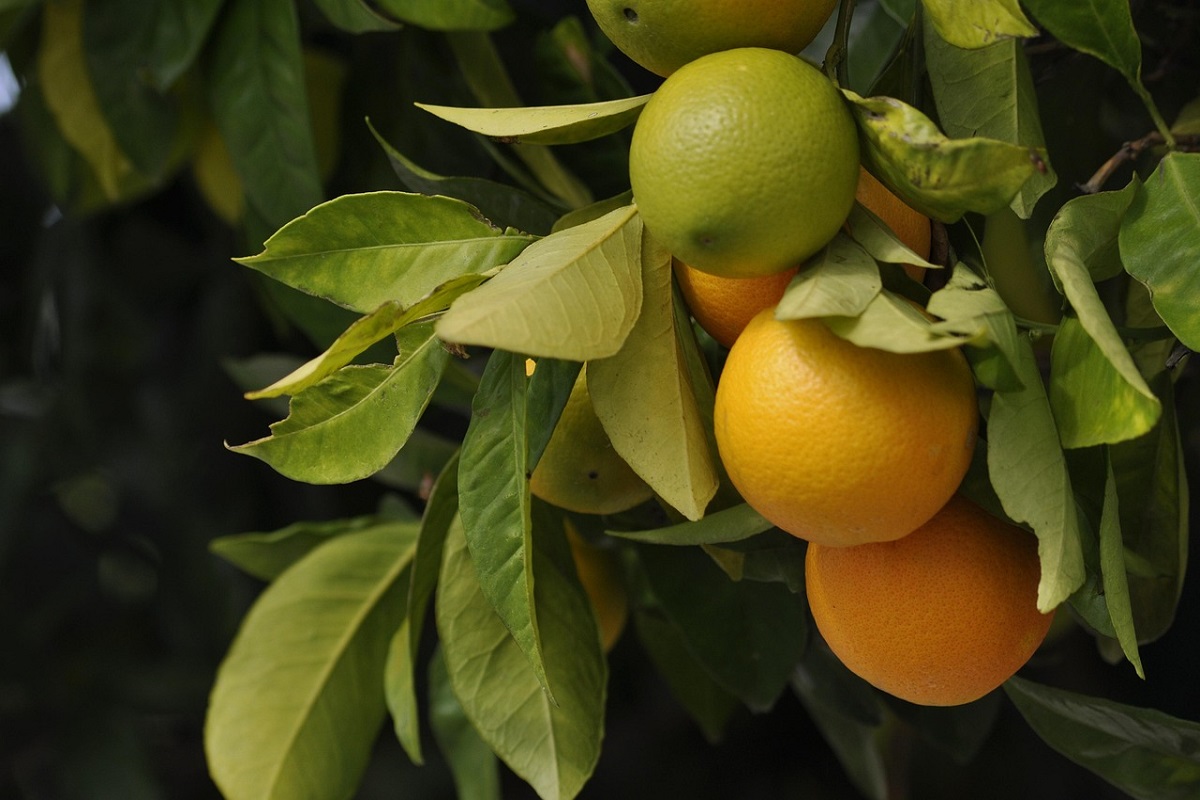
- Maturity Indicators: Fruits are ready for harvest when they attain the proper size, and the color changes from green to a uniform yellow or orange. A simple test is to taste the fruit for sweetness.
- Harvesting Method: Fruits should not be pulled from the tree. They should be carefully clipped with a small piece of the stem attached, using harvesting shears or clippers. This prevents injury to the fruit rind.
- Post-harvest Handling: Harvested fruits should be collected in padded bags or baskets to avoid bruising. They should be moved to a shaded area as soon as possible.
- Loss Prevention: Avoid harvesting during hot afternoons or when the fruits are wet. Handle the fruits gently at all stages.
17. Yield of Orange Crop
The yield of an orange orchard varies significantly based on variety, age of the tree, and management practices.
- Initial Bearing: Commercial bearing starts from the 4th or 5th year after planting.
- Yield per Plant: A young tree (5th year) might yield 40-50 fruits. A fully mature tree (8 years and above) can produce 500-600 fruits or more.
- Yield per Acre: An average yield from a well-managed orchard is around 4 to 5 tonnes per acre in the initial bearing years, which can stabilize to about 8-10 tonnes per acre for mature orchards.
- Factors Affecting Yield: Key factors include variety selection, soil health, irrigation, nutrition management, pest and disease control, and pruning.
18. Storage and Marketing
Storage
- On-farm Storage: Oranges have a relatively good shelf life. They can be stored at room temperature for a week.
- Cold Storage: For longer storage, oranges can be kept in cold storage at a temperature of 7-8°C and 85-90% relative humidity for 4-8 weeks.
- Post-harvest Treatments: Fruits are often washed, graded by size and color, and sometimes waxed to improve appearance and reduce moisture loss.
Marketing
- Local Markets (Mandis): The primary channel for most farmers is selling to wholesalers or commission agents at the nearest agricultural market.
- Contract Farming: Tying up with juice processing companies or large retail chains can provide a stable market and pre-determined prices.
- Value-added Products: Farmers or FPOs (Farmer Producer Organizations) can explore making products like fresh juice, squash, marmalade, or candy peel to capture more value.
- Export Potential: There is a good export market for Indian oranges, especially Nagpur mandarins, in neighboring countries and the Middle East.
19. Cost of Orange Farming & Profit Margin
The economics of orange farming involves an initial investment period followed by decades of returns. The following is an estimated model for one acre.
| Particulars | Amount (INR) – Approximate | Notes |
|---|---|---|
| A. Initial Investment (First 3-4 Years) | ||
| Land Preparation & Pits | ₹ 15,000 | One-time cost |
| Planting Material (120 plants @ ₹50/plant) | ₹ 6,000 | One-time cost |
| Drip Irrigation System | ₹ 30,000 | Subsidies may be available |
| Annual Maintenance (Years 1-4) | ₹ 80,000 (₹ 20,000/year) | Includes labor, fertilizer, plant protection |
| Total Initial Investment (approx.) | ₹ 1,31,000 | Income from intercropping can offset some of this cost. |
| B. Annual Economics from 5th Year Onwards (Mature Orchard) | ||
| Annual Maintenance Cost | ₹ 50,000 – ₹ 60,000 | Labor, fertilizer, pruning, harvesting etc. |
| Expected Yield | 8,000 kg (8 tonnes) | Average for a well-managed orchard. |
| Average Market Price | ₹ 30 – ₹ 40 per kg | Varies greatly by season, quality, and market. |
| Gross Income (8,000 kg @ ₹35/kg) | ₹ 2,80,000 | |
| Net Profit (Gross Income – Maintenance) | ₹ 2,20,000 | |
Region-wise Profit Comparison: Profits can be higher in regions like Punjab with high-yielding varieties like Kinnow, or in the Vidarbha region where Nagpur Santra commands a premium price. Conversely, costs might be higher in hilly regions due to labor and logistics challenges.
20. Advantages of Orange Cultivation
- High Market Demand: Consistent demand for fresh fruit and processed products ensures a ready market.
- Long Economic Life: A well-maintained orchard can provide income for over 20-25 years.
- Export Value: Certain varieties like Nagpur mandarin have significant export potential.
- Government Support: Various government schemes are available to support farmers.
- Processing Scope: The fruit is a key raw material for the thriving juice and food processing industry.
21. Government Schemes for Orange Farming
The Indian government and various state governments promote horticulture through several schemes:
- Mission for Integrated Development of Horticulture (MIDH): This is a centrally sponsored scheme that provides assistance for various aspects of horticulture, including planting material, orchard establishment, and post-harvest management.
- Subsidies on Drip Irrigation: Under the Pradhan Mantri Krishi Sinchayee Yojana (PMKSY), farmers can get significant subsidies for installing drip irrigation systems.
- Nursery Subsidies: Schemes often support the establishment of high-quality nurseries to ensure the availability of disease-free planting material.
- State-specific Schemes: Many states have their own additional schemes to promote citrus cultivation. Farmers should contact their local horticulture department for details.
22. Organic Orange Cultivation
There is a growing market for organic fruits. Transitioning to organic orange farming can lead to premium prices.
- Organic Inputs: Replace chemical fertilizers with FYM, vermicompost, poultry manure, and oil cakes.
- Biofertilizers: Use biofertilizers like Azospirillum and Phosphorus Solubilizing Bacteria (PSB) to improve nutrient availability.
- Natural Pest Control: Encourage natural predators. Use neem oil, Karanj oil, and other botanical extracts for pest control. Pheromone traps are also a key tool.
- Certification: To sell produce as ‘organic’, farmers need to undergo a certification process which typically takes 2-3 years for perennial crops.
23. Common Mistakes in Orange Farming
- Poor Site & Soil Selection: Planting in waterlogged or alkaline soil leads to failure.
- Incorrect Planting Depth: Planting the bud union below the soil level is a common and fatal mistake.
- Improper Spacing: Overcrowding leads to competition for light and air, increasing disease risk.
- Over/Under Irrigation: Both extremes are harmful. Drip irrigation helps avoid this.
- Neglecting Pruning: Allowing the tree to grow without a proper framework can lead to weak branches and lower quality fruit.
- Ignoring Pest & Disease Signs: Delaying action when the first signs of pests or diseases appear can lead to a major outbreak.
24. FAQs – Frequently Asked Questions
- 1. How many years does it take for an orange tree to bear fruit?
- Commercial fruiting starts from the 4th to 5th year after planting.
- 2. How many orange trees can be planted in one acre?
- With a standard spacing of 6m x 6m, you can plant approximately 110 to 120 trees per acre.
- 3. Is orange farming profitable in India?
- Yes, with good management practices, orange farming is a highly profitable long-term venture, with potential net profits of over ₹2 lakh per acre from a mature orchard.
- 4. What is the best soil for orange farming?
- The best soil for orange cultivation is a well-drained, medium-light loamy soil. The ideal pH should be between 6.0 and 7.5. Good drainage is critical to prevent root diseases.
- 5. How much water does an orange tree need?
- An orange tree requires regular watering, especially during dry seasons and critical growth stages like flowering and fruit development. While the exact amount depends on the climate and soil, a deep watering session that moistens the root zone is recommended. Drip irrigation is the most efficient method.
- 6. What is the lifespan of an orange tree?
- With proper care, an orange tree can have a productive economic life of 20-25 years. The total lifespan can be much longer, sometimes up to 50 years or more, though fruit production declines with old age.
- 7. Which state is the largest producer of oranges in India?
- Madhya Pradesh is the largest orange-producing state in India, followed by Punjab and Maharashtra. While Maharashtra, particularly the Nagpur region, is famous for its high-quality mandarins, Madhya Pradesh leads in overall production volume.
- 8. Can I grow intercrops in an orange orchard?
- Yes, especially in the first 3-4 years before the trees develop a large canopy. Leguminous crops like beans and peas, or vegetables, can be grown between the tree rows to get an additional income.
- 9. What is “citrus greening”?
- Citrus Greening, or Huanglongbing (HLB), is a devastating bacterial disease spread by an insect called the Asian Citrus Psyllid. It causes yellow leaves, stunted growth, and bitter, unusable fruit, and there is no cure. Using disease-free plants from certified nurseries and controlling the psyllid insect are the only ways to manage it.
- 10. How do I control fruit drop in my orange trees?
- Some fruit drop is natural. However, excessive drop can be caused by water stress, nutrient deficiencies, or pests. Ensuring proper irrigation and nutrition is key. In some cases, a foliar spray of plant growth regulators like NAA (Naphthalene acetic acid) can help reduce pre-harvest drop.
25. Conclusion
Orange farming in India is a journey that demands patience, knowledge, and dedication, but the rewards are substantial and long-lasting. From the initial investment in land preparation and high-quality saplings to the annual cycle of care, a well-managed orange orchard stands as a testament to a farmer’s skill. With its consistent high demand in both domestic and international markets, the orange offers a stable and profitable source of income for decades.
The future scope for orange cultivation is bright, driven by a growing population, increasing health consciousness, and a robust processing industry. By adopting modern techniques like drip irrigation, integrated nutrient management, and proactive pest control, farmers can significantly boost their yield and fruit quality. This guide has laid out the complete roadmap; the path to a successful and profitable orange orchard is now in your hands. Embrace the challenge, and you will surely reap the sweet fruits of your labor for years to come.
For those looking to start, we encourage you to connect with local horticulture departments for training and scheme-related information. Sourcing your saplings from a certified nursery is the first and most critical step towards building your profitable orange farming business.